

Billy Idol’s Unconventional Path to Sobriety: From Heroin to Crack and Back Again
Famed rock icon Billy Idol has lifted the lid on his tumultuous past, revealing a surprising and frankly shocking method he employed to overcome his severe heroin addiction. The “White Wedding” hitmaker, now 70, confessed during an appearance on the “Club Random with Bill Maher” podcast that he turned to smoking crack cocaine as a means to quit heroin.
“Once you’re trying to get off heroin, what do you go to? You go to something else,” Idol explained. “I started smoking crack to get off heroin.” Maher, clearly taken aback, questioned the star, who simply affirmed, “It worked. It worked.”
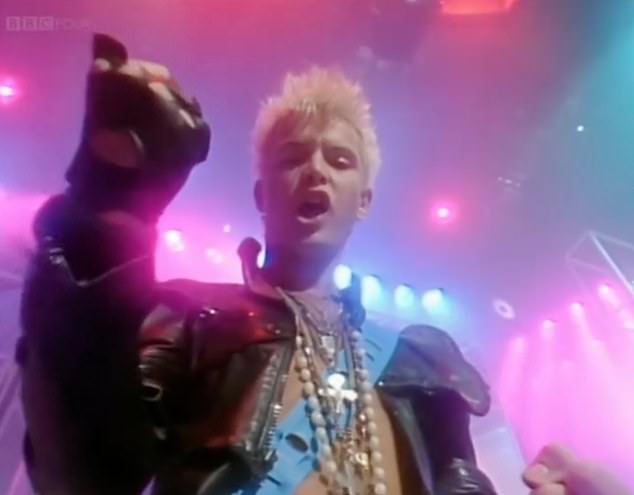
This candid admission comes in the wake of Idol’s reflections on a near-fatal heroin overdose that almost derailed his career. He revealed that the incident occurred just days before a crucial performance on the iconic television show Top Of The Pops in 1984, a period following the success of his hit album Rebel Yell.


Idol’s life has been a testament to survival, navigating decades of rock and roll excess, profound drug addiction, and a series of life-threatening accidents. These harrowing experiences are explored in a new two-hour documentary, Billy Idol Should Be Dead. The film delves into how the musician managed to pull through such extreme circumstances.
Recounting the near-fatal overdose, Idol shared with The Mirror the gravity of the situation. “I did OD and nearly died,” he stated. “I went to America in March 1981 and came back to the UK in triumph in 1984, after Rebel Yell. I was due on Top Of The Pops. I nearly ruined it and nobody knew.”
He elaborated on the events of that fateful night: “On our return to London we met some pals and they had some of the strongest heroin, Persian Brown, I think. Everybody did a line and they all nodded out except me and a mate and we did a few more lines.” The consequences were dire: “I was basically dying. I was turning blue. So they put me in an ice bath and walked me around on the roof of the building.”
Idol’s journey through addiction was a complex tapestry woven with various substances and compulsions. His struggles included heroin, marijuana, opium, a significant alcohol habit, and a persistent sex obsession. The grip of drug dependency began subtly after his move to New York, where he initially possessed little more than basic furnishings and a guitar. However, he soon began to make his mark on the music scene.
“The record company gave me money and I would buy some pot and weak smack [heroin],” Idol recalled. “I would go out to dance clubs.” It was within these vibrant club environments that he was first introduced to heroin, a drug that would lead to a severe addiction, with him initially unaware of its perilous nature.



Despite attempts by his father to intervene and a subsequent move to Los Angeles, Idol found himself cycling in and out of sobriety over the years. The turning point, he says, came in 1994 when he collapsed outside an LA club due to an overdose. This critical event prompted him to re-evaluate his life, particularly for the sake of his children.
Speaking in 2019, Idol acknowledged the numerous times he risked his life during his wilder days. However, he now expresses a greater appreciation for life and his career. He admitted to no longer consuming vodka bottles during his performances, a stark contrast to his former habits.
“For a singer, you need a ton of breath. You have to be fit to be a singer. You can’t just be up there,” he explained. “You’d have a heart attack and die on stage, which would be interesting, but I much prefer to get through the gig and do another one.”
The documentary Billy Idol Should Be Dead, which premiered at the Tribeca Festival on June 10, became widely available on February 26, offering audiences an intimate look at the enduring spirit and remarkable resilience of a rock and roll legend.


