William Butterton, an electrical engineer by trade, has explored numerous avenues for supplementary income. However, he’s found that placing Automated Teller Machines (ATMs) comes closest to his definition of “passive income.” Through his venture, Viking Vendors, he’s generating approximately $1,500 per month, requiring only an hour or two of his time each week.
Butterton himself is sceptical of the concept of truly passive income, but he firmly believes that ATMs represent the closest approximation. He likens it to having an employer that doesn’t demand payment. As a full-time electrical engineer who has dabbled in various side hustles, he sees the ATM as a machine that independently handles transactions.
Residing across the water from Seattle in the quiet town of Silverdale, Butterton has harboured entrepreneurial ambitions since childhood, maintaining invention journals from a young age. While he possessed a wealth of business ideas in his twenties, a sense of comfort held him back from pursuing them. This inertia shifted after the birth of his first child, prompting a serious search for income-generating opportunities that wouldn’t consume excessive time. This quest led him to his initial side hustle: acquiring and deploying ATMs.
After researching the ATM business, Butterton concluded that the risks were minimal, primarily confined to the initial financial outlay of around $2,500 to purchase a machine. He and a friend decided to give it a go.
Launching an ATM Business: The Initial Investment
The process of setting up an ATM business can be initiated by anyone with an online connection. In 2022, when Butterton and his associate embarked on this venture, the cost of an ATM machine was approximately $3,000 after tax.
Beyond the purchase price, they allocated about $1,000 in cash to stock the machine and an additional $1,000 as a reserve, bringing the total upfront investment per machine to roughly $5,000. They initially acquired two machines, which were delivered to Butterton’s garage.
The most significant hurdle in establishing the business, Butterton explained, was securing a business bank account that would permit ATM operations. Many major financial institutions are hesitant to work with ATM businesses due to past associations with fraud and money laundering.
Once they found a smaller, local bank willing to process ATM transactions, their next critical step was to actively seek out suitable locations.
“Your success hinges entirely on your ability to market yourself effectively,” Butterton noted.
His strategy involves targeting cash-only businesses as a primary focus. He also seeks out establishments that either prefer or actively encourage cash payments or tipping, such as barbershops, nail salons, and convenience stores.
In Washington state, Butterton highlighted that marijuana dispensaries represent the ideal locations for ATM placement in terms of profitability, although they are notoriously difficult to penetrate. While he hasn’t yet secured placement in any dispensaries, his ATMs are currently operating in several nail salons.
Scaling Up: Eight Machines Generating $1,500 Monthly
Butterton and his partner deliberately named their company “Viking Vendors” to avoid limiting their business solely to ATMs. Their overarching business philosophy is to cast a wide net initially and then refine their focus.
Their next expansion involved incorporating vending machines. This required them to learn about reseller permits and navigate different tax structures, adding a layer of complexity. However, this diversification has allowed them to establish a presence in various local businesses that don’t require ATMs, while still maintaining a relatively passive operation.
They quickly discovered that restocking vending machines with food and drinks was considerably less passive than managing the cash in ATMs.
“If I were advising anyone interested in either, I would personally stick with ATMs,” Butterton advised. “The product you load into an ATM is far more manageable than hauling pallets of drinks and snacks.”
Since the launch of Viking Vendors in 2022, they have expanded their operations to include a total of eight machines – five ATMs and three vending machines – which collectively generate an average monthly profit of $1,500. Business Insider has reviewed terminal activity summaries to verify these earnings.
The majority of this profit is derived from ATM surcharge fees, which are directly deposited into the business’s bank account. Determining the optimal fee involves a process of trial and error, and it is highly dependent on the specific location. The objective is to set a fee that maximises transaction volume. Butterton explained, “If I charge $2 and see 100 transactions, and then I increase it to $3 and still get 100 transactions, then the $2 price was likely too low.”
Butterton typically charges around $3 per transaction and has not had to share ATM profits with any of the businesses hosting his machines.
Vending machines operate on a different model. They generate revenue by marking up product prices; for instance, purchasing an item for $1 and selling it for $2. If a business allows them to store inventory on-site, Butterton mentioned that they usually share approximately 10% of the profits. This arrangement alleviates the need for him to transport beverages and snacks in his vehicle.
While the business boasts relatively low operating expenses, the threat of theft and vandalism can impact profit margins. Butterton recounted an instance where one of his ATMs was stolen and noted the initial difficulty in obtaining affordable insurance. The initial coverage he secured cost about $2,500 annually, which was challenging to justify when he only had two machines. He has since found more cost-effective insurance, and because the premium remains relatively constant whether insuring two or ten machines, it becomes a more manageable expense as the business scales.
He and his partner intend to add more machines, but they are proceeding cautiously. As their fleet grows, so does the time commitment required for restocking and maintenance.
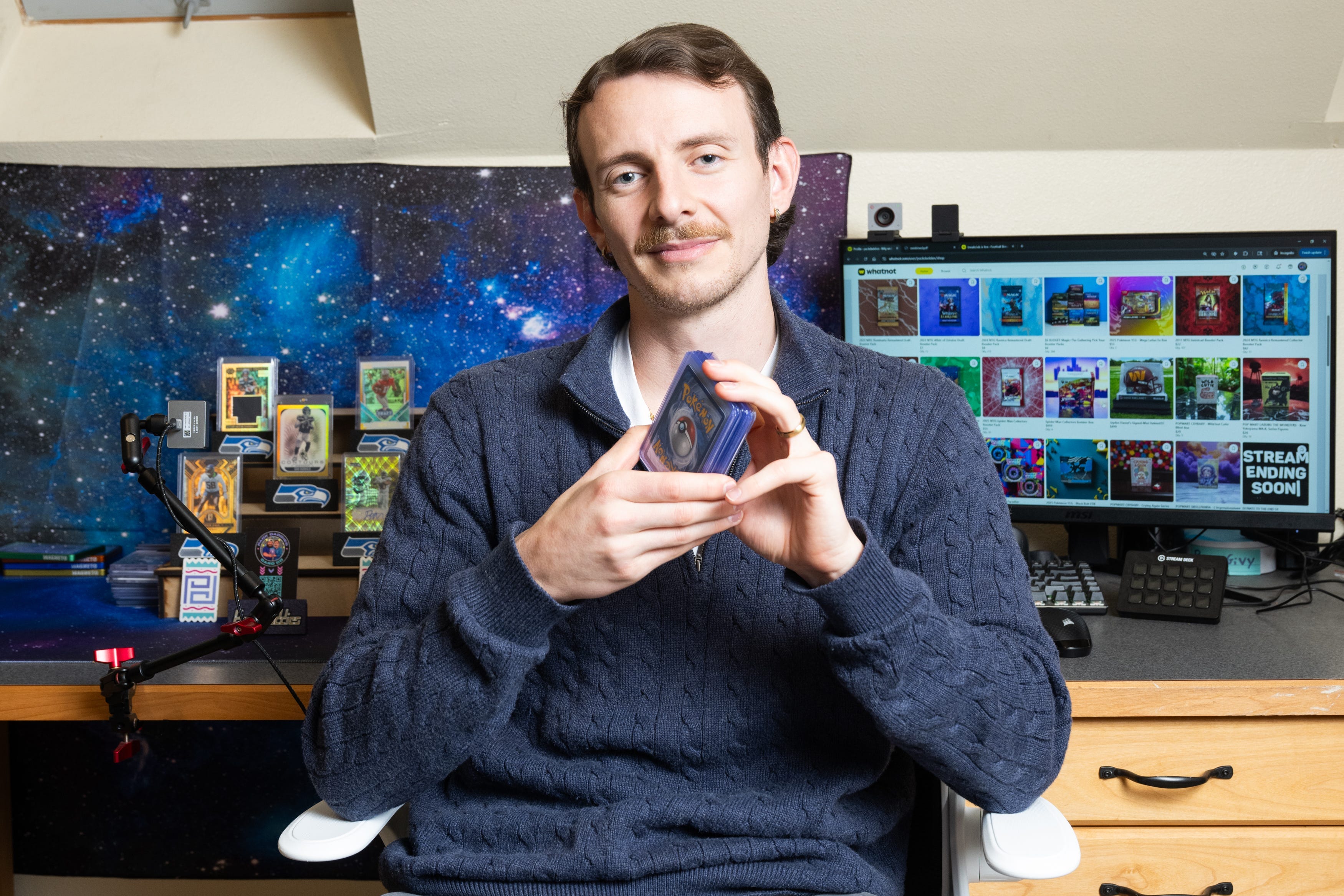
Each week, they dedicate approximately one hour to the business, allowing Butterton to maintain his full-time engineering role and pursue other entrepreneurial interests. These include selling collectibles on the live-streaming platform Whatnot and developing his company, One-Eyed Willy’s, which produces all-natural, food-safe wood finishes.
While acquiring more machines would undoubtedly increase revenue, Butterton is more focused on identifying a point where the additional income remains commensurate with the time invested. Currently, the business helps cover expenses such as a car payment and childcare, while still allowing him quality time with his family.
“Naturally, I aspire to build a significant business and would love to earn $100,000 a month from ATMs,” Butterton stated. “However, I also recognise that my children are only young once, and the business will still be there in five years.”