
Government Measures to Cope with Rising Fuel Costs
Governments across Australia are exploring various strategies to assist residents in managing the increasing cost of fuel. These efforts include encouraging public servants to work remotely and recent announcements about a three-month reduction in the fuel tax. One effective way to save on petrol and reduce demand for fuel is by avoiding unnecessary travel.
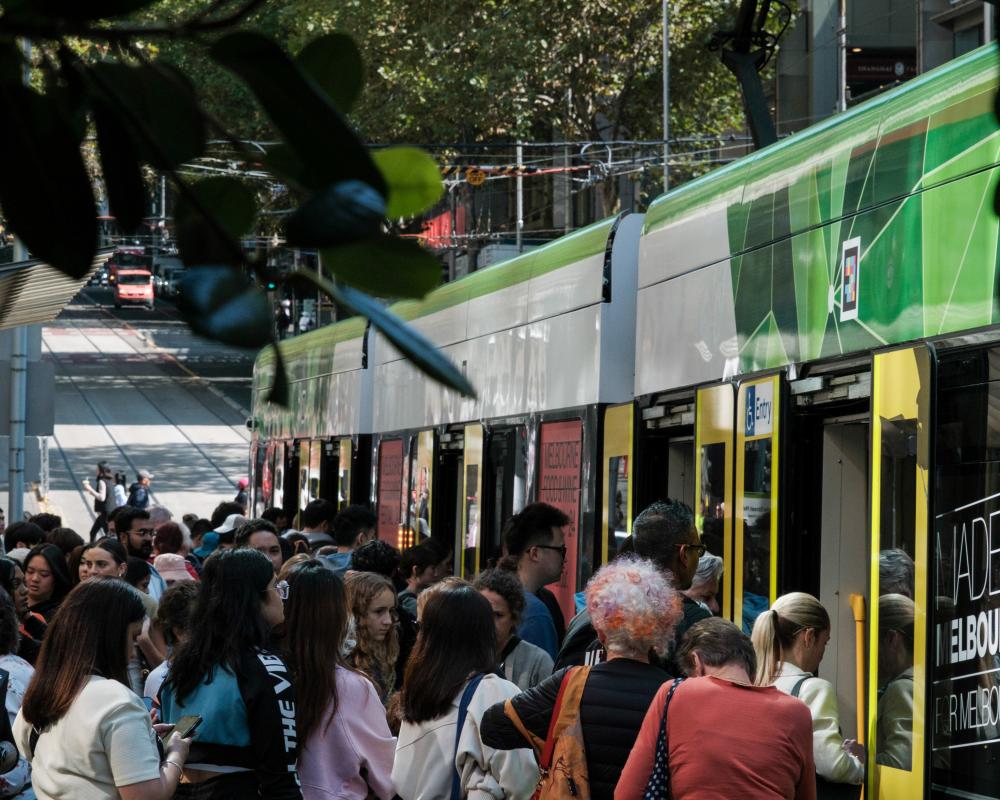
In response to this, Victoria’s government announced that public transport would be free until the end of April. Similarly, Tasmanians will have access to free bus services and Derwent River ferries until 1 July. However, New South Wales has been more cautious about implementing a similar plan, as the state’s Treasury estimates it would cost $140 million per month in lost Opal revenue—approximately double what it would cost in Victoria.
Pros of Free Public Transport
Professor Graham Currie from Monash University, a leading expert in public transport, believes that making bus, tram, and train travel free is an easy measure for state governments to implement. He argues that this policy can significantly improve the lives of Australians struggling with rising fuel costs.
Unleaded petrol has increased by around $1 per litre since February, reaching approximately $2.60, while diesel has risen by nearly $1.50 to $3.20 per litre over the past six weeks. With households already facing high living costs, free public transport could provide much-needed relief.
Currie highlights that the policy is quick to implement and serves as a positive action during unusual times. “It is quick and that is part of the motivation for governments,” he says. “We are in a bit of an unusual situation and this is quite a nice thing to do.”
Professor Mark Hickman, a transport engineering expert at the University of Queensland, agrees that free public transport is one of the better options among limited choices. “It certainly provides a more economical way of getting around,” he says. However, he notes that many car users may not switch to public transport due to varying needs and habits.
Cons of Free Public Transport
Both professors acknowledge that the primary drawback of free public transport is that it primarily benefits higher-income households in inner-city areas. Currie explains that only about half of urban Australia has access to quality public transport, and those who do tend to be wealthier individuals in areas like Toorak.
“This policy does not help those without access in the outer suburbs or regional towns,” Currie adds. He also raises concerns about the effectiveness of using $71 million on temporary free transport when the money could be better spent on long-term improvements, such as expanding services to underserved areas or electrifying the bus fleet.
Hickman studied the impact of Queensland’s 50c fare policy, which started 18 months ago. “What we have seen is that it does get people to take more travel with public transport, but the number of people switching from motor vehicles is very small,” he says. The increase has mainly come from people who previously cycled, walked, or did not travel at all.
He also points out that there is limited data on how fuel shortages affect public transport usage. Additionally, he questions whether free public transport aligns with federal fuel subsidies, suggesting that the policies may conflict.
Conclusion
While free public transport offers immediate relief for some, its long-term impact remains uncertain. Experts suggest that a more sustainable approach might involve investing in infrastructure and renewable energy to support public transport systems effectively.