The Challenge of Africa’s Trade Position
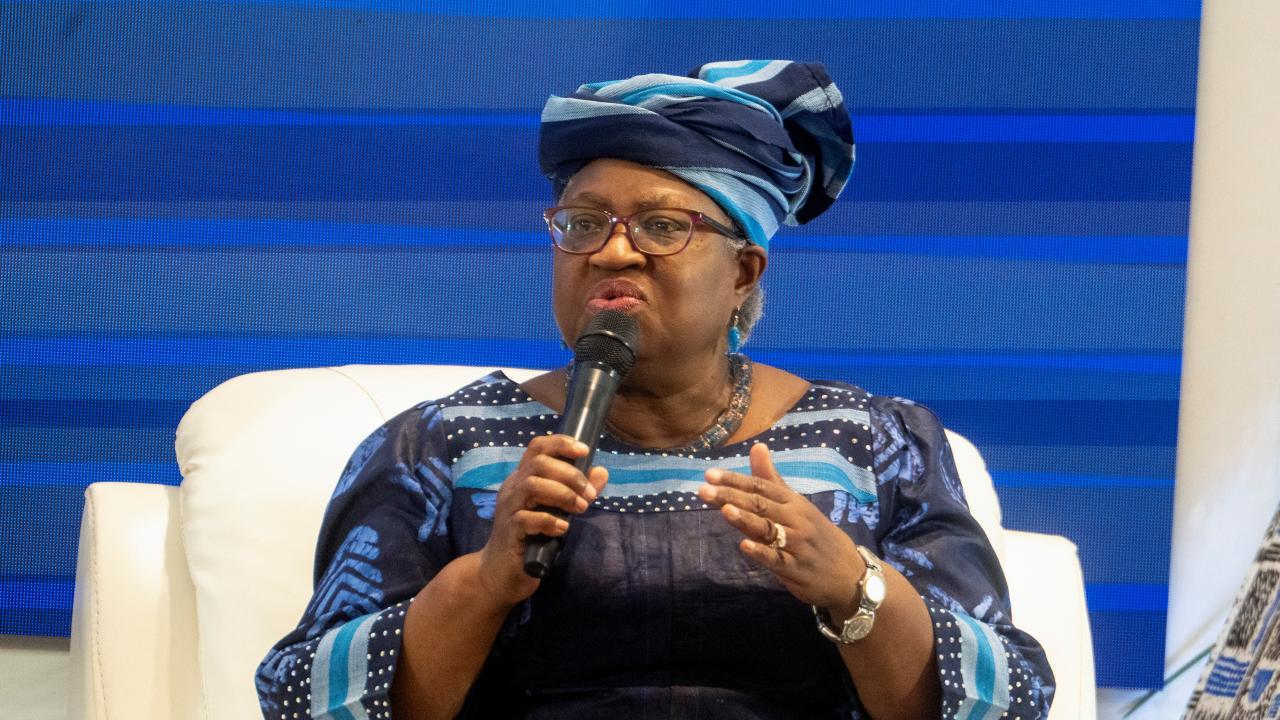
After delivering a speech on the topic, Okonjo-Iweala highlighted that Africa’s share of global trade has remained stagnant at around 3% for many years. This indicates that the continent is not fully capitalizing on the value generated from its production. She emphasized that this issue stems from structural challenges, as commodities still constitute approximately 60% of Africa’s exports. This heavy reliance on raw materials leaves many economies vulnerable to fluctuating prices and hampers job creation.
Okonjo-Iweala stressed the need for Africa to focus on adding more value to its exports rather than solely exporting unprocessed goods. She advocated for stronger local value chains that would enable more processing and manufacturing to occur within the continent. According to her, the key to increasing Africa’s share in world trade lies in creating these value chains locally, which would, in turn, lead to greater job opportunities.
Leveraging Africa’s Resources
The former director-general pointed out that Africa possesses the resources necessary to transform its economic model. She noted that the continent controls about 30% of the world’s critical minerals and approximately 60% of renewable solar potential. These assets could serve as a foundation for industrial development if supported by adequate investment, infrastructure, and trade-friendly policies.
Despite efforts to diversify, many African countries, including Malawi, continue to rely heavily on primary goods for their exports. Data from the UNCTAD Data Hub and the World Bank’s WITS revealed that Malawi’s merchandise exports have declined from approximately $1.3 billion in 2014 to around $950 million in recent years. Commodities still dominate the export basket, highlighting the difficulty in developing a pipeline from farms or mines to factories.
The Role of Value-Added Exports
Between 2021 and 2023, commodities accounted for roughly 91% of Malawi’s export earnings, with agricultural products such as tobacco being the main drivers. This underscores the challenge of transitioning from raw material exports to more value-added products.
Business leaders believe that shifting towards value-added exports is feasible but requires targeted support. Daisy Kambalame, the chief executive of the Malawi Confederation of Chambers of Commerce and Industry, stated that moving up the value chain could enhance foreign earnings and competitiveness. However, she emphasized that this transition would only be successful if the manufacturing base is strengthened.
Government Initiatives
To address these challenges, Malawi’s government has introduced several initiatives. These include the National Export Strategy (2021-2026) and a “Buy Malawi” campaign aimed at promoting local production and expanding export markets. These policies are designed to encourage domestic industries and foster economic growth through increased trade activity.
By focusing on value addition, strengthening local industries, and implementing supportive policies, African nations can work towards a more sustainable and diversified economic future. The path forward requires collaboration between governments, businesses, and international partners to ensure that the continent can fully leverage its resources and potential.