A Legacy of Art and Advocacy
Marjane Satrapi, the acclaimed Iranian-French cartoonist and filmmaker behind the 2007 drama Persepolis, has passed away at the age of 56. Her death marks the end of a remarkable career that spanned decades and touched audiences across the globe.
The French presidency released a statement honoring her passing, calling it “the loss of a leading figure of French culture and an artist devoted to freedom, whose work carried a universal message and earned her immense international acclaim.” President Emmanuel Macron and his wife also paid tribute, highlighting her ability to transform her Iranian childhood into a universal fable.
According to reports from French media outlets like BFM TV, Satrapi had “died of sadness” just over a year after the passing of her husband, Swedish film producer and actor Mattias Ripa. The information reportedly came from people close to the artist, though no official cause of death was disclosed.
The French Academy of Fine Arts, where she was a member, remembered her as “a passionate advocate for cinema and film education.” They noted that she had established a foundation earlier this year to help international students pursue film studies in Paris.

A Universal Story Through Art
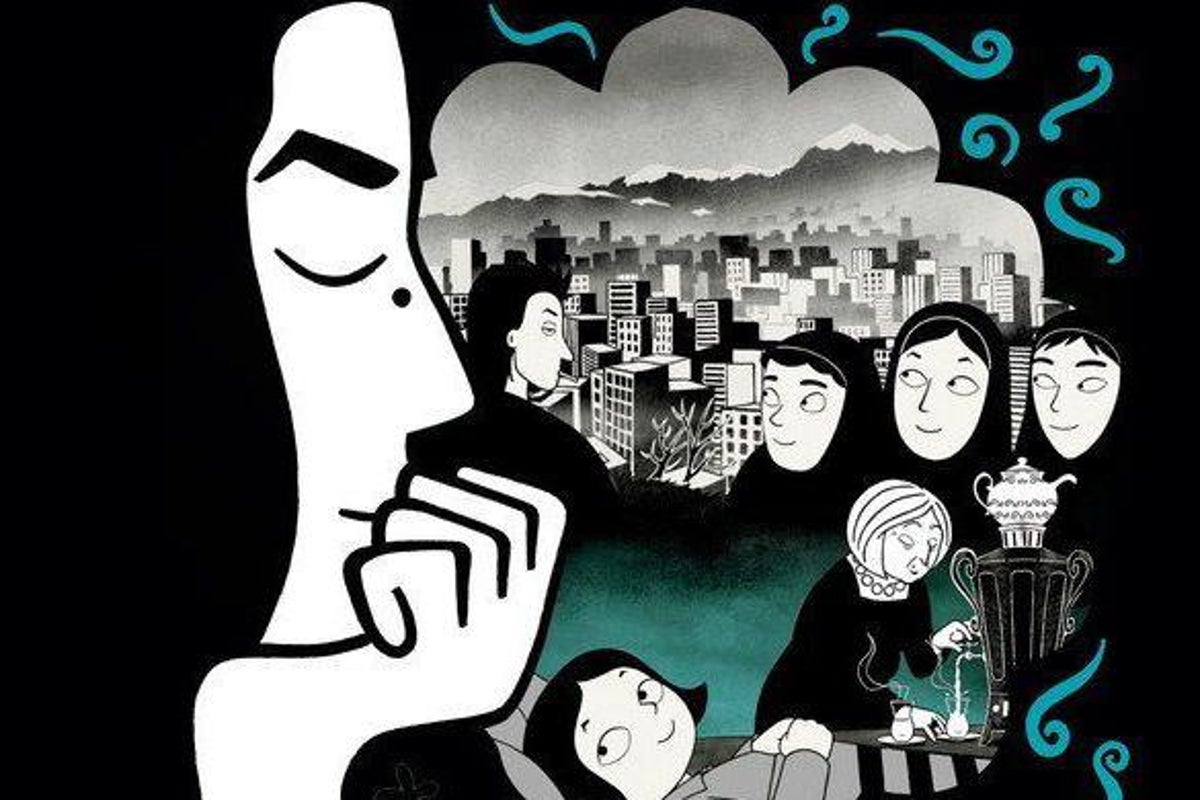
Satrapi is best known for her monochrome autobiographical comic book and film Persepolis, a coming-of-age tale set against the backdrop of the Islamic Revolution in Iran. The film won the Film Critics Grand Prix at the Cannes Festival in 2007 and the César Award for Best Adapted Screenplay in 2008. It was also nominated for Best Animated Feature at the 2008 Oscars.
In a 2007 interview at Cannes, Satrapi described the film as a reminder that Iranians are just like everyone else. “What we wanted to say is, if these people scare you, look closer: They have parents, they have lovers, they have hope, they have stories,” she said.
At the time, Iranian authorities protested the movie’s inclusion at Cannes, sending a letter to the French Embassy in Tehran. Despite this, the film gained widespread recognition and became a symbol of cultural resistance.
A Journey of Identity and Expression
Born on 22 November 1969, in Rasht, Iran, Satrapi’s early life was shaped by the political turmoil of her country. Her parents sent her to Vienna, Austria, in 1983 to finish her studies due to the extremism following the 1979 Revolution that brought Ayatollah Khomeini to power.
Finding Austria hostile and missing her parents, she returned to Iran in 1989 to attend Tehran University, where she earned a degree in visual communications. By the time she graduated, she decided to leave Iran and accept the opportunities her parents had long sought for her. In 1994, she moved to France, studying in Strasbourg before settling in Paris.
Her graphic novels include Broderies (Embroideries) and Poulet aux prunes (Chicken with Plums), both of which were adapted into films. As a filmmaker, she directed works such as La Bande des Jotas (The Gang of Jotas) and Radioactive (Madame Curie), a biography about the Polish physicist Marie Curie.
A Voice for Human Rights
In 2023, Satrapi coordinated the book Femme, vie, liberté (Woman, Life, Freedom) with a group of artists and academics to illustrate the revolts that occurred in Iran after the death of Mahsa Amini in 2022 at the hands of the so-called “morality police.” The work denounced the repression and lack of human rights that Iranian society, especially women, suffers under the regime.
In 2024, she was elected a member of the French Academy of Fine Arts. That same year, she was offered France’s highest award, the Legion of Honor, but declined it, arguing that France was not doing enough to support Iranian people fighting for democracy.
“Supporting the women’s revolution in Iran cannot be reduced to photos or speeches,” she wrote in a January 2025 letter to French authorities. “When people are fighting for democracy, we should support them.”
Recognition and Reflection
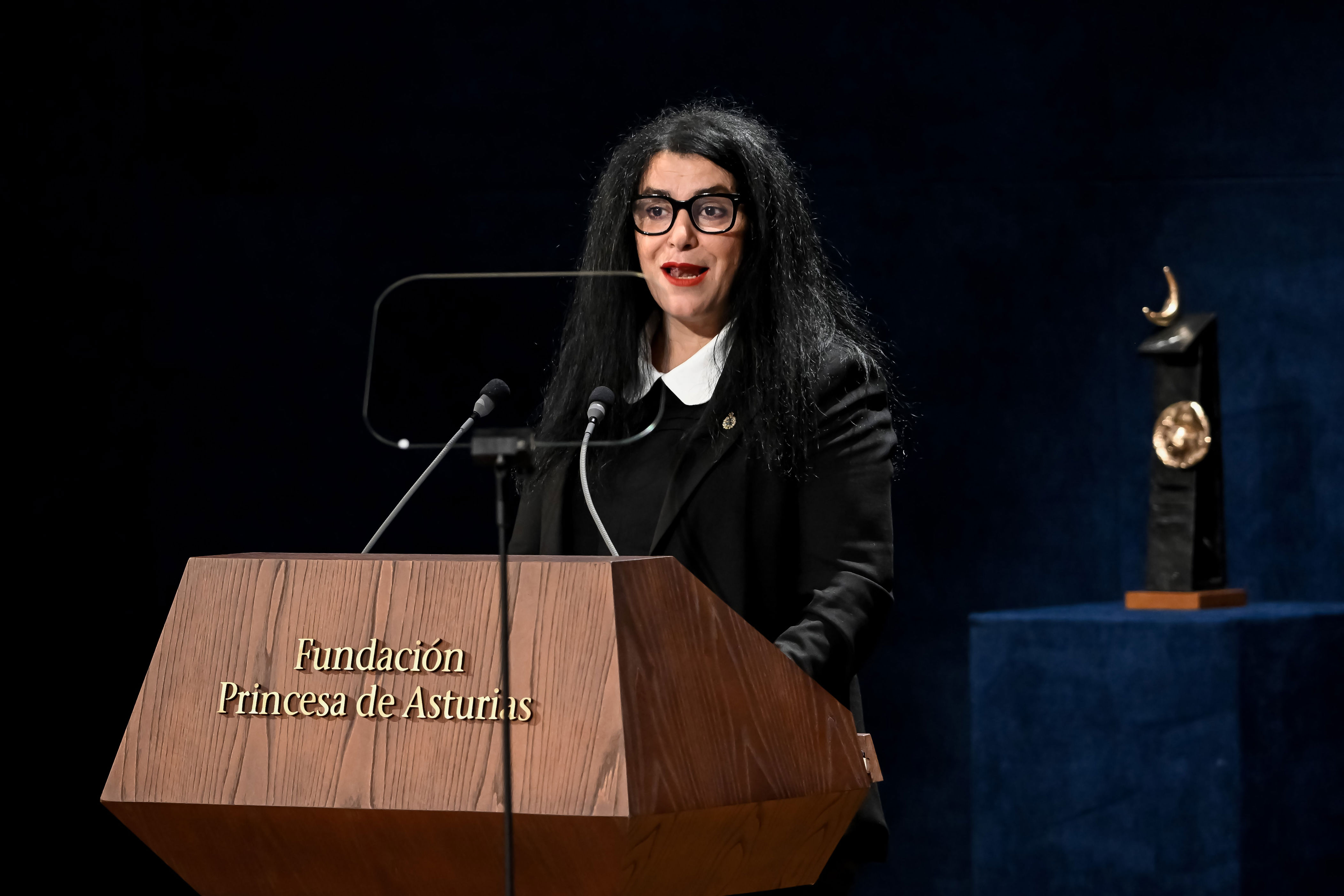
In 2024, Satrapi won the Princess of Asturias Foundation award in Spain for communication and humanities. The organization praised her as “an essential voice in the defense of human rights and freedom.” The judges described her as “a symbol of civic engagement led by women.”
Her husband, Mattias Ripa, died in April 2025 at the age of 53. On her Instagram page, she left a single message in a series of posts: “Because I have lost the love of my life.”
Independent readers are independently-minded global citizens. They are not defined by traditional demographics or profiles, but by their attitudes. In today’s increasingly fragmented world, communities value real facts and frank opinions delivered first-hand from a non-biased news brand that they can trust. Armed with information and inspiration, Independent readers are empowered and equipped to take a stand for the things they believe in.