New Discovery Reveals the Secret Behind Pigeon Navigation
Homing pigeons have long been a mystery to scientists due to their incredible ability to travel hundreds of miles and still find their way home. For years, researchers believed that these birds used their eyes, brains, or beaks to navigate. However, a recent study has uncovered an unexpected source of their navigational skills – their liver.
The study suggests that homing pigeons may rely on specialized immune cells in their liver and spleen to detect the Earth’s magnetic field. These cells, known as macrophages, accumulate iron while breaking down old red blood cells. This accumulated iron gives them unique magnetic properties, allowing them to respond to the planet’s magnetic field.
According to a study published in the journal Science, when these macrophages were removed, pigeons struggled to find their way home. Martin Wikelski, director at the Max Planck Institute of Animal Behaviour in Germany, stated, “What looks like a ‘gut feeling’ in bird navigation may actually have a physical basis.” He added, “If immune cells are part of how birds sense direction, it would fundamentally change how we understand navigation.”
While scientists have known for some time that migratory birds and homing pigeons use the Earth’s magnetic field for navigation, the exact mechanism remained a mystery. This new research highlights the potential role of the liver and spleen in this process, combining insights from immunology, physics, and animal behaviour.
In the study, scientists examined various organs of homing pigeons previously linked to magnetic sensing, including the eyes, beak, and brain. Clivia Lisowski, another author of the study, noted, “We had some clues that the liver and spleen have magnetic properties, because they break down red blood cells and so store much iron in the body.”
Among all the tissues and organs analyzed, the liver had the highest concentration of iron and produced the strongest magnetic response. Further tests confirmed that liver macrophages were responsible for these magnetic properties.
To test whether these macrophages influence navigation, scientists removed them from pigeons trained to return to their aviary from locations over 20km away in Germany. On overcast days, when the sun was hidden, pigeons without macrophages lost their sense of direction and struggled to navigate home. However, on sunny days, they could still successfully return, suggesting that the birds use magnetic information alongside solar cues to orient themselves during flight.
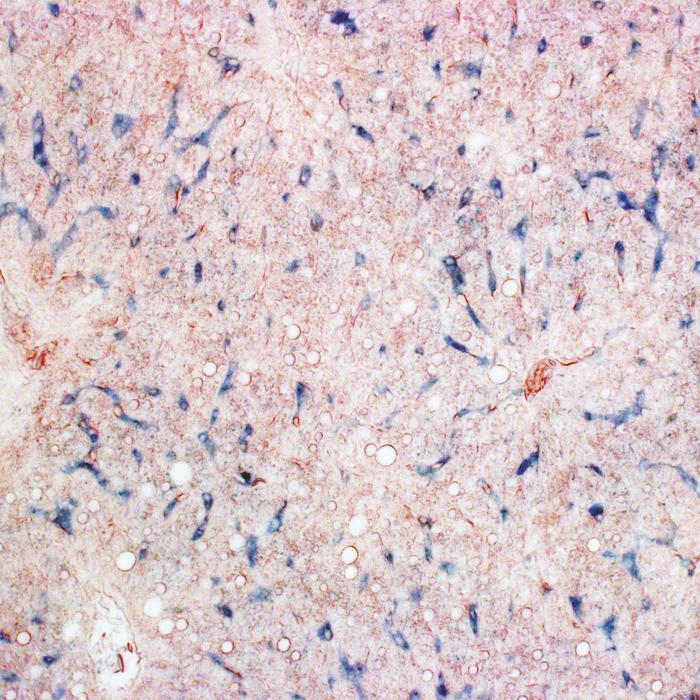
Using advanced microscopy, researchers assessed how information from the pigeons’ liver travels to the brain. They found that the iron-rich macrophages are positioned close to nerve fibres, hinting at a possible pathway through which magnetic information is transmitted from the liver to the nervous system and ultimately to the brain.
“These findings provide the first concrete evidence of how the Earth’s magnetic field can be perceived within the body and passed on to the brain to guide movement,” Dr. Lisowski said.
This groundbreaking research not only sheds light on the navigational abilities of homing pigeons but also opens up new possibilities for understanding how other animals perceive and interact with their environment. As scientists continue to explore these mechanisms, we may gain deeper insights into the complex ways in which life on Earth adapts and thrives.