

Former Transport Official Avoids Jail After Evading Anti-Corruption Inquiry
A former official from Transport for NSW, alleged to be the architect of a multi-million dollar kickback scheme, has sidestepped immediate imprisonment. Ibrahim Helmy, who was central to a staggering $343 million kickback scandal implicating the state agency, failed to present himself before an Independent Commission Against Corruption (ICAC) inquiry in May.
This non-appearance triggered the commission to issue an arrest warrant. Subsequently, Helmy was charged with failing to attend the inquiry and for breaching his bail conditions, which stipulated regular reporting to Merrylands Police Station on Mondays, Wednesdays, and Fridays. A family member reportedly informed the commission that Helmy “took the rubbish out on a Sunday night and did not return,” signalling his deliberate evasion.
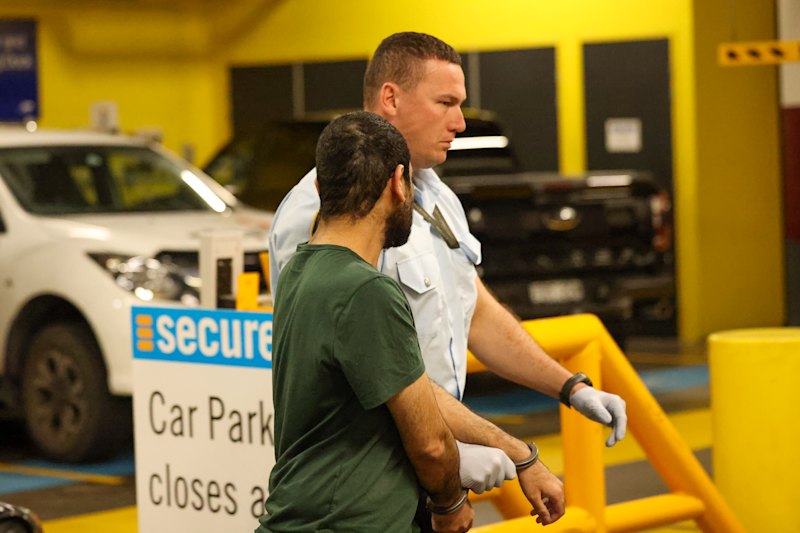
After a four-month period on the run from authorities, Helmy was apprehended on September 26. He was discovered hiding in a cupboard within a Lakemba unit, a red-brick dwelling that had served as his clandestine residence. This arrest followed extensive efforts by law enforcement to locate him. He subsequently spent 42 days in custody.
During a court hearing, it was revealed that Helmy had meticulously planned his evasion, taking significant steps to remain undetected. These measures included creating an email address under a pseudonym to secure a rental property advertised on Gumtree. He also arranged for a private driver to pick him up from a side street near his temporary accommodation, further minimising the risk of being spotted by police or ICAC officers.
Sentencing and Community Corrections Order
Ultimately, Helmy received an 18-month community corrections order and was fined $1760. A community corrections order is a sentence reserved for offences serious enough to warrant more than a simple fine but not so severe as to necessitate imprisonment. These orders can involve stringent supervision by community corrections officers, require up to 500 hours of community service, and may include curfews. Such orders can remain in effect for up to three years.
Chief Magistrate Michael Allen of the Local Court emphasised that Helmy’s actions had significantly hindered and delayed the ICAC’s investigation. He noted that this delay came at a considerable cost to the ICAC and, by extension, the broader community.
“You were well aware that you were placed on conditional release,” Magistrate Allen stated. “Those conditions were clear – they were not complicated. For reasons that are not entirely clear, you chose to ignore those conditions not for a short period of time, but for many, many months.”
The Magistrate further commented on the gravity of Helmy’s deception. “That was again, made perhaps more serious by the fact that you continued a ruse of still residing at the address in Merrylands when you, in fact, secreted yourself at a secret address which took law enforcement much time and resources to locate you, ultimately holed up in a cupboard. Such were your efforts to avoid detection, when you were subpoenaed to give crucial evidence, you did not attend.”
It is worth noting that certain charges against Helmy, specifically those alleging he failed to reside at his Merrylands home and possessed multiple mobile phones, were withdrawn and dismissed by the court.
Mitigating Factors Influencing the Sentence
Magistrate Allen explained that several factors contributed to the decision to impose a community corrections order rather than a custodial sentence. Helmy’s decision to plead guilty at the earliest opportunity, coupled with documented mental health issues and a clean criminal record prior to these events, were identified as significant mitigating circumstances.
Dressed in a white button-down shirt and grey slacks, Helmy appeared in court with his head bowed. His younger brother, Mohamed, was present, seated behind him. As Helmy stood for his sentencing, Magistrate Allen delivered a stern admonition: “I expect a lifelong lesson from you … You, by your actions and your failures delayed the administration of justice at significant cost to the community.”
The Kickback Allegations
The ICAC recently concluded a public inquiry examining allegations that Helmy was the central figure behind corrupt relationships with nine different companies. These companies were reportedly awarded contracts by Transport for NSW to the tune of at least $343 million, in exchange for kickbacks. Helmy is accused of personally receiving approximately $11.5 million in kickbacks. These illicit payments allegedly included cash, gold bullion, and cryptocurrency, provided by contractors in return for being awarded lucrative work on the state’s road infrastructure projects.
Following his arrest in September, Helmy made his initial appearance in the witness box on October 7 last year, attending the ICAC inquiry a further 18 times.


