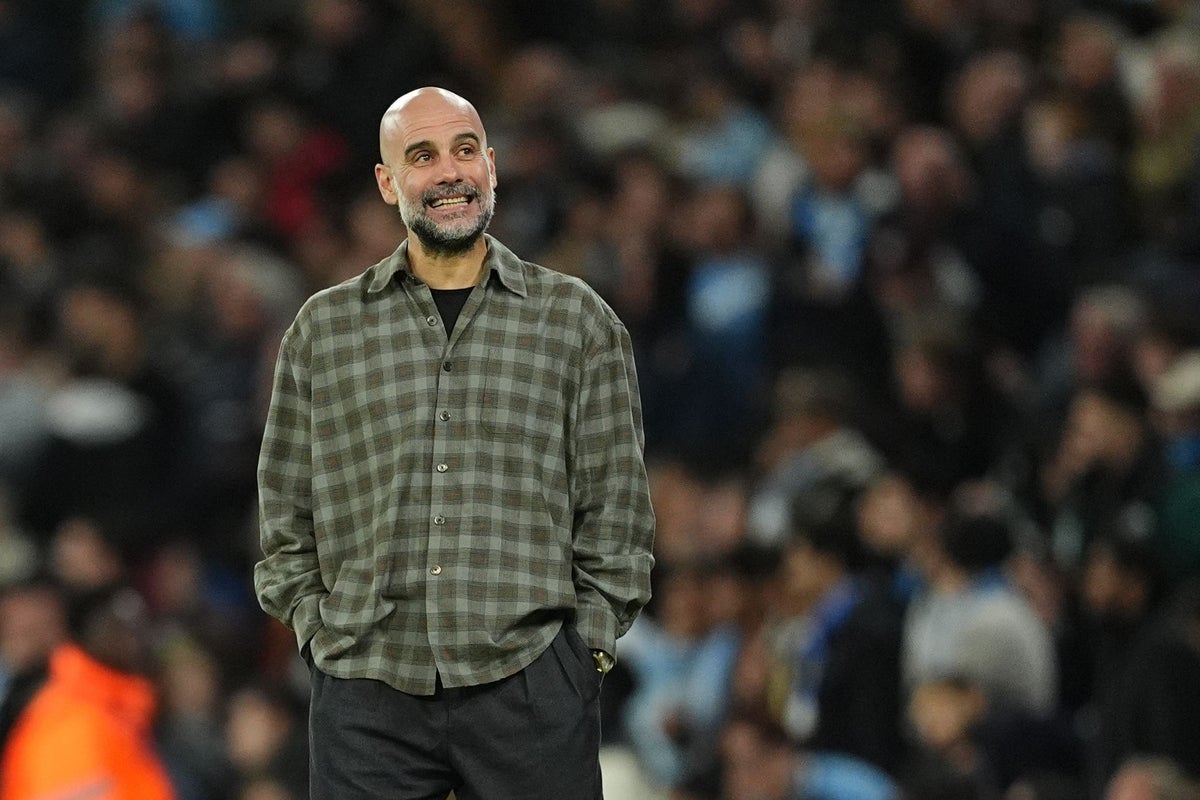
Guardiola’s Champions League Quest: A Tale of Near Misses and Lingering Doubts
The air at the Etihad Stadium was thick with anticipation, a stark contrast to the somber mood that descended as Manchester City’s Champions League dreams were once again dashed. For Pep Guardiola, the architect of so much domestic dominance, the continental prize remains an elusive phantom, raising questions about his legacy at the club. This latest setback, a gut-wrenching penalty shootout loss, echoes the painful goodbyes of footballing legends, leaving fans and pundits alike to ponder what might have been.
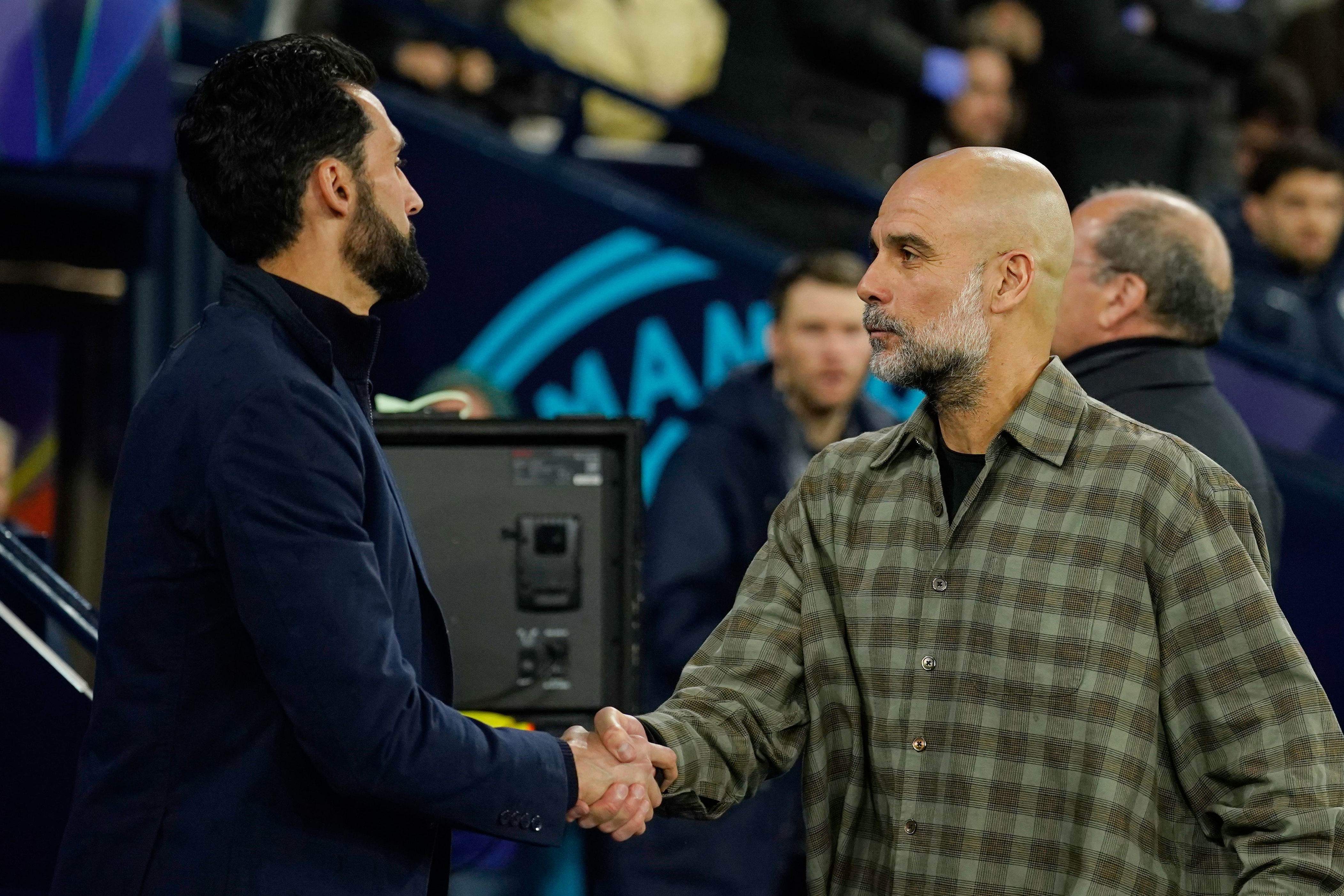
The parallels have been drawn, inevitably, to Sir Alex Ferguson’s final campaign with Manchester United. In 2013, a controversial red card to Nani in a crucial tie against Real Madrid contributed to a defeat that marked the end of an era. Now, in 2026, a similar narrative seems to be unfolding for Guardiola. While he remains contracted for another year, the whispers of his potential departure are growing louder. Unlike Ferguson, who openly acknowledged his impending exit, Guardiola has been more reserved, deflecting questions about his future with his characteristic blend of wit and pragmatism. He was notably magnanimous in defeat, refusing to blame Bernardo Silva for his dismissal or the referee, instead praising the victorious Real Madrid manager, Alvaro Arbeloa, and hinting at a bright future for the Spaniard. It’s a stark reminder that even the greatest managers were once building their own legacies.
Guardiola’s place among the managerial elite is beyond dispute. His trophy cabinet, particularly in domestic competitions, is overflowing. Yet, the accusation that he could have achieved even more at City, especially on the European stage, lingers. When pressed on the matter, Guardiola’s response, laced with his trademark sarcasm, hinted at a deeper truth: “I have to win six Champions Leagues to be recognised in that? Yeah, yeah for sure.” While an exaggeration, it underscores a valid point. It’s too simplistic to suggest he should have won more than his solitary Champions League title with City.
Consider the landscape: in the decade since Guardiola’s arrival, his former employers, Barcelona and Bayern Munich, have managed only one Champions League title between them. Real Madrid, in stark contrast, have amassed multiple triumphs in the same period, with Arbeloa potentially adding a fifth. This highlights the sheer unpredictability of knockout football, a sentiment echoed by City captain Bernardo Silva. “In a league [season] the best team wins 95 per cent of the time,” Silva remarked. “In the Champions League, the best team does not necessarily win.”
There have been moments when Manchester City, under Guardiola, have undeniably been the best team in Europe. Even during their historic Treble-winning season of 2022-23, they were not consistently dominant throughout the entire campaign. Arsenal, for instance, led the Premier League standings for a significant period. At certain junctures, teams like Luciano Spalletti’s Napoli showcased breathtaking football. Ultimately, City’s relentless consistency and tactical brilliance saw them prevail, though Guardiola himself acknowledged the crucial late saves by Ederson against Inter Milan in the final.
It’s fair to say City could have, and perhaps should have, added more Champions League titles to their honours board. However, a closer examination of their ten campaigns under Guardiola reveals a more nuanced picture. In his inaugural season, the inherited squad simply wasn’t strong enough. The last two campaigns have also seen earlier-than-expected exits in the Round of 16 and quarter-finals, respectively. “The last two editions we have been out [earlier],” Guardiola himself noted.
The seven seasons in between his debut and these recent campaigns represent the period of greatest potential, and perhaps, the most significant missed opportunities. The 2021 final against Chelsea stands out as a prime example. Guardiola’s selection, notably the absence of a dedicated defensive midfielder like Rodri or Fernandinho, and the deployment of Ilkay Gundogan in a deeper role, has been widely debated as a tactical misstep. Other selection dilemmas have also come under scrutiny: Gundogan on the right wing at Anfield in 2018, Savinho starting in the Bernabeu last week, and the three centre-backs against Lyon in 2020. In 2019, starting Kevin De Bruyne on the bench in the first leg against Tottenham also raised eyebrows, though that tie was ultimately decided by a multitude of factors beyond just team selection.
Throughout Guardiola’s tenure, City have experienced periods of sheer bad luck, but also recurring vulnerabilities. As Real Madrid have repeatedly demonstrated, a susceptibility to swift, clinical counter-attacks has proven to be their undoing. While they exited the 2023-24 competition unbeaten, apart from the penalty shootout, their previously formidable 26-game unbeaten run in the Champions League has been followed by a concerning nine losses in seventeen matches. Their recent aggregate defeats to Real Madrid – 6-3 and 5-1 – suggest that, at the highest level, they are being outmaneuvered.
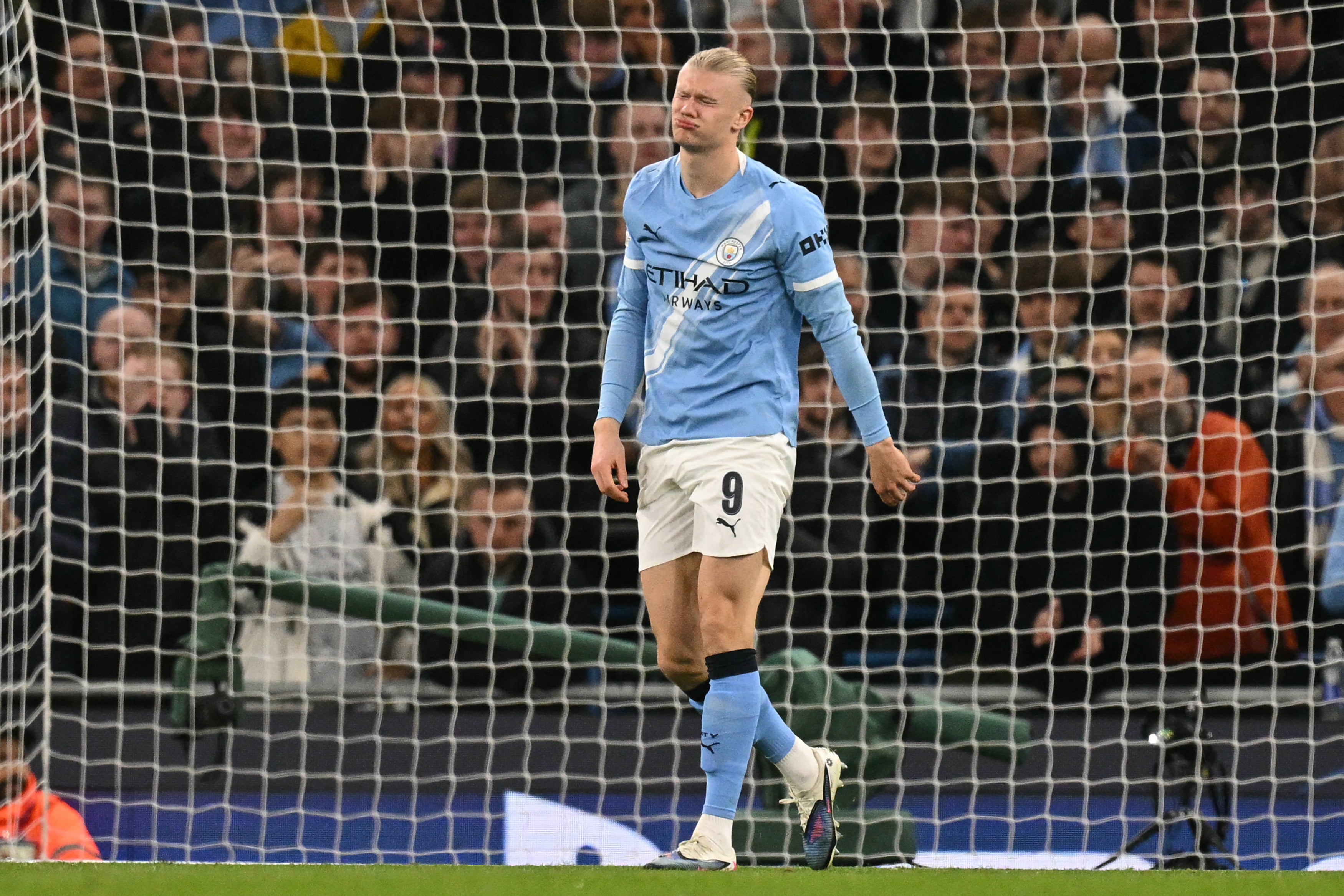
The pursuit of a quadruple, which theoretically remained alive until mid-March, now appears to be a distant fantasy. Much like their chances of conquering Europe in the final year of Guardiola’s contract, barring an extraordinary turn of events. Real Madrid, even without the talismanic Jude Bellingham and without needing peak Kylian Mbappe, possess a formidable array of world-class talent. Their inspirational core of Thibaut Courtois, Fede Valverde, and Vinicius Junior proved too much for City. Arguably, City can only boast two undisputed world-class individuals in Erling Haaland and Gianluigi Donnarumma, with Rodri needing to rediscover his absolute best form to be considered a third.
Alvaro Arbeloa spoke of the depth of City’s squad, perhaps a reaction to the previous year when injuries exposed its limitations. While the team is replete with quality players, it lacks the truly exceptional, game-changing individuals that define the very elite. Guardiola has assembled a collection of fine footballers, but not necessarily of the calibre that De Bruyne and his peers exhibited at their zenith. This, in turn, complicates selection. The players, while different in their attributes, are often relatively interchangeable. Guardiola’s choices in Madrid, starting with Marc Guehi, Nico O’Reilly, Antoine Semenyo and Savinho, and in Manchester, with Rayan Ait-Nouri, Matheus Nunes, Tijjani Reijnders and Rayan Cherki, highlight this. While the tactical decision to deploy a front four in the Bernabeu was questionable, the overall talent pool in both legs remained remarkably similar.
This is a team in transition, a side navigating a period of change. “We are not a complete team,” Guardiola candidly admitted. While individual performances, like Abdukodir Khusanov’s impressive display, offer glimpses of potential, the team as a whole, while good, lacks the definitive identity that characterised Guardiola’s earlier successes at City. The direction of travel remains uncertain. Whether this summer or next, Guardiola will eventually step aside. “Everybody wants to fire me,” he quipped when asked about his future, a smile playing on his lips. He knows the truth – that he is highly valued. But when his tenure concludes, he will leave Manchester with a treasure trove of domestic medals, but a solitary, and perhaps frustratingly insufficient, Champions League crown.