Bionic Centaurs: The Wearable Robot Revolutionising Human Mobility
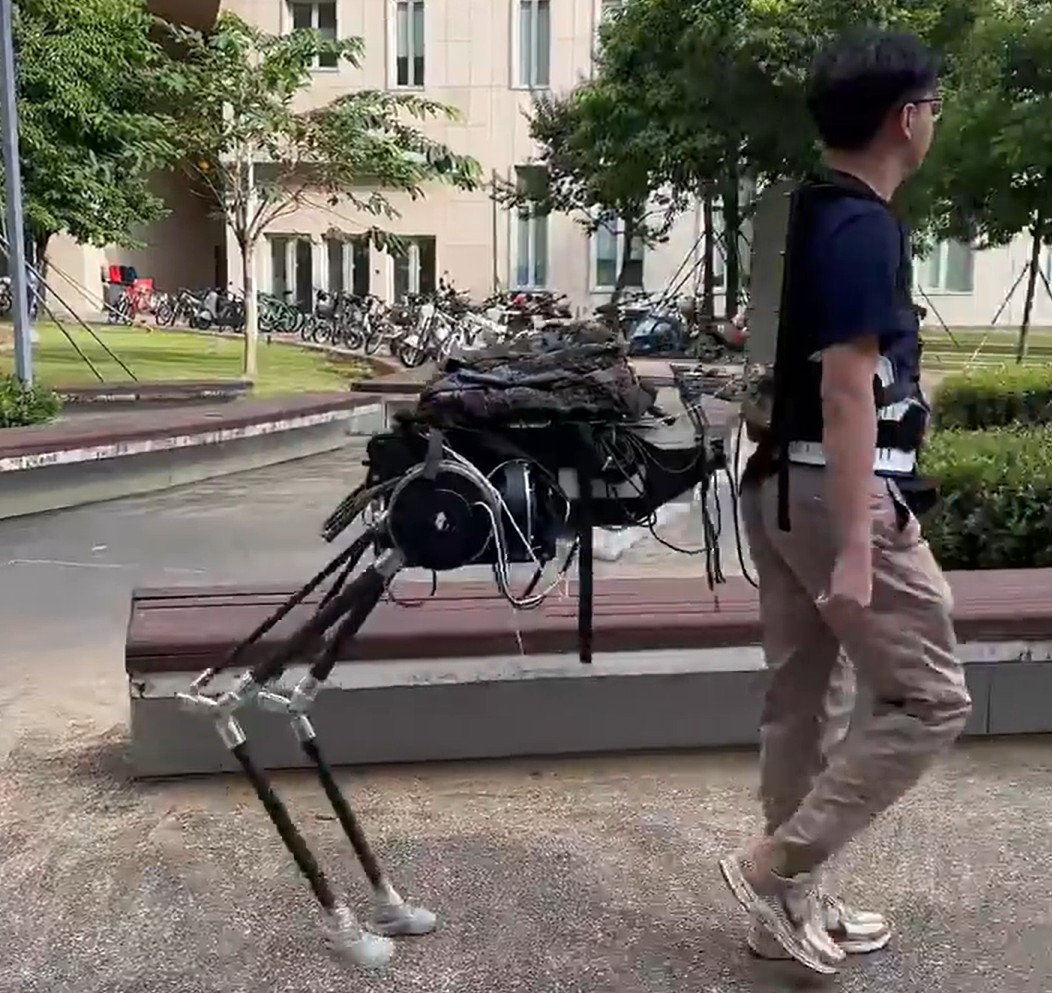
Imagine a future where carrying heavy loads feels like a stroll in the park, and navigating challenging terrain is no longer a daunting prospect. Scientists in China are making this a reality with the development of a groundbreaking wearable robot that effectively transforms humans into “bionic centaurs.” This innovative system equips users with two additional mechanical legs, creating a powerful human-robot hybrid capable of moving in a four-legged configuration, reminiscent of the mythical half-horse, half-man creatures.
Developed by an accomplished team at the Southern University of Science and Technology in Shenzhen, this wearable platform is ingeniously designed to synchronise its movements with the user. More than just a passive companion, it actively supports a significant portion of the weight typically borne by a person, especially when carrying heavy loads.
The Centaur System: A Symbiotic Partnership
The core of this revolutionary technology, led by researchers Zhixin Tu, Yihao Jiang, and Chenglong Fu, is the “Centaur robot.” This system comprises two independent robotic legs, each with three degrees of freedom (DoF), and a robotic torso. Crucially, these robotic components are coupled with the human user via a passive softening elastic mechanism. This sophisticated integration forms a seamless human-Centaur quadruped system, where the robotic legs work in tandem with the wearer.
This unique configuration offers a dual benefit: it optimises the vertical distribution of load, meaning the weight is spread more evenly, and it provides a horizontal forward force that acts through the user’s centre of mass during locomotion. The researchers highlight the “compliance-based interaction,” which ensures a natural and responsive connection between human and machine.
The robotic legs move in harmony with the wearer, effectively sharing the burden of carrying weight and providing a helping hand – or rather, leg – to propel forward motion.
Adapting to Every Step and Terrain
The experimental results from the Centaur robot are compelling. The team reports that the system demonstrates remarkable adaptability, smoothly adjusting to variations in human walking direction and speed. This seamless collaboration allows the human-robot duo to traverse diverse and challenging terrains with unprecedented ease.
A key differentiator of this new system, compared to traditional exoskeletons that directly attach to a person’s legs, is its unique interface. Instead of being strapped directly to the user’s limbs, the Centaur robot acts as a separate pair of robotic limbs connected to the wearer through an elastic mechanism worn on the back.
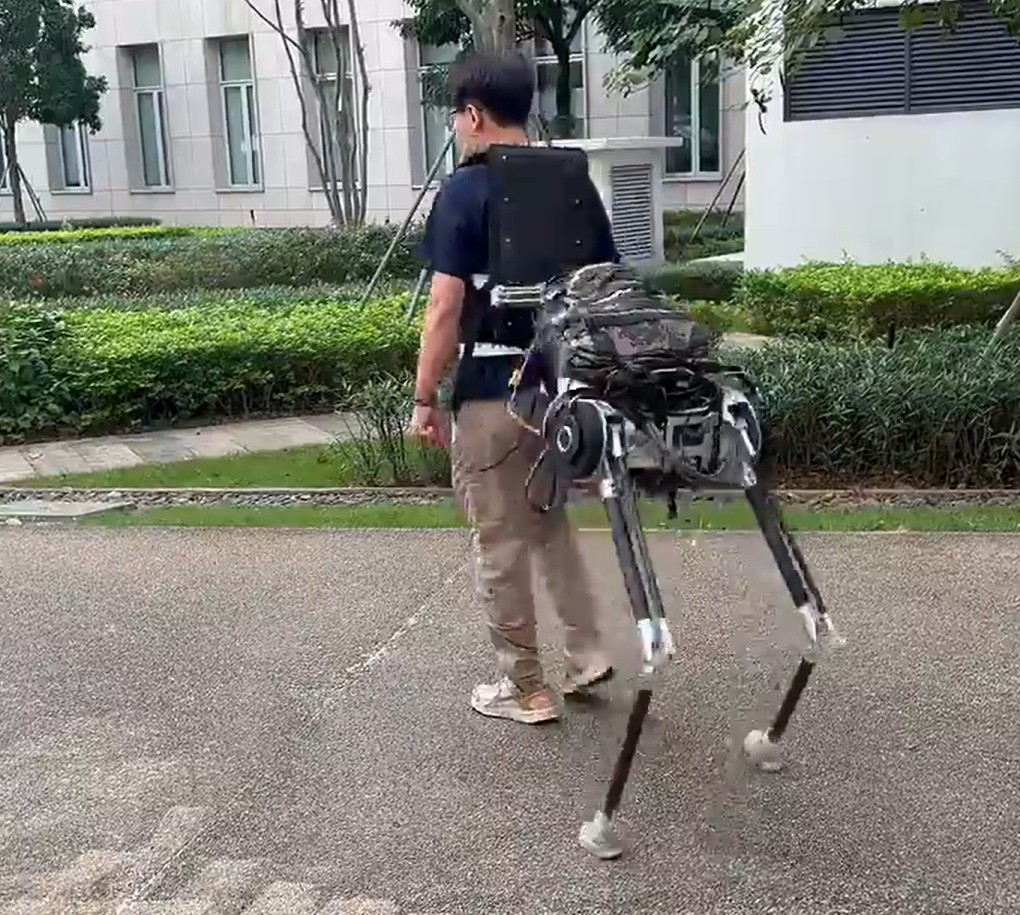
This innovative design allows the robotic legs to shoulder a substantial portion of the weight-bearing responsibilities, freeing the human user to concentrate on maintaining balance and navigating their environment.
Quantifiable Benefits: Reduced Effort, Enhanced Performance
The impact of the Centaur robot on human effort is significant and measurable. In tests where participants carried a substantial load of approximately 20kg (44lb), their metabolic energy expenditure decreased by a striking 35%. Furthermore, the pressure experienced on their feet was reduced by around 52% when compared to walking the same distance without the robotic assistance. This translates to a dramatically more comfortable and less fatiguing experience when undertaking strenuous tasks.
The system functions as a hybrid walking mechanism, where the robotic legs contribute both propulsion and crucial weight support. Under lighter loads, the elastic connection between the human and robot remains relatively firm, ensuring good coordination and a unified sense of movement. However, as the weight increases, the system intelligently becomes more flexible. This increased compliance allows the robotic legs to absorb a greater share of the applied force and carry a more significant portion of the overall load.
This dynamic adaptation means the human user can focus their energy on the more intuitive aspects of movement, such as steering and maintaining balance, while the robot diligently handles the bulk of the mechanical work required to transport the load.
Advanced Control for Seamless Integration
To achieve this sophisticated level of coordination, the research team developed advanced motion-planning and control systems. These systems are specifically engineered to enable the robotic legs to precisely match the user’s speed and direction of travel, creating a truly integrated experience.
During extensive trials, the researchers observed that the robotic legs were capable of supporting more than half of the carried weight. Remarkably, this was achieved while still allowing participants to maintain a natural and unhindered walking pattern.
Future Applications: Transforming Industries
The potential applications for these advanced wearable robots are vast and transformative. The research team envisions their technology playing a crucial role in assisting workers who regularly transport heavy equipment across challenging environments.
Key sectors that stand to benefit include:
- Military Logistics: Enabling soldiers to carry heavier equipment and supplies over long distances and difficult terrain with reduced fatigue.
- Disaster-Relief Operations: Facilitating the rapid and efficient delivery of essential supplies to affected areas, even in the aftermath of natural disasters.
- Industrial Transport: Improving the safety and efficiency of moving heavy materials in factories, warehouses, and construction sites.
The groundbreaking research detailing this innovative human-robot collaboration was recently published in the esteemed journal, The International Journal of Robotics Research. This development signals a significant leap forward in the field of human augmentation and promises to redefine the capabilities of human mobility.