F1’s New Regulations Under Scrutiny After Chinese Grand Prix Blunder
The dawn of Formula 1’s new technical era, marked by a suite of revamped regulations, has been met with widespread criticism from drivers, pundits, and fans alike. While the season is still in its infancy, a seemingly minor incident at the recent Chinese Grand Prix has sharply illuminated the intricate and, for some, baffling complexities embedded within these new rules, particularly concerning the sophisticated energy recovery and deployment systems.
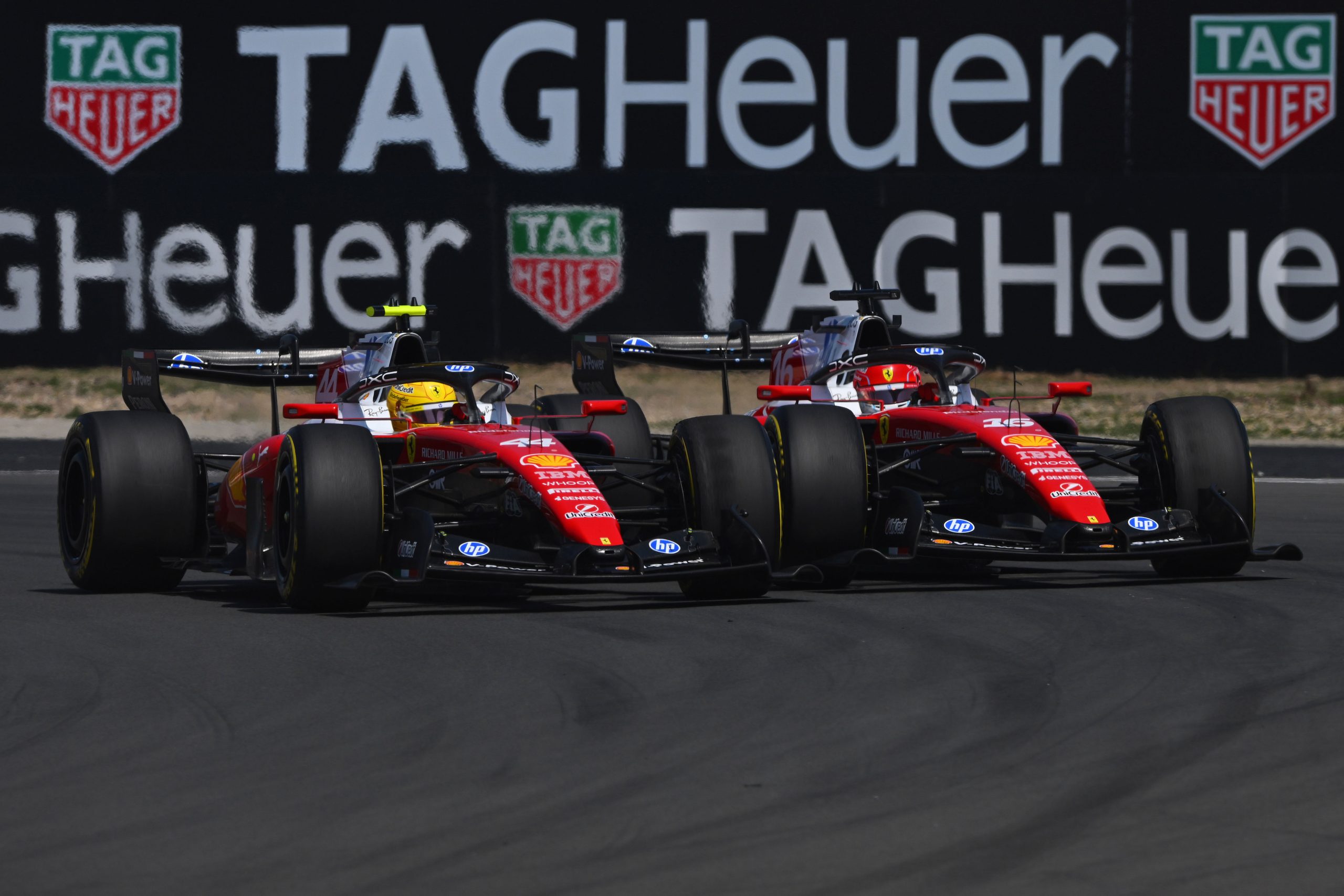
A detailed analysis, utilising telemetry data and presented in a YouTube video by The Race, has brought to light an instance where Ferrari’s Charles Leclerc was significantly hampered on his final flying lap during sprint qualifying. The data revealed that despite setting a personal best time in a sector, Leclerc experienced a substantial drop in top speed down the circuit’s main straight, a phenomenon that left him bewildered.
“What the hell is happening? This deployment. My god,” Leclerc exclaimed during the lap, his frustration palpable as he grappled with an unexpected loss of performance.
Jonathan Noble, an analyst, believes this specific event serves as a prime example of the perceived illogical nature of the current regulations. The core of the issue stemmed from a minuscule correction Leclerc made after a slight rear-end wobble exiting Turn 10. To regain control, he momentarily eased off the throttle from 100% to 95%.
This seemingly insignificant throttle input, a quirk of the new regulations, triggered an unexpected surge of electrical power deployment on the short straight between Turns 10 and 11. While this brief burst provided a marginal advantage in that specific section, it crucially depleted the available electrical energy reserves. Consequently, Leclerc found himself with significantly less power to deploy on the subsequent 1.2-kilometre back straight, a deficit that more than negated the earlier gain.
The ultimate outcome was a 15km/h reduction in top speed and an approximate half-second loss on his lap time. While it still represented his fastest lap of the session, the potential for a much greater improvement was evidently curtailed. Experts suggest that without this issue, Leclerc, who ultimately qualified sixth, might have been in contention for a front-row start. He went on to secure a second-place finish in the sprint race and a fourth in the main Grand Prix.
“We finally get, I think, not only a proper picture of how these cars are, but also the complexities, the madness as one team boss described to me, of the rules and how difficult it is to drive, to not only get the best out of these cars, but to understand what’s going on,” Noble commented, underscoring the profound difficulty drivers face in mastering these intricate systems.
He further elaborated on the telemetry, stating, “You look at the telemetry data and we can see it here, all lap time bleeds away on that back straight. The peak speed doesn’t go as high. He’s up to 15kmh slower all the way down the back straight.”
Noble highlighted the counter-intuitive nature of the energy management. “Our understanding normally is how you harvest (energy) going into a corner basically decides how good your deployment is coming out of it. But if we look at the previous section at turns 11, 12 and 13 there’s very little difference (between his fastest two laps) so it doesn’t seem to be an obvious explanation. You need to look much further back in the lap to work out what’s happened.”
He continued to dissect the anomaly: “Now you can look at that straight between turns 10 and 11 and you can see there’s a lot more speed in that second lap from Leclerc. Much more power is being deployed, and that doesn’t particularly make sense. The reason now we can see, there is a slight throttle lift … and this bizarrely, due to quirks in the rules, triggers a power boost randomly. That power boost burns through more power than he wants and then leaves him without power coming down the back straight.”
Co-host Edd Straw described this revelation as the “smoking gun” in the ongoing debate surrounding the efficacy and intelligibility of the new regulations.
Despite the mounting criticism, F1 management opted against immediate rule changes ahead of the Suzuka weekend. However, the ensuing five-week hiatus before the Miami Grand Prix, a gap created by the cancellation of the Middle East double-header, may provide a crucial window for reflection and potential adjustments.
For Australian Formula 1 enthusiasts, the timing of the Japanese Grand Prix in Suzuka offers a welcome respite from the often challenging time zones for European races. The action kicks off with practice sessions commencing midday Friday AEDT, followed by qualifying at 5pm on Saturday, and the main race commencing at 4pm on Sunday. This favourable schedule allows fans to immerse themselves in the racing action without the need for late-night viewing until the Azerbaijan Grand Prix in September.