Launch of the Enterprise Content Management System (ECMS) Marks a New Era for Nigeria’s Marine and Blue Economy
The Federal Ministry of Marine and Blue Economy has officially launched its Enterprise Content Management System (ECMS), marking a significant step forward in the Ministry’s digital transformation and institutional reform initiatives. This development is seen as a pivotal moment in Nigeria’s efforts to reposition the marine and blue economy as a key driver of economic growth and global competitiveness.
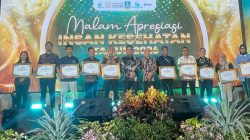
The launch was conducted by the Minister of Marine and Blue Economy, Dr. Adegboyega Oyetola, and the Head of the Civil Service of the Federation, Mrs. Didi Esther Walson-Jack, during the Ministry’s Fourth Quarter 2025 Stakeholders and Citizens Engagement event held at the Transcorp Hilton Hotel in Abuja. The gathering brought together a wide range of stakeholders from across the marine and blue economy value chain, under the theme: “Positioning Nigeria’s Marine and Blue Economy for Investment, Innovation and Expansion: The Pathway.”
Dr. Oyetola emphasized that this engagement represents a defining moment in Nigeria’s journey to elevate the marine and blue economy as a critical pillar of economic diversification. He stated that the forum was designed to deepen transparency, accountability, partnership, and shared ownership of reforms aligned with the Renewed Hope Agenda of President Bola Ahmed Tinubu.
Strategic Benefits of the ECMS
Speaking about the launch of the ECMS, the Minister described the platform as a strategic investment that goes beyond internal administration. It aims to drive efficiency, transparency, accountability, and improved service delivery within the Ministry. “A digitally enabled Ministry is a more responsive Ministry,” he said. “Through the ECMS, we are streamlining workflows, strengthening records management, improving decision-making, and enhancing our capacity to support investors, operators, and partners with speed, clarity, and integrity.”
The Minister highlighted the strategic importance of the marine and blue economy, noting that Nigeria’s extensive coastline, vast inland waterways, and strategic geographic location offer unique opportunities to harness maritime trade, fisheries, aquaculture, logistics, tourism, and allied services for inclusive growth, job creation, and regional integration.
Progress and Achievements
Over the past year, the Ministry has recorded several key achievements, particularly in the fisheries and aquaculture sectors. Local fish production increased from 1.1 million metric tonnes to 1.4 million metric tonnes. While this still falls short of the country’s annual consumption of 3.6 million tonnes, the Minister noted that the progress reflects targeted interventions, improved coordination, technology deployment, and better sectoral planning.
Dr. Oyetola also announced that the Ministry has begun engaging financial institutions to provide single-digit interest loans for fishermen nationwide. These loans aim to expand access to affordable finance, boost productivity, empower operators, and curb illegal, unreported, and unregulated fishing.
Global Recognition and National Acknowledgment
On the international stage, the Minister pointed out that Nigeria’s election into Category C of the International Maritime Organization (IMO) and its emergence as Chairman of the Conference of Ministers of the Fisheries Committee for the West Central Gulf of Guinea reflect renewed global confidence in Nigeria’s maritime leadership, governance reforms, and policy direction.
He added that the Ministry’s reform efforts have earned national recognition, including a 96 per cent performance rating by the Central Results Delivery Coordination Unit (CRDCU), positive assessments from the Presidential Enabling Business Environment Council (PEBEC), and recent data from the National Bureau of Statistics ranking water transportation among the top five fastest-growing sectors of the Nigerian economy.
Support from Key Stakeholders
In her remarks, Mrs. Didi Esther Walson-Jack commended the Ministry for its far-reaching reforms and notable achievements, especially the successful go-live of the ECMS. She described the digital platform as a significant step toward paperless governance, improved records management, and faster, more efficient service delivery within the public service. According to her, the ECMS will enhance institutional memory, reduce bureaucracy, improve accountability, and align the Ministry with the Federal Civil Service’s broader digital transformation agenda.
Dr. Pius Akutah, Executive Secretary/Chief Executive Officer of the Nigerian Shippers’ Council, praised the consistency of the Minister and his team in carrying out the President’s agenda. He added that the event is focused on positioning Nigeria’s Marine and Blue Economy for investment, innovation, and expansion, which is crucial for advancing the sector to the next level.
Conclusion
The event attracted a broad array of industry stakeholders, including regulators, private sector operators, development partners, investors, and representatives from diverse segments of the marine and blue economy. All participants reaffirmed their commitment to supporting the sector’s growth and sustainability.