Introduction to Hoya R72 Infrared Filter
Hoya, a company that started in 1941 in Tokyo, has grown into a global med-tech and technology leader. It is currently the world’s largest supplier of optical glass, holding approximately 50% of the market share for optical glass production. Given this background, it’s no surprise that Hoya knows a thing or two about creating high-quality filters for photography. One such product is the Hoya R72 infrared filter, designed to block visible light and allow only a narrow band of infrared light with wavelengths between 760nm and 860nm.
The Hoya R72 can be used on standard cameras to achieve an infrared long-exposure effect. The light-blocking properties of the R72 extend exposure times by up to several minutes because most sensors have an IR cut filter installed, making them less sensitive to IR wavelengths. However, the resulting image has a red tint that needs to be converted to black and white.
To properly test the Hoya R72, I used a Canon EOS R that had been converted to full-spectrum infrared photography by experts at Advanced Camera Services. This allowed me to shoot infrared images at faster shutter speeds, more akin to ‘normal’ photography.
Specifications of Hoya R72 Infrared Filter
- Filter type: Screw-in circular
- Filter threads: 46, 49, 52, 55, 58, 62, 67, 72, 77, 82, 86 & 95mm
- Material: Aluminum
- Depth: 6mm (4mm when mounted)
- Weight: 38g (82mm)
Pricing of Hoya R72 Infrared Filter
The list price and ‘street’ price of Hoya’s infrared filters vary widely. For example, in the UK, the 72mm version was available at £149 in one retailer but as low as £72 in another online store. It clearly pays to shop around, but our pricing widget below does all the price hunting for you!
Prices also varied dramatically depending on the filter thread size. Some larger thread sizes demanded high prices, while others were surprisingly cheaper. For instance, the 55mm size actually cost less than the smaller 46mm filter. In the US, the smallest 46mm filter costs about $53, the 82mm option I tested costs $129, and the two largest options, 86mm and 95mm, jump to $268 and $303, respectively. That’s a lot more money for only a little more glass.
So the answer to the question of whether these filters are good value for money is: it depends. The best prices I found ranged from $53 / £42 to $265 / £240. Generally, those measuring between 46mm and 77mm were not overly expensive if you shop around, considering they come with Hoya branding and the quality expected from the world’s largest manufacturer of optical glass. However, pricing gets more complicated when you go to 82mm and beyond.
Design and Handling of Hoya R72 Infrared Filter
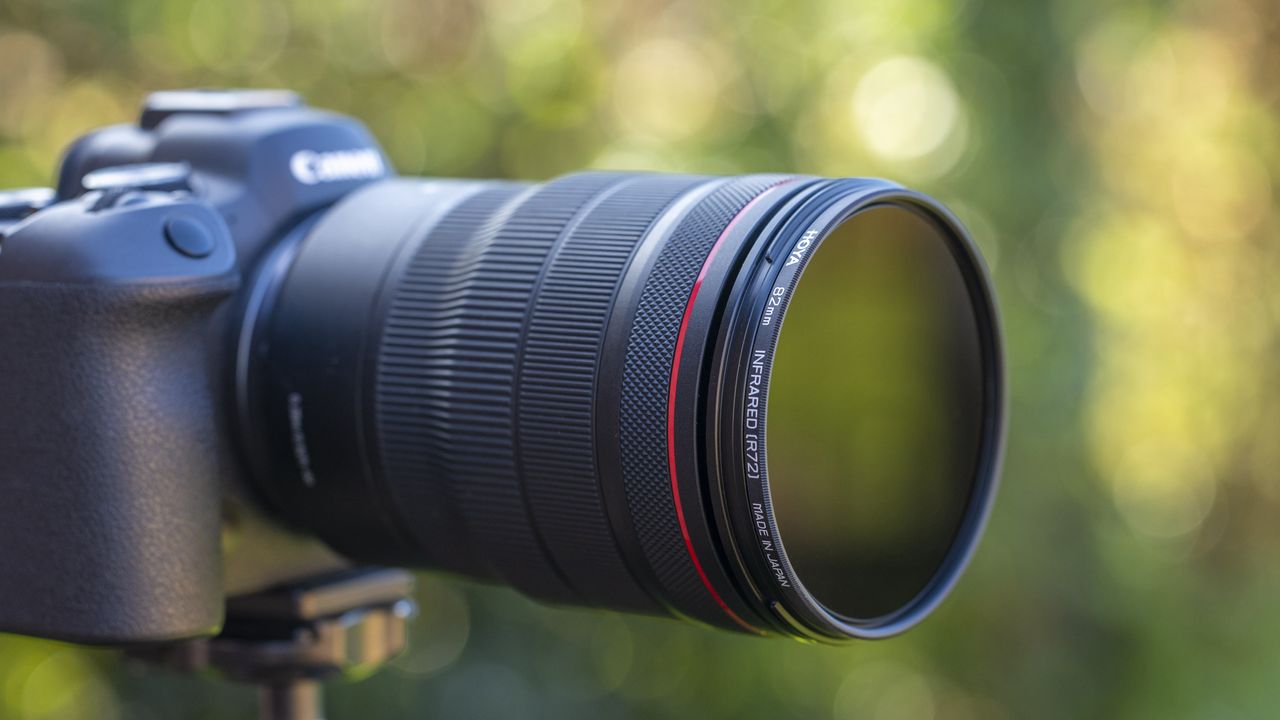
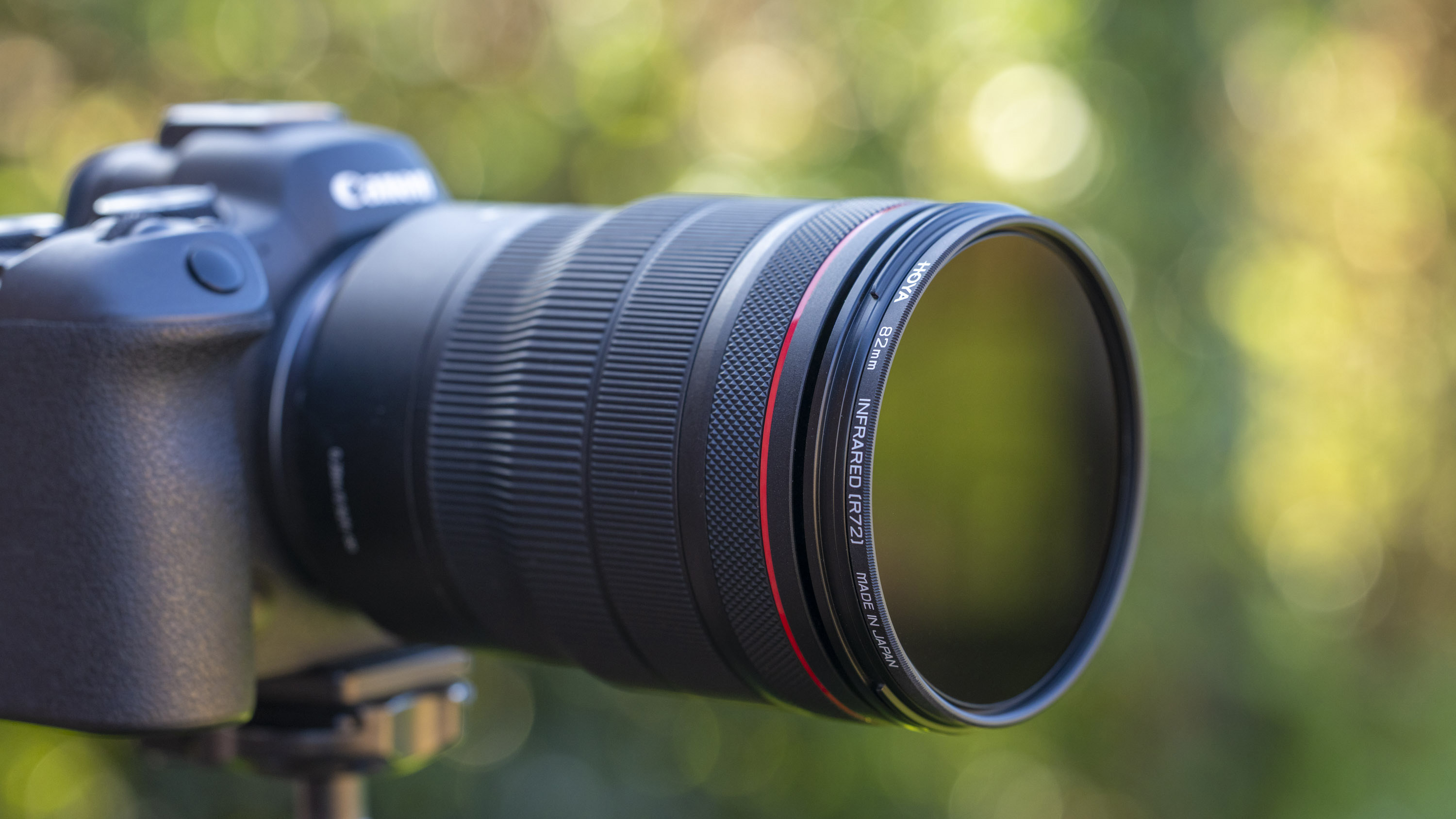
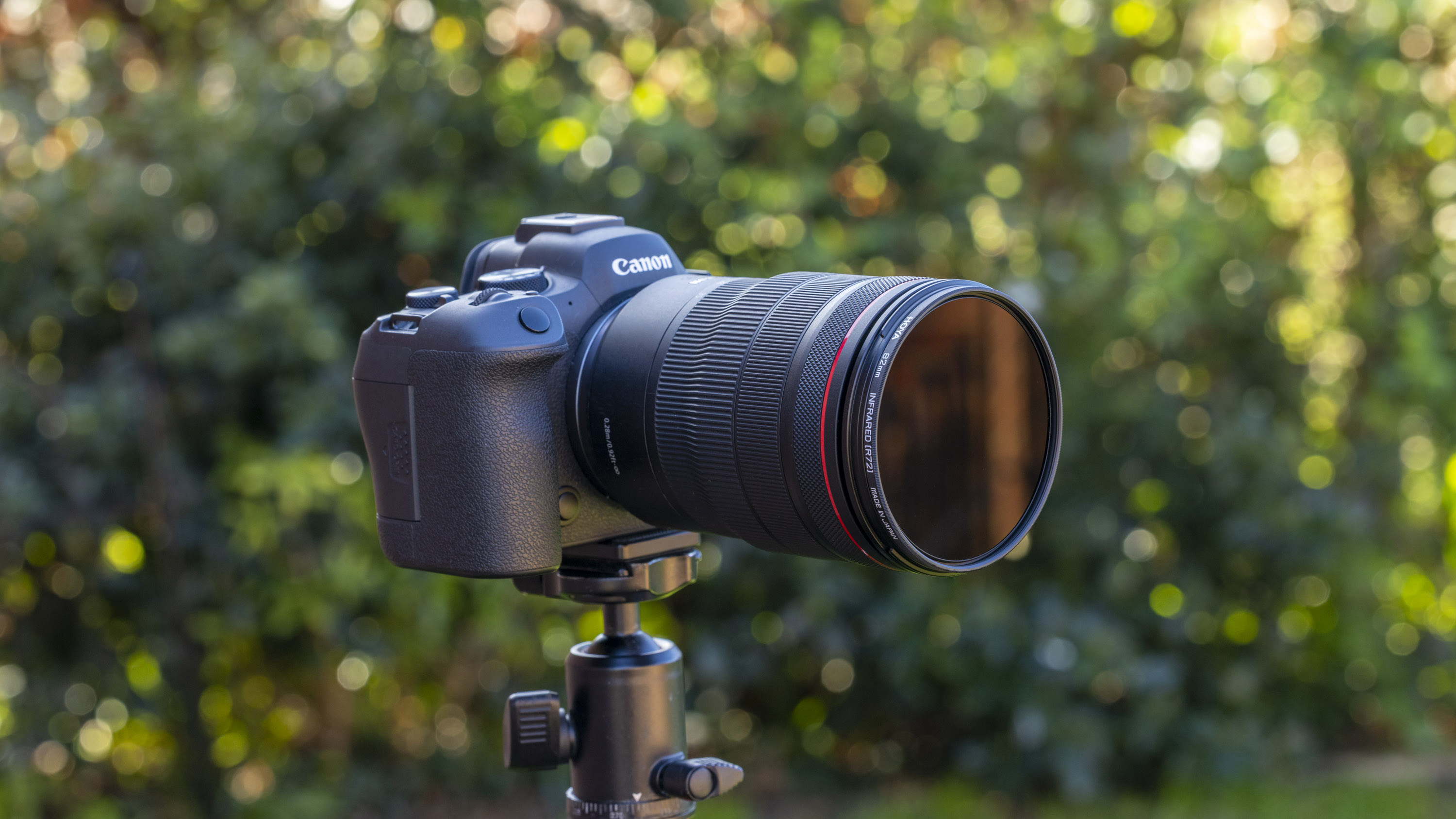
The Hoya R72 looks like a fairly standard screw-in filter, aside from the fact that the optical glass is pretty much pitch black, allowing only a narrow band of infrared light between 760nm and 860nm to pass through. Hoya claims it has a light transmittance rate of 95%.
This means on standard cameras, it acts rather like a strong ND filter by blocking out light and recording long exposures, though you will have to convert to a black-and-white infrared image to avoid the unpleasant red color cast. On a modified full-spectrum camera, like the EOS R I used, you’re still limited to shooting monochrome, but at much more usable ‘standard’ shutter speeds—fast enough to shoot handheld and without the need for a tripod.
The resulting images look more contrast-rich than standard black-and-white shots due to the way green foliage reflects IR light, giving vegetation bright white highlights, while blue skies absorb infrared and produce deep blacks.
The filter can be picked up in 12 different filter thread options, so there’s a very good chance you’ll be able to get one in your lens’s native front filter thread without the need for a step-up ring.
Most standard screw-in filters typically protrude by about 3mm, but the Hoya R72 sticks out a fraction more at 4mm. This deeper build and the possibility of stacking filters together increase the chance of the black aluminum frame appearing in shot when using ultra-wide focal lengths, which could result in vignetting. However, when shooting at my Canon RF 15-35mm f/2.8L IS USM lens’s widest 15mm focal length on full-frame, I couldn’t see any signs of vignetting.
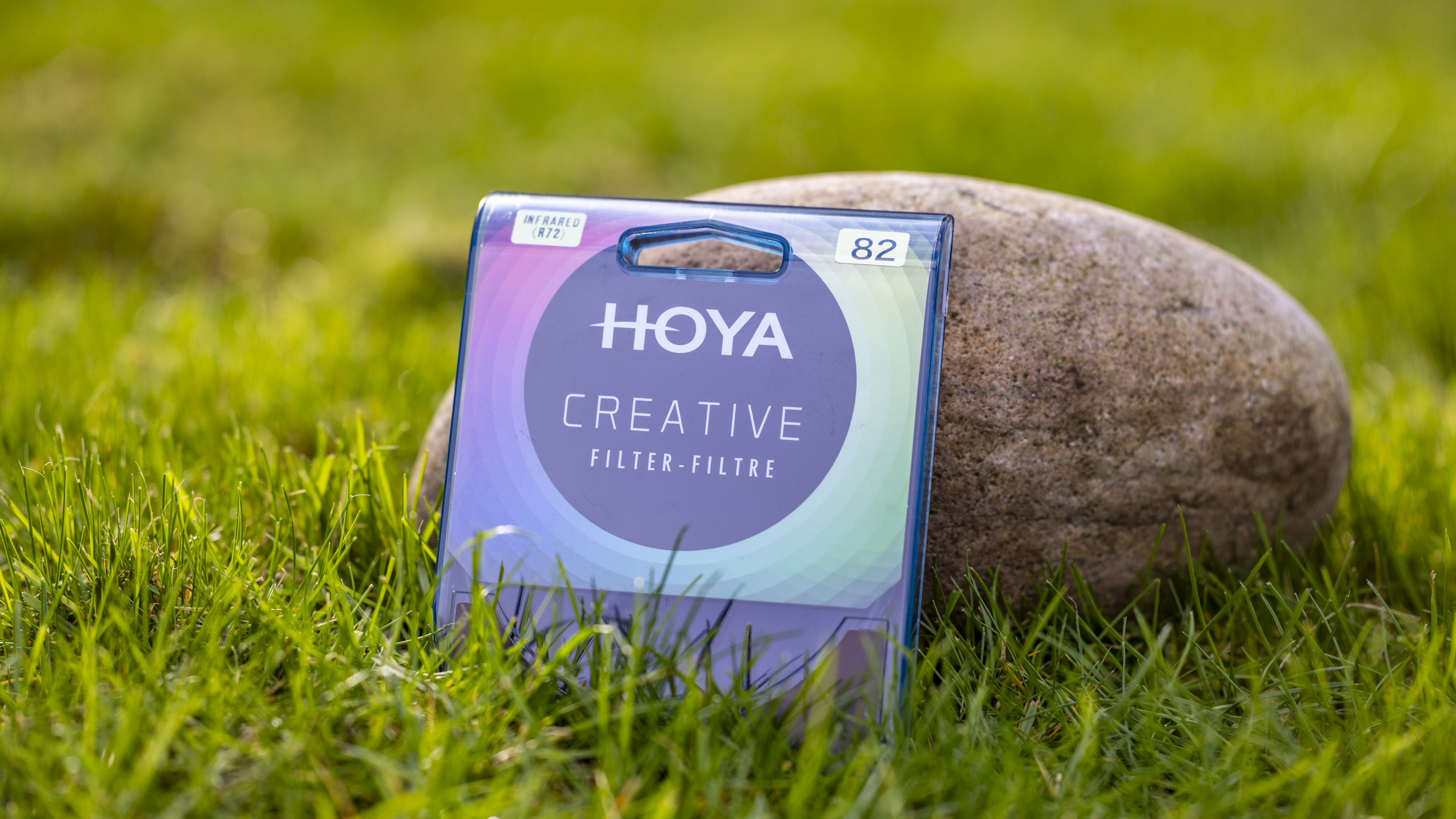
The Hoya R72 comes with a solid plastic hard case and has a piece of foam inside it to keep your filter protected. Hoya’s hard case was one of the best I’ve tested, with a good balance between protection and keeping the size of the case down to make it easy to slip into your camera bag or a coat pocket. It also opens easily, which is useful when trying to fit your filter quickly before the light changes.
Performance of Hoya R72 Infrared Filter
The infrared-passing properties of the Hoya R72 come from the glass substrate itself, rather than relying on a coating. Speaking of coatings, the R72 is pretty scant in this department with just a single layer on each side to tame reflections. Unfortunately, the R72 doesn’t have any extra coatings for scratch resistance or to repel oil and water.
For better coatings, you could consider Hoya’s sister brand Cokin, with its more premium Nuances Infrared 720, which boasts some of the best oil, water, and scratch-resistant coatings from all of the infrared filters I have tried.
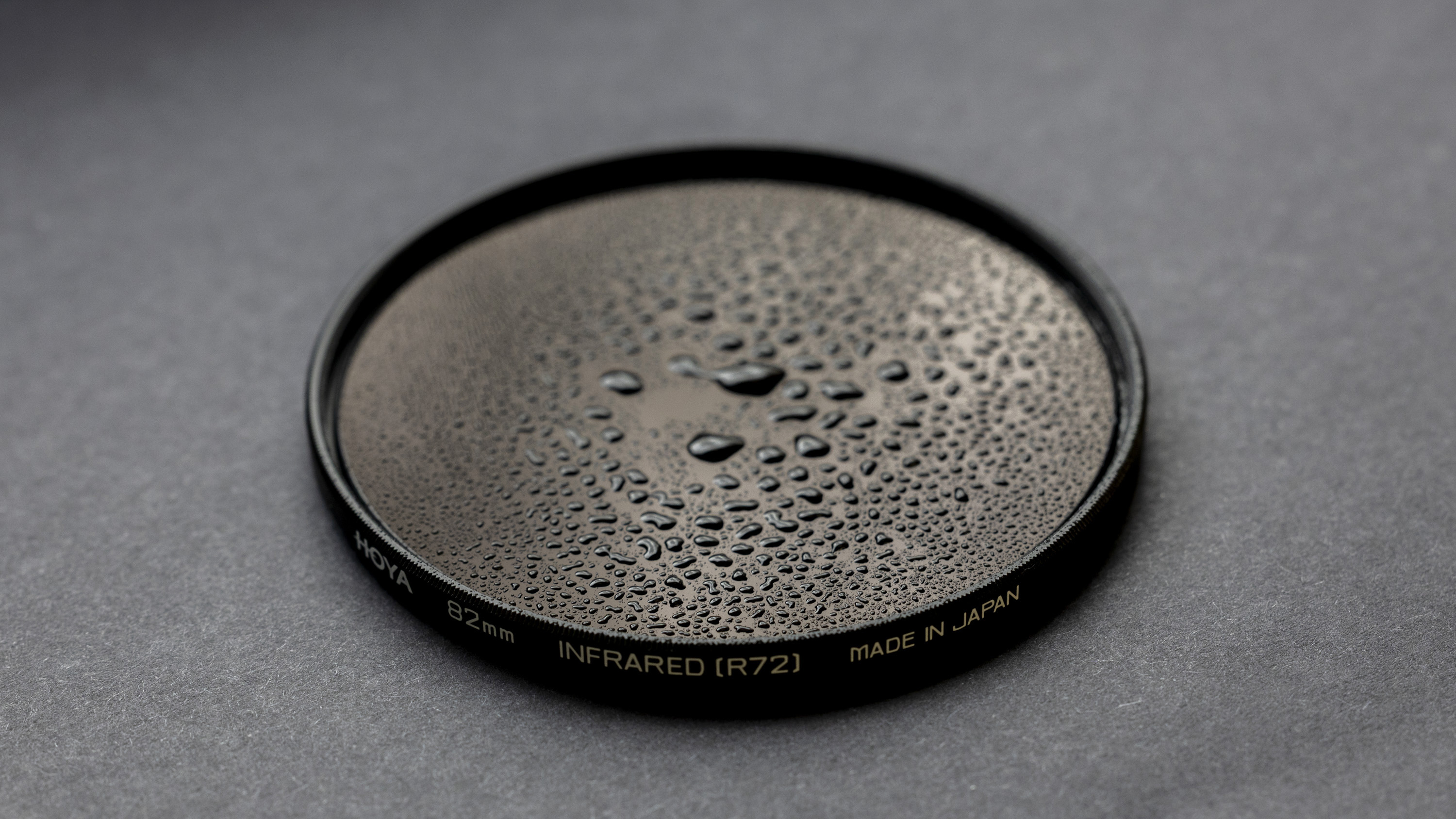
The Hoya R72 only allows in a thin band of light between 760nm and 860nm, ruling out the possibility of color infrared photography, which requires a lower cut around 590nm. However, it produces exceptionally good black-and-white infrared photos. On an IR-converted camera, which has had its IR cut filter removed, you can shoot black-and-white infrared images at shutter speeds close to standard, though there is still a reduction of about two stops, turning a 1/640 sec exposure without the filter into a 1/160 sec one with it in place.
You can also use the filter on normal non-converted cameras, though this requires a much longer exposure time, so you’ll be limited to exposures several minutes long because the sensor is so insensitive to IR light. I found it lengthened a standard shutter speed of 1/10 sec to 6 secs, essentially acting like a 6-stop ND filter.
As you can see from these test shots, the Hoya R72 does a great job of limiting wavelengths of light to the infrared spectrum, which provides the classic B&W infrared look, with green foliage turning white and blue skies turning a deep black.
Fine details did look a little soft with the R72 attached, though you really have to zoom in to around 200% to notice the difference. Sharpness is a little tricky to judge when it comes to infrared photography, as the contrast changes so dramatically with and without the filter attached.
Verdict on Hoya R72 Infrared Filter
Hoya’s R72 is a decent choice for black-and-white infrared photography. Those with non-converted cameras will be restricted to long exposures, which can look quite striking and dramatic. Those with a full-spectrum converted camera will be able to shoot handheld, with shutter speeds much closer to standard.
The Hoya R72 is available in a wide range of sizes between 46mm and 95mm, though the options between 46mm and 77mm offer the best value. The cost of filter sizes of 82mm and above can be quite considerable.
While the smaller filter sizes are reasonably priced – or at least can be if you find them discounted – they don’t have the strongest feature set, lacking oil and water-resistant coatings. Their rims are also quite deep at 4mm, although I didn’t experience any vignetting issues.
Overall, if you can pick them up at the right price, the Hoya R72 is a solid option that offers good-quality glass and a trusted name, but lacks the advanced coatings of more expensive rivals.
Features
★★★☆☆
Features are a little scant, with the biggest omission being the lack of oil, water, dust and scratch-resistant coatings.
Design
★★★★☆
The circular screw-in design is available in lots of size options though there’s no square variant. The filter rim is quite thick, which could cause issues with vignetting when stacked, and also has no knurling on the outer edge, so there’s not much to grip on to.
Performance
★★★★☆
The lack of water-resistant coatings made the filter hard to clean and very fine details were softened slightly. However, it delivers B&W shots with that punchy IR look that most photographers will be happy with.
Value
★★★★☆
The smaller filters are reasonably priced, but larger sizes can be disproportionally expensive and aren’t nearly as good value for money.
Alternatives
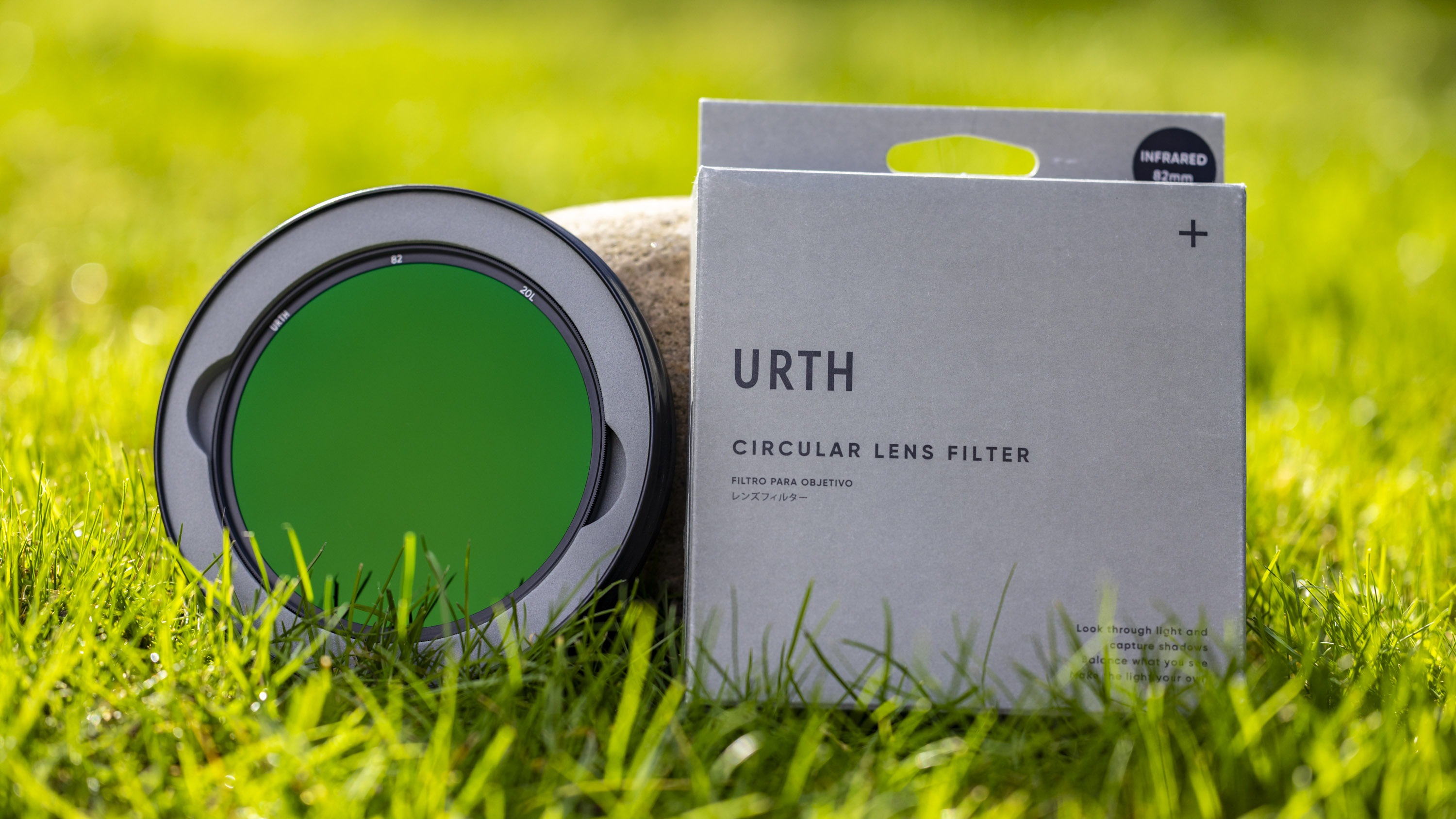
For those looking for quality on a reasonable budget, the Urth IR Filter Plus+ is a great choice and has brilliant features like oil and water-resistant coatings, though it’s only available in circular screw-in options.
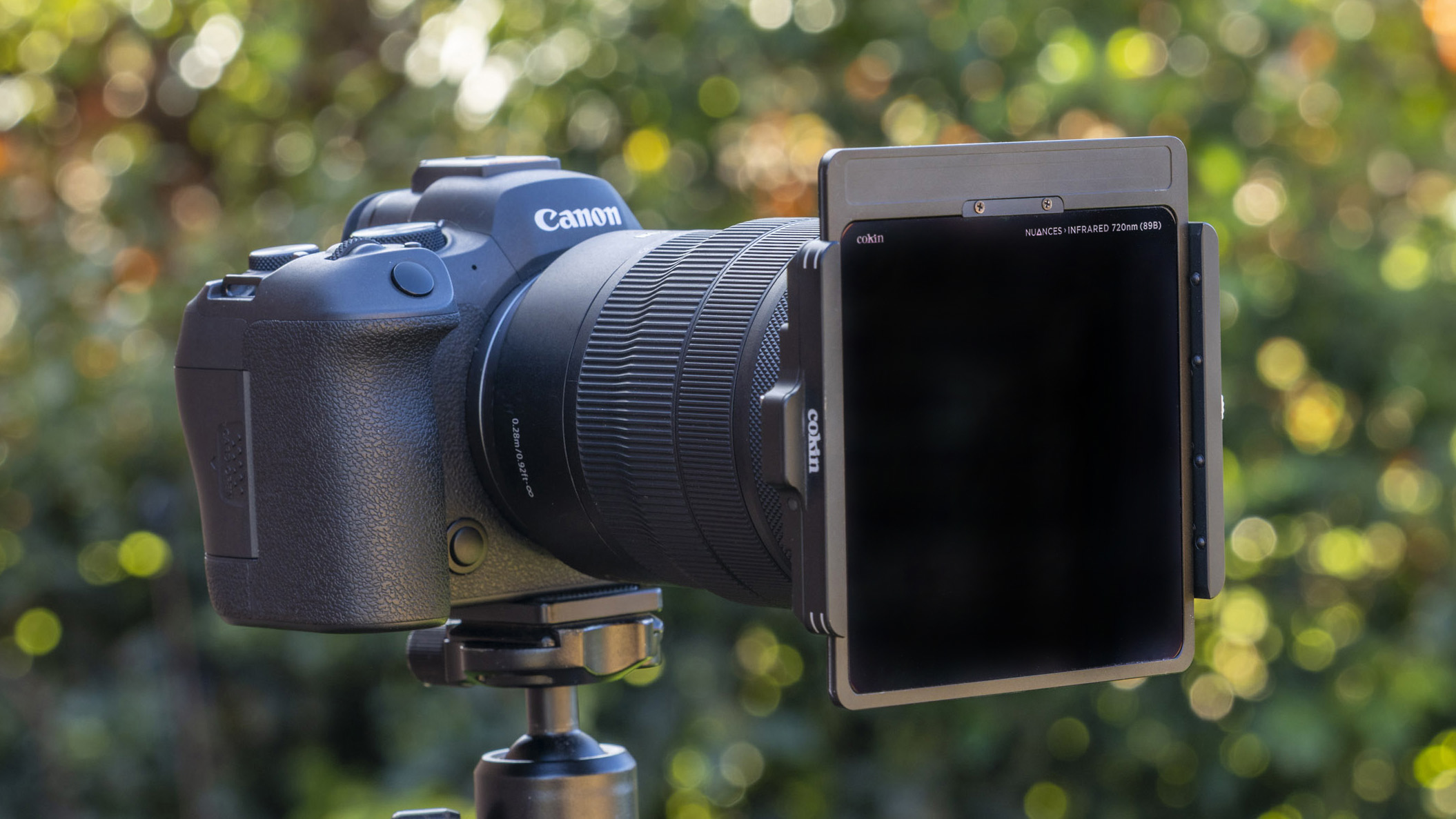
The Cokin Nuances Infrared 720 (89B) is a premium filter that demands a premium price. For working professionals making a living from infrared photography, this filter will deliver great results and has brilliant build quality and coatings, too.