A New Era in Marathon Running
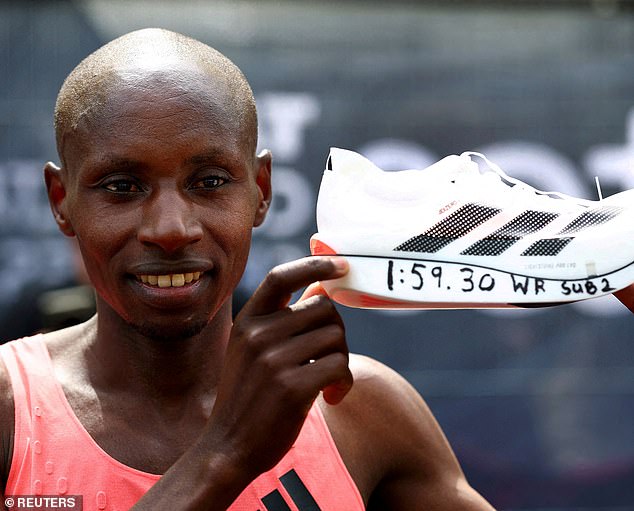
Last week, Sabastian Sawe made history by breaking the two-hour barrier in the London Marathon. The 31-year-old Kenyan completed the 26.2-mile course in just one hour, 59 minutes, and 30 seconds, averaging a blistering speed of 13.2 miles per hour (21.2 km/h). This remarkable achievement has sent shockwaves through the sporting world, but experts believe that this record might not last for long.
Scientists argue that athletes have not yet reached the absolute limit for marathon running, and it’s possible that even faster times could be achieved before the next Olympics in 2028. In the past, researchers estimated that the fastest possible time a human could run a marathon was one hour, 57 minutes, and 58 seconds. However, with advancements in training strategies, nutrition, and shoe technology, athletes may soon surpass this theoretical limit.
Dr Olivier Roy-Baillargeon, a running expert at The Running Clinic, told the Daily Mail: “Nothing tells us that this theoretical limit is an actual one. Of course, no one will ever run a marathon in 1:30. But could we see a 1:56, or even a 1:55 someday? I wouldn’t bet against it.”
The Evolution of Marathon Times
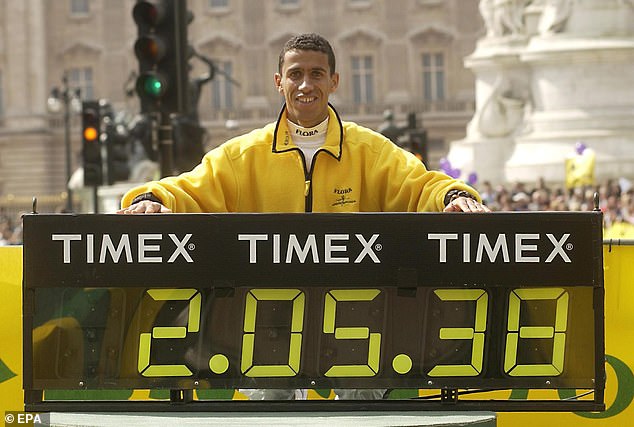
In recent decades, marathon times have been improving at an astonishing rate. Since Morocco’s Khalid Khannouchi set the world record at 2:05:42 in 1999, subsequent athletes have shaved more than five minutes off his time. By 2019, Kenya’s Eliud Kipchoge became the first person to complete a marathon in under two hours, albeit outside of competition conditions.
Less than a decade later, two athletes – Sabastian Sawe and second-place finisher Yomif Kejelcha – finished in under two hours during the London Marathon, which was a race condition.
Dr Peter Lamb, a biomechanics expert from the University of Otago in New Zealand, told the Daily Mail: “Marathon times are getting faster, largely because of the carbon-plated super shoes.”
These so-called ‘super shoes’ feature an aggressive ‘rocker’ profile, extremely tall foam cushioning, and stiff carbon-fibre plates. They return more energy from each stride into the runner’s step, adding a springy bounce that improves running efficiency. This means runners burn less fuel and oxygen for every step, enabling them to put more power into propelling themselves forward while keeping their legs fresh.

Predictions for Future Marathon Times
Experts have offered their predictions on how fast a marathon could be run:
- David Roche, ultramarathon runner and running coach: 1:56
- Professor Grégoire Millet, marathon expert from the University of Lausanne: 1:58
- Dr Olivier Roy-Baillargeon, running coach for The Running Clinic: 1:55
Studies have shown that super shoes can improve running efficiency by as much as four percent, with elite runners potentially benefiting even more. Dr Jean-Francois Esculier, clinical associate professor at the University of British Columbia, explained that these shoes also have a powerful psychological effect. Runners perform better if they believe their shoes are advanced technology.
“Runners could potentially be willing to push more if they believe they have the right tools to do it,” he said. “I believe the mental aspect of performance needs to be emphasized. In the world of performance, small details matter.”
After Kipchoge set his sub-two-hour marathon time wearing prototype Nike Alphafly shoes, World Athletics introduced strict restrictions on shoe design. However, highly efficient super shoes are still legal, provided they don’t exceed 40 mm in midsole height or contain more than one carbon-fibre plate.
The super shoes worn by Sawe during the London Marathon, the ADIZERO Adios Pro Evo 3, weigh less than 100g and pack in 39 mm of specialized high-energy foam for extra bounce.


Key Factors Driving Faster Times
Several factors are contributing to the rapid improvement in marathon times:
- Efficiency-enhancing super shoes – These shoes provide a springy bounce that improves running efficiency.
- Better fuelling and nutrition strategies – Athletes are consuming over 100 grams of carbohydrates per hour during races.
- More focus on durability – Modern training methods emphasize building physiological resilience.
- Massive volumes of running during training – Elite athletes now run up to 240km per week.
- Psychological advantages from the ‘Roger Bannister effect’ – As more runners break barriers, the collective mindset shifts.
- Better drafting from more athletes staying grouped at sub-two-hour pace – This creates a more efficient racing environment.
David Roche, an ultramarathon runner and running coach, noted that what was once considered an endurance limitation is now largely a fuelling limitation. Athletes today consume significantly more carbohydrates than previous generations, allowing them to maintain higher intensity for longer periods.


Training Strategies and Physiological Resilience
Part of what made Sawe’s performance in London impressive was his ‘negative split’, where he ran the second half of the marathon faster than the first. Dr Roy-Baillargeon explained that modern athletes are at the very limit of what is humanly possible, with the biggest change being a massive improvement in durability.
“The most important difference between current and previous generations of athletes is the emphasis on astronomical volumes of easy running,” said Dr Roy-Baillargeon. Methods developed by Italian coach Renato Canova involve running massive distances at gentle paces leading up to race day.
“These methods are becoming more common, and more runners will be hitting sub-two-hour splits in the future,” he added.
Professor Grégoire Millet, a marathon expert from the University of Lausanne, predicts that as more runners achieve sub-two-hour times, the ‘Roger Bannister effect’ will kick in, leading to even faster times. He estimates that a 1:58 marathon could be achieved before the 2028 Olympics in Los Angeles.