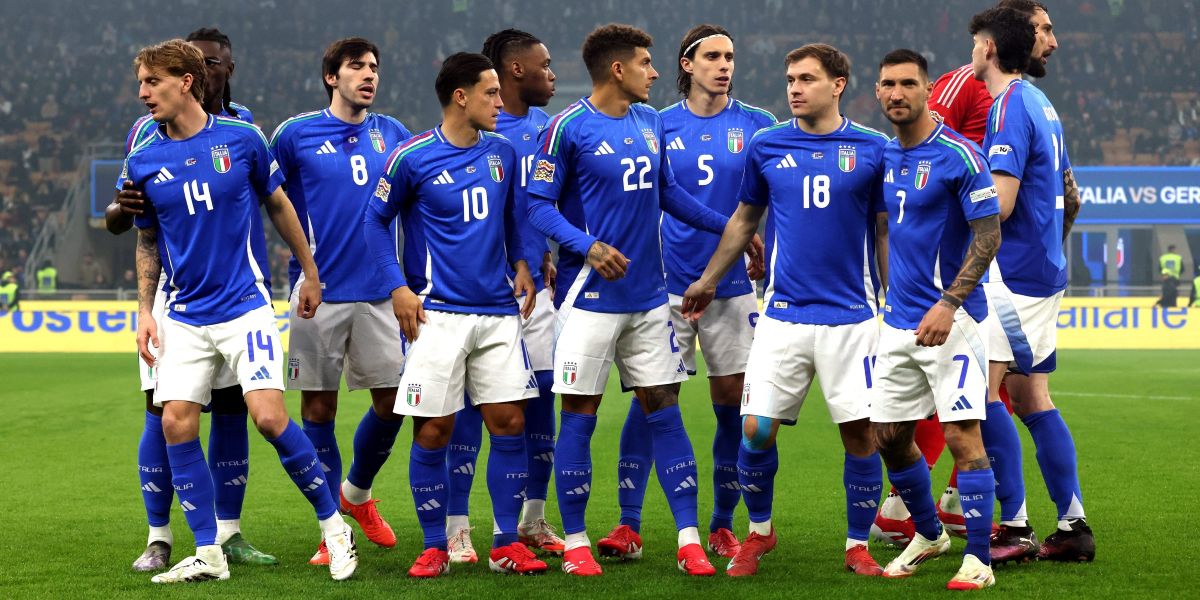
A Shocking Defeat and a Crisis in Italian Football
Italian football is in turmoil following a stunning penalty shootout loss to Bosnia and Herzegovina on Tuesday, marking the third consecutive failure for the national team to qualify for the FIFA World Cup. This defeat means the four-time World Cup champions, who last won in 2006, will miss the 2026 global tournament, extending a painful streak that began with their elimination in 2018.
The decisive playoff match, held in Zenica, Bosnia, saw Italy take an early lead in the 15th minute through Fiorentina forward Moise Kean. However, the game took a dramatic turn when Inter defender Alessandro Bastoni was sent off for fouling a Bosnian attacker. With a numerical advantage, Bosnia and Herzegovina equalized in the 79th minute via Haris Tabaković. The match eventually went to penalties, where Italy missed twice from the spot, sealing their fate and sending Bosnia to only its second World Cup as an independent nation.
A Nation in Shock
The magnitude of Italy’s absence from the World Cup is underscored by the country’s rich footballing history. Having lifted the trophy four times, the Azzurri’s repeated failures to reach the tournament—2018, 2022, and now 2026—have plunged the sport into a profound crisis. Italian sports daily Gazzetta dello Sport captured the national mood with a headline declaring it “the third apocalypse.”
This defeat is particularly painful given Italy’s recent success at Euro 2020, where they famously beat England on penalties at Wembley Stadium. However, their World Cup record since their 2006 triumph has been bleak, with group stage exits in 2010 and 2014 preceding the current qualification drought.
Italy defender Leonardo Spinazzola expressed the team’s devastation after the loss: “We still don’t believe it, that we’re out and that it happened in this manner. It’s upsetting for everyone. For us, for our families, and for all the kids who have never seen Italy at a World Cup.”
Calls for Systemic Change
The repeated failures have ignited urgent calls for systemic reform within Italian football. Gabriele Gravina, president of the Italian Football Federation (FIGC), resigned from his role, with a new president set to be elected on June 22. This leadership change comes amidst growing pressure on Italy’s Sports Minister Andrea Abodi, who is facing demands for answers from politicians.
The issues appear to run deep. Italian sports journalist Tancredi Palmeri, speaking to CNN Sports’ Amanda Davies, emphasized the need for fundamental change: “Change at the top has to happen or Italy will be doomed to relive this again and again. Obviously, Gattuso is not the problem, but he is not even the solution. He was a temporary coach who came on last June. His task was to restore a sense of belonging to the Italian team, to the national team, to the players. He actually succeeded in that, but football is not only about that.”
Long-Term Structural Issues
Concerns about the structure of Italian football are not new. In 2013, legendary player Roberto Baggio resigned from his position as technical director of the FIGC, citing a lack of support for his 900-page reform program. Baggio stated that €10 million had been allocated for his initiatives, but he had not received any funds, leading to his departure.
As former prime minister Matteo Renzi noted, “Soccer isn’t just entertainment in our country; it’s part of our culture and national identity,” underscoring the profound impact of the national team’s struggles on the country.
A Deepening Crisis
The crisis in Italian football is not just about results on the pitch. It reflects a broader issue of governance, investment, and long-term planning. The repeated failures have left fans and officials alike questioning the direction of the sport in the country.
With the next World Cup approaching, the pressure is mounting for Italian football to implement meaningful changes. The question remains whether these changes will come in time to prevent another cycle of disappointment. For now, the Azzurri face a difficult road ahead, one that requires more than just tactical adjustments—it demands a complete rethinking of how the sport is managed and developed in Italy.