The financial support for LIV Golf, an ambitious and expensive experiment in professional golf, has come to an end. The withdrawal of backing from Saudi Arabia’s Public Investment Fund (PIF) last week marked a significant shift in the kingdom’s approach to global investments. This move highlighted that even a trillion-dollar fund, fueled by oil revenues and geopolitical ambitions, has its limits. The PIF’s investment in LIV Golf was estimated to be around $8 billion.
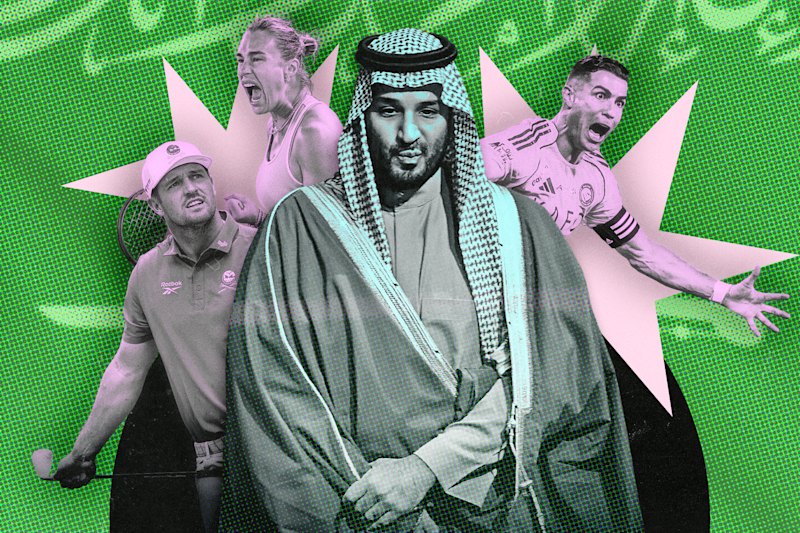
The PIF’s decision to step back from LIV Golf is not just about financial considerations but also part of a broader strategic realignment. The goal is to redirect billions previously spent on international ventures towards domestic projects, especially in preparation for the 2034 FIFA World Cup. This shift has already begun to affect other sports properties backed by the PIF, with more changes expected for teams and athletes who have benefited from substantial Saudi financial support over the past decade.
PIF’s Strategic Reboot
In March, the PIF, chaired by Crown Prince Mohammed bin Salman, announced a new strategy for the period 2026–2030. This plan marks a departure from the previous decade of aggressive, high-profile global spending and instead focuses on a more conservative, domestically oriented approach.
Saudi Arabia, as the world’s largest crude petroleum exporter, saw its state-owned oil company Aramco record a historic profit of $223 billion in 2022. Previously, 30% of the PIF’s portfolio was invested abroad, but this will now be capped at 20%. The new focus includes prioritizing returns on investment, legacy spending, and infrastructure development for the 2034 World Cup and the 2030 World Expo. Additionally, there will be increased investment in grassroots sports.
“The 2026–2030 strategy marks a natural evolution as PIF moves from a period of rapid growth and acceleration to a new phase of sustained value creation, with a strengthened focus on maximising impact, raising the efficiency of investments,” the PIF stated in a media release.
Vision 2030 and Its Impact
Launched a decade ago by Crown Prince bin Salman, Vision 2030 aimed to reduce the kingdom’s reliance on oil and diversify its economy into sectors such as tourism, hospitality, and property. This included ambitious projects like Neom and “The Line,” a 170km mirrored skyscraper designed for nine million residents. However, many of these projects have been scaled back to be more achievable and affordable. For instance, “The Line” plans have been reduced to between 2km and 5km.
Central to the new strategy is the focus on delivering the 2034 FIFA World Cup. Saudi Arabia secured the hosting rights in 2024 as the sole bidder. The tournament will be held at 15 stadiums, mostly new, with construction costs for football infrastructure estimated to reach $45 billion.
Other Sports Affected
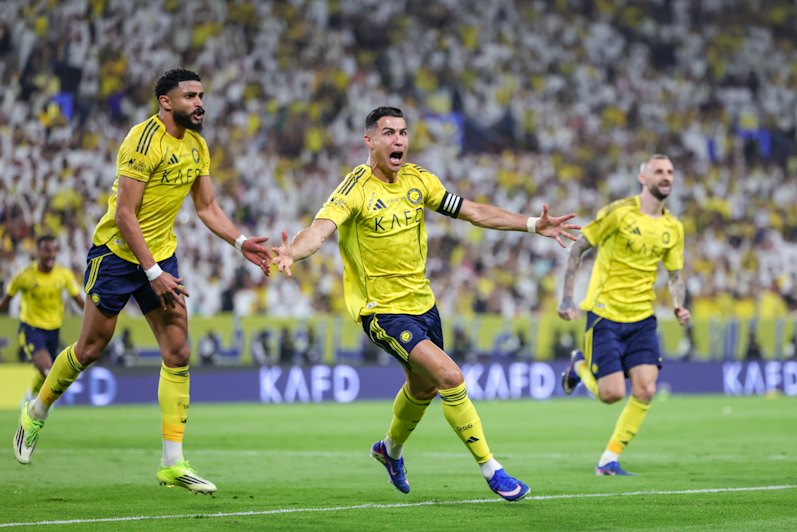
Saudi Arabia has long used sports as a tool for “sportswashing” its human rights record, investing heavily in both domestic and international sports. Football was a major focus, with four clubs owned by the PIF attracting global stars like Cristiano Ronaldo and Neymar through lucrative contracts.
Ronaldo signed with Al-Nassr in 2023 for a two-year deal worth almost $800 million, with potential earnings reaching up to $1.6 billion by 2027. Similarly, Karim Benzema earns $200 million annually with Al-Ittihad. However, these figures may not continue as the PIF begins to divest. It recently sold 75% of Al-Hilal to a private group, and Al-Nassr is expected to follow suit.
Newcastle United, which the PIF owns 85% of, is unlikely to be sold off immediately. The club provides a strong profile for Saudi Arabia in one of the world’s most-watched leagues. Other sports, however, are set to face similar challenges.
New Focus Areas
The PIF is shifting its attention to esports and grassroots sports, aiming to develop homegrown Olympic medalists. With gaming becoming increasingly popular among Saudi youth, the PIF is investing heavily in the sector. Plans include a $12 billion Qiddiya Gaming District and a global gaming tournament with an $85 million prize pool. In September 2025, the PIF acquired a 93.4% stake in Electronic Arts (EA), gaining control over major games like FC 26 and Madden NFL.
Developing real-world Olympic medallists is another priority. The PIF will increase funding for grassroots programs and infrastructure, targeting sports such as judo, taekwondo, and equestrian. Unlike some Gulf neighbours, Saudi Arabia does not recruit athletes from other countries.
Under a “Long-Term Athlete Development” model, the PIF has identified 12 sports for “hyper-funding.” These include judo, taekwondo, karate, wrestling, fencing, equestrian, shooting, weightlifting, athletics, swimming, jiu-jitsu, and Paralympic athletics.
Specialist foreign coaches could earn substantial salaries, and a new $370 million sports city is being built in Dammam. The Mahd Sports Academy is also expanding to 12 locations, using AI-driven scouting technology to identify athletic potential in children as young as six.