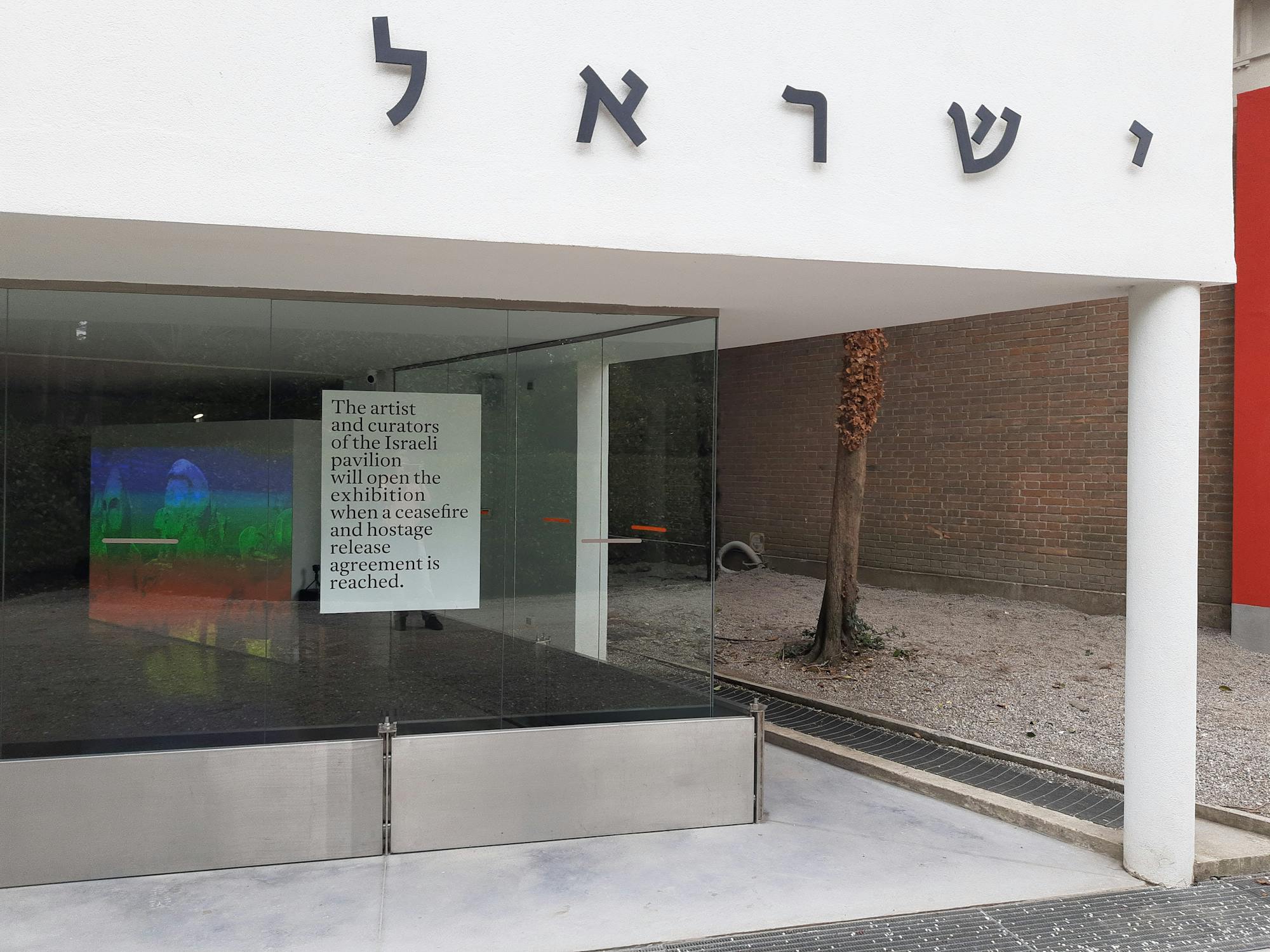
The Venice Biennale and the Politics of Art
The Venice Biennale is widely regarded as the most prestigious recurring event in contemporary art, often described as the Olympics of the art world. It serves as a global platform for artistic expression and cultural exchange, showcasing the work of artists from around the world. Among its many accolades, the Golden Lion for best national participation stands as the most coveted prize. This award, along with the Silver Lions, is given by the biennale jury—a rotating panel of international curators and critics.
On April 22, the jury announced that Russia and Israel would not be considered for awards. Just eight days later, the jury collectively resigned—nine days before the opening of this year’s biennale. This decision marked a significant moment, revealing the growing tension between art institutions and politics. The idea that art can remain separate from political realities has long been a fiction, and this event exposed that contradiction.
The Resignation and Its Implications
No official explanation was provided for the jury’s resignation, but their statement indicated that they were “in acknowledgment” of their intention to refrain from considering countries whose leaders are currently charged with crimes against humanity by the International Criminal Court. In practice, this would have affected Russia and Israel. The exclusion of these nations raises an important question: if countries can participate, on what basis are they denied prizes?
The biennale is structured around national representation, with each country’s participation conferring recognition of its standing within the international art world. Allowing countries to exhibit while excluding them from awards creates an inconsistency. For critics of the presence of Israel and Russia, inclusion constitutes complicity. On the other hand, defenders of artistic autonomy argue that withholding awards on geopolitical grounds undermines the claim of institutional neutrality.
A History of Political Engagement
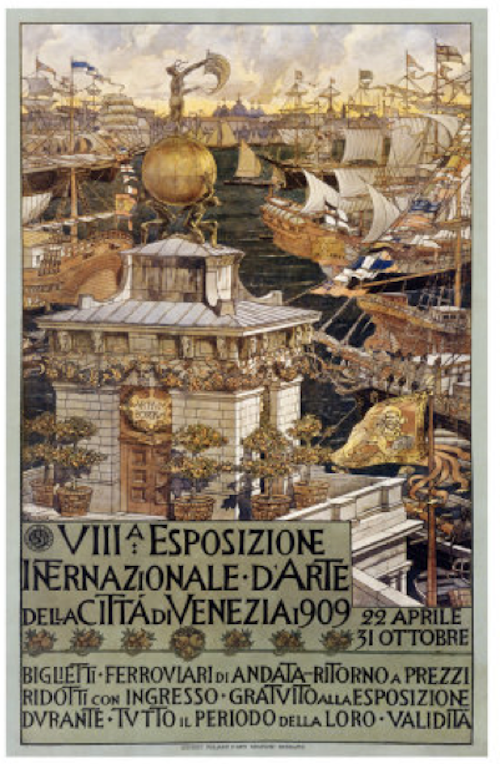
The Venice Biennale has never been entirely apolitical. Founded in 1895, it began as a civic initiative to promote Italian art and attract tourism. From 1907, the introduction of national pavilions transformed it into an international exhibition that functioned as cultural diplomacy. Of the 100 countries that participate, 30 have a permanent exhibition space. This has included Russia since 1914 and Israel since 1952. Other countries exhibit in various venues across Venice.
Each country’s participation is represented through curated artistic production, with flags, borders, and diplomatic recognition built into the exhibition’s logic. Such a setup produces a fundamental contradiction: the biennale claims to operate apart from geopolitics, yet it is an institution structured through state representation.
The Challenge of Neutrality
In periods of relative global stability, this contradiction could be contained. Disputes over inclusion, representation, or censorship occasionally arose but rarely threatened the institution’s stability. However, today, the balance can no longer hold. The war in Ukraine, conflicts in the Middle East, and increasing geopolitical polarization have made neutrality itself appear as a political position.
The involvement of the Italian government and the European Union further complicates matters. While formally acknowledging the biennale’s autonomy, Italian officials have opposed Russia’s participation and signaled pressure through administrative scrutiny. The European Union withdrew a €2 million grant in response to Russia’s inclusion. These actions make it clear that the Venice Biennale’s independence is limited. Reliance on external funding allows political actors to exert influence by threatening to withdraw support or increasing scrutiny.
A Shift in Authority
The biennale’s jurors decide on prizes, and when the basis for those decisions becomes entangled in a wider political dispute, they are placed in a difficult position. Withdrawal becomes a way of refusing to confer legitimacy through awards. This year, the biennale will replace the jury-awarded Golden and Silver Lions with “Visitors’ Lions,” to be voted on by attendees and presented in November.
Italian cabinet minister Matteo Salvini described the change as “democratic,” framing the shift as one that transfers authority from a select jury to visitors. This treats wider participation as a more legitimate basis for judgment. Although such a move appears philosophical, it was the only viable option. It allows the exhibition to continue without resolving the underlying conflict. The awards will be transformed into collective choices, rather than critical judgements.
The Future of the Biennale
The biennale’s authority rests on its historical role as a site of judgment, where expert evaluation through juries and awards shapes contemporary art discourse. This year, that function will be suspended, and the awards will be grounded in preference rather than critique. Does this mean the exhibition will become more open, or simply less authoritative?
The Difficulty of ‘Neutrality’
The jury’s resignation is not simply a breakdown of decision-making. It also exposes the flawed belief that culture can stand apart from politics, and institutions can operate independently of state influence. This breakdown is not unique to cultural institutions. It reflects a broader shift affecting universities, research bodies, and cultural organizations.
Under conditions of political conflict, these institutions are increasingly subject to pressures that make claims to neutrality more difficult to sustain. The Venice Biennale’s recent events highlight the challenges faced by cultural institutions in maintaining their independence in an increasingly polarized world.