Detection of Vaccine-Derived Poliovirus in Perth
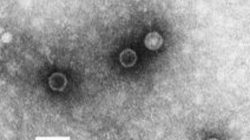
A highly contagious and deadly disease that has not been seen in Australia for 54 years has been detected in sewage in Perth. Health officials have confirmed the presence of a vaccine-derived poliovirus strain in a sample of untreated wastewater at the Subiaco wastewater treatment plant in mid-April. This is the first time this particular strain has been found in Australia, following similar detections in Europe in 2024 and 2025.
The detection in Europe did not result in any cases of polio. According to the Australian Centre for Disease Control, the strain found in Perth is likely linked to a person who recently traveled from overseas. Vaccine-derived poliovirus is rare but can be identified in areas where oral polio vaccines are used.
Sanjaya Senanayake, an Associate Professor of Medicine at the Australian National University, emphasized that the likelihood of this strain developing into a live polio case is low. “In a highly immunized country like Australia, the chance of this vaccine-derived strain causing cases of polio is extremely unlikely,” Senanayake stated. She also noted that outbreaks of polio in the region have been infrequent, though they have occurred in countries such as the Philippines, Indonesia, and Papua New Guinea.
The detection has been labeled “significant,” but officials stress that it does not indicate the spread of polio in Australia. “Wastewater surveillance is designed to give us early warning, so health authorities can take precautionary action,” said Professor Zoe Wainer, Director-General of the Australian Centre for Disease Control. “This is an environmental detection, not a clinical case. No cases of polio have been identified, and there is no evidence of local transmission.”
Wainer added that Australia remains polio-free, and the detection in Perth does not affect this status. In response to the finding, the Western Australian government will increase testing at the Subiaco wastewater plant to weekly for six months.
The last case of locally-acquired polio in Australia was in 1972. Wild poliovirus type 1 is still circulating in Pakistan and Afghanistan. A different strain, vaccine-derived poliovirus type 2 (VDPV2), was also detected during routine wastewater sampling in Melbourne in 2024. However, this did not lead to any cases of polio in Australia.
What is Poliovirus?
Polio, or poliomyelitis, is a highly contagious viral infection that can cause paralysis and death. It can be contracted in two ways, according to Senanayake. “The first is through ‘natural’ circulating virus, which still occurs in Pakistan and Afghanistan, where there have been challenges with their vaccination programs,” she explained. “Another way is through infection with mutated forms of virus derived from the oral polio vaccine, which are shed in faeces. It is one of these vaccine-derived strains that have been detected in Western Australian wastewater.”
Polio mainly affects children under five. Australia has a polio vaccine that protects against types 1, 2, and 3. Around 93 per cent of children aged five years are fully vaccinated against polio in Australia, which is slightly below the global target of 95 per cent.
Australia was declared polio-free in 2000, and the only case of polio detected in the country since then was in 2007, when an overseas-born student contracted the disease while abroad.