The Strait of Gibraltar and the Struggling Pilot Whales
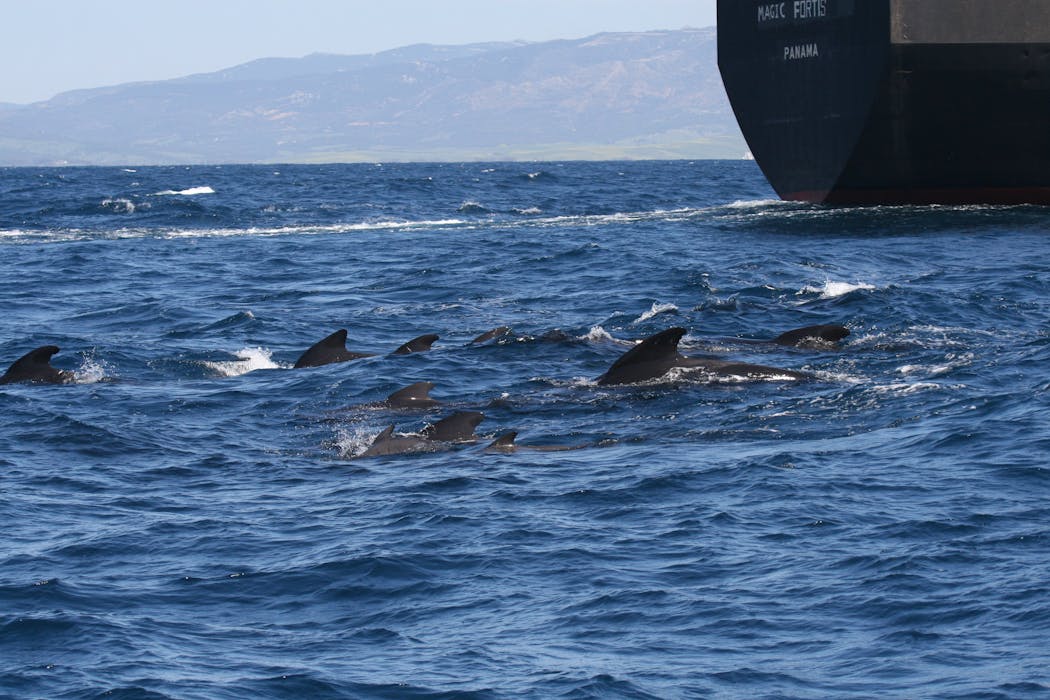
In the Strait of Gibraltar, a well-known marine passage connecting the Mediterranean Sea to the Atlantic Ocean, resides a critically endangered sub-population of long-finned pilot whales (Globicephala melas). These creatures, numbering only a few hundred, are not technically whales but large oceanic dolphins. They are believed to have a navigator or leader for each pod, which is why they are called “pilot” whales.
There are two types of pilot whales: short-finned and long-finned. While they typically inhabit deep offshore waters, they can occasionally be found in coastal areas. Like other dolphins, they communicate using high-frequency sounds, such as clicks and squeaks. These sounds do not travel as far as the melodic songs of humpback whales.
A recent study led by Milou Hegeman from Aarhus University in Denmark, published in the Journal of Experimental Biology, reveals that these pilot whales in the Strait of Gibraltar are having to shout at the upper limit of their hearing range to communicate over human-made noise.
The Source of the Noise
The ocean is filled with various sounds. Some are natural, like those produced by fish, seals, and waves. Others come from human activities, either intentionally (such as seismic and sonar exploration) or unintentionally (like the noise from moving ships or vessels).
Human-made sound has been increasing the noise levels in the ocean, even in remote Arctic regions. The Strait of Gibraltar, due to its strategic location, is especially noisy because of the constant drone of cargo ships.
Studying the Pilot Whales
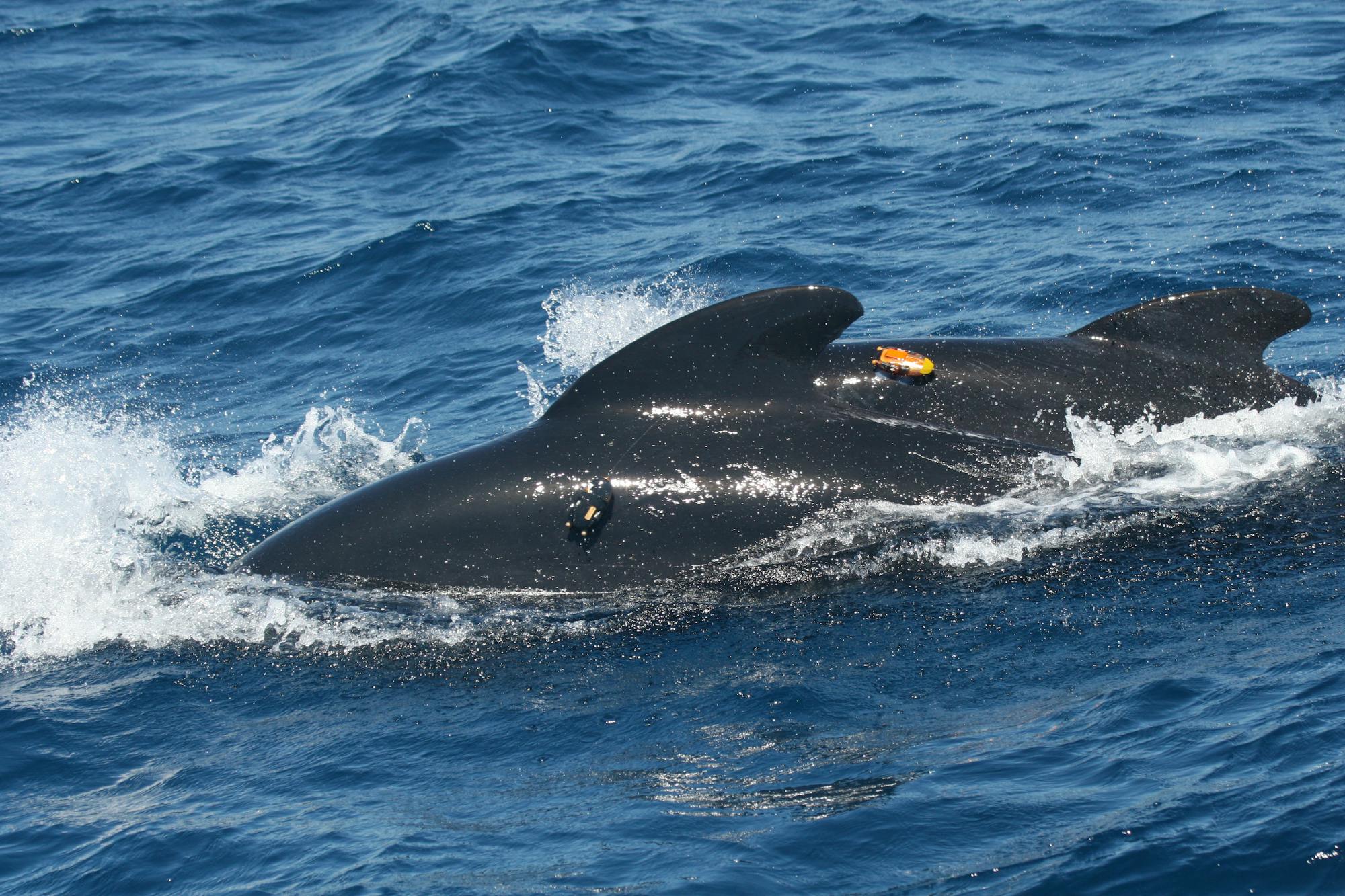
To investigate the communication and behavior of the pilot whale population in the Strait of Gibraltar, scientists used 6-meter poles to attach small tags to the whales—similar to an Airtag used to track a suitcase. These tags were placed between the dorsal fin and blowhole using sterile suction cups.
Between 2012 and 2015, researchers attached tags to 23 long-finned pilot whales that live in the area year-round. The tags remained on the whales for up to 24 hours, collecting sounds and tracking their behavior before floating to the surface where scientists could retrieve them using an antenna.
Over 84 hours of recordings were made, with 1,432 pilot whale calls extracted. The tags also captured ship noise in the area.
Adapting to a Noisy Environment
The researchers found that there was a scarcity of pilot whale calls during periods of shipping noise. When they did call, the volume of their calls increased by about half the amount of background noise. This suggests that the animals are adapting to communicate in noisier conditions, similar to having a conversation in a crowded place and raising your voice to be heard.
A whale calling out for its group with ship noise in the background.
Other Noises, Other Impacts
This study focuses on one location, but there is growing evidence that human-made noise is affecting other species in different places. For example, a 2012 study found that ship noise increases stress in right whales. Another study from 2024 showed that sea turtles in the Galapagos were more vigilant due to increased ship noise.
It’s not just ship noise that affects ocean life. Sonar disrupts whale diving and feeding behaviors, sometimes leading to strandings.
Efforts to Reduce Ocean Noise
Fortunately, efforts are being made to reduce noise pollution in the ocean. These include building quieter ships, rerouting ship activity, helping ship operators drive more quietly, and reducing noise from all human activities.
This new study is part of many scientific contributions to understanding our impact on the ocean. Protecting what we know is essential. As we celebrate the 100th birthday of Sir David Attenborough, it’s worth remembering his wisdom: “If we save the sea, we save our world.”
Part of this involves being more aware of sound in our oceans. Sometimes, it’s not just visible impacts like plastic pollution that need attention—it might also be the impacts we can only hear.