A New Beginning on the Hockey Field
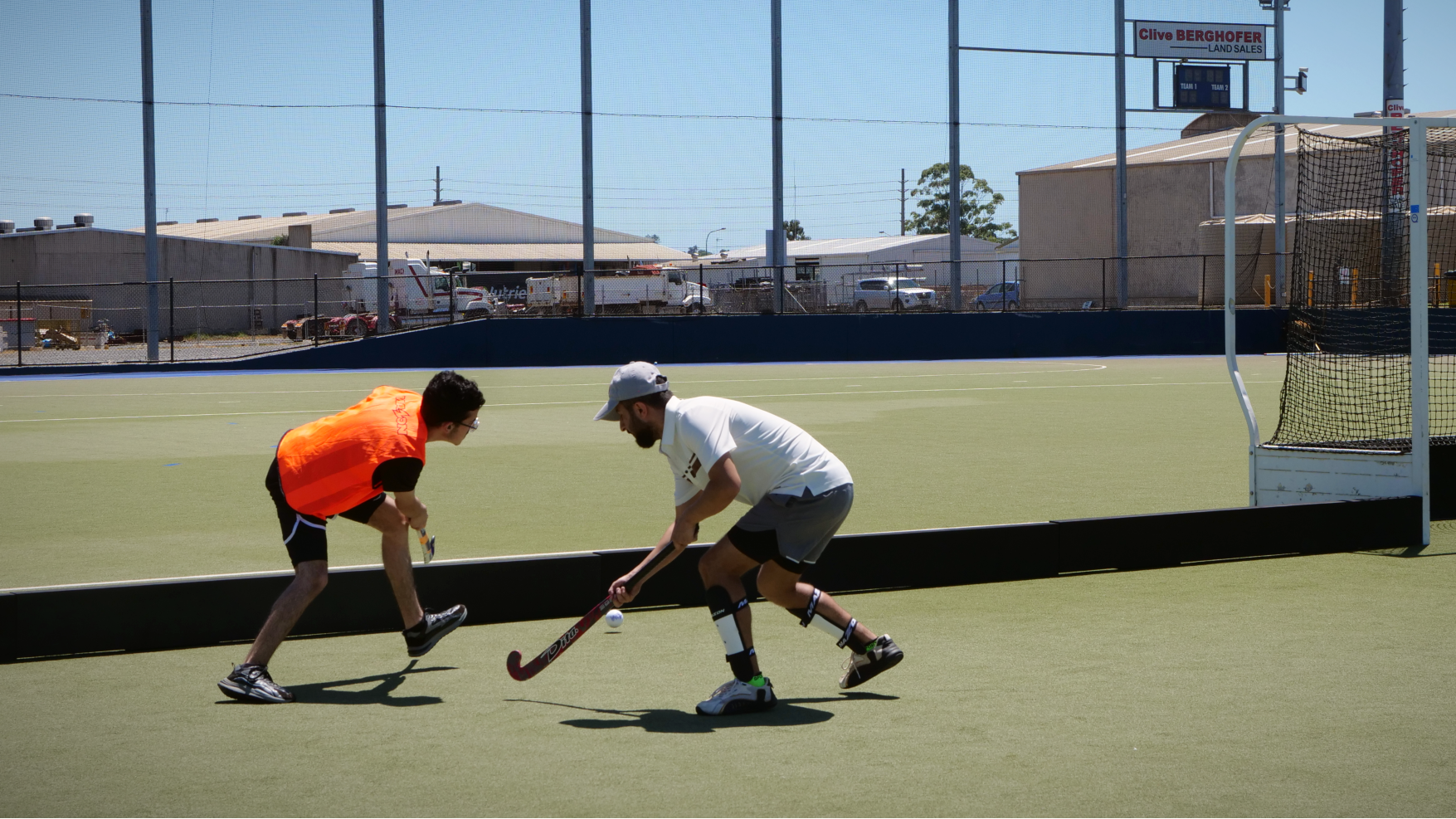
Amir Abdalla taps his hockey stick against the net posts twice and crouches in anticipation as the ball whizzes towards him. He darts forward, and it bounces off his shin guards with a satisfying thwock. “Good one, Amir!” comes the call from his teammates. The 21-year-old goalie plays for the Rangeville Hockey Club in Toowoomba, 125 kilometres west of Brisbane. “They’re a part of my life now, and they’re like family to me,” Mr Abdalla said.
But Mr Abdalla’s life has seen more turmoil than most on his hockey team. He remembers in 2014, when he was just nine years old, fleeing his house in northern Iraq to escape ISIS, which was committing genocide on the Yazidi people. “We had to run away from my house, my town, and go to the mountains,” Mr Abdalla said. “We stayed there for seven days with no food or water. All my family got kidnapped and killed on my father’s side and my mother’s side.”
Mr Abdalla and his remaining family lived in abandoned buildings and refugee camps for years before they were approved to come to Australia as refugees in November 2022. Now, he is finding a new sense of purpose through sport, specifically hockey.
Hockey Program for Yazidi Community
Toowoomba has the highest number of Yazidi refugees in Australia. Yazidis are a highly persecuted religious minority who predominantly come from Iraq, Turkey, Syria, and the Caucasus. The community is dealing with the ongoing effects of enduring trauma while adjusting to life in regional Queensland.
Sport, hockey in particular, has been an outlet. Jessie McCartney runs Belong in Hockey, a Toowoomba Hockey Club program where every Friday morning, refugees learn to play hockey, have morning tea with the volunteers, and engage in educational sessions afterwards. “We had a vision that sport can be the thing that helps these people get a sense of belonging in the community and improve their confidence and their language,” Mr McCartney said.
He said since the program started in 2023, 140 refugees had participated in the program, including Mr Abdalla. “We’re very proud of Amir. He’s become an advocate for hockey in the Yazidi community,” Mr McCartney said.
In the three years that Mr Abdalla has been in Toowoomba, he has secured a full-time job as an air-conditioning and refrigeration apprentice and has recently bought a house. “I always try to get better, like whatever it is in life,” Mr Abdalla said. Having graduated from the Belong in Hockey program in 2024, Mr Abdalla plays club hockey and volunteers on weekends, teaching children to play.
Sport ‘Stronger Through Diversity’
Hockey Australia has recognised the work of Belong in Hockey, and the Queensland government recently granted the program $95,000 to continue its services. Mr McCartney has plans to expand the program to cater to other marginalised communities, including First Nations groups, people with disabilities, and veterans.
He said Toowoomba was the ideal place to run this sort of program. “We’re 180,000 people, we’re the second biggest inland city in Australia after Canberra, and we have an amazing sporting community,” he said. “Welcoming these people who have these amazingly diverse stories and histories and cultures helps make your sport a more enjoyable place for everyone.”
Chinar Ali, 19, has been playing on Friday mornings for three months. She left Iraq with her siblings and came to Australia in 2024. “It’s very hard when you come to a different country and you don’t know anything about it,” Ms Ali said. She said participating in Belong in Hockey had helped her to find her feet in Toowoomba. “They help us a lot, not just playing hockey but they help us how to make new friends, how to meet other people in different countries. Because of [the program], we know what to do.”
More Than a Game
Volunteer Erin Gilbar said she had “fallen in love” with the program and had since enlisted her parents to volunteer as well. “The first session they [the participants] come along, [they’re] a bit shy, don’t have much English, but then over the course of a few months, suddenly they’re one of the leaders,” Ms Gilbar said. “It’s really heartwarming to see.”
She said she loved getting to know the Yazidi refugees and had even been invited to their homes for cultural celebrations. Ms Gilbar said she felt she got “more out of it than the participants sometimes.” She was diagnosed with Ehlers-Danlos syndrome and had to stop playing hockey. “I had to stop working because of my health issues, so I was very isolated,” she said. Since volunteering at Belong in Hockey, Ms Gilbar has been able to build up her strength and return to the sport. “Being able to come out here just gave me that social connection. It gave me hockey back.”