The Met Gala: A Night of Glamour and Controversy
The Met Gala is the one night of the year when too much is never enough. It’s a night where we expect drama, archival pulls, and the house ambassadors of legacy brands like Chanel to show up looking like absolute royalty. But this year, one particular moment sparked a firestorm online.
Bhavitha Mandava, the first-ever Indian ambassador for Chanel, stepped onto the carpet in a simple sheer top and a pair of blue jeans. The reaction was instant. While fellow Chanel ambassadors like Jennie or Lily-Rose Depp were wearing custom, high-fashion ensembles, Mandava looked a little more off-duty. The internet held its breath, and then they collectively gasped—but not for the reason Chanel had probably hoped.
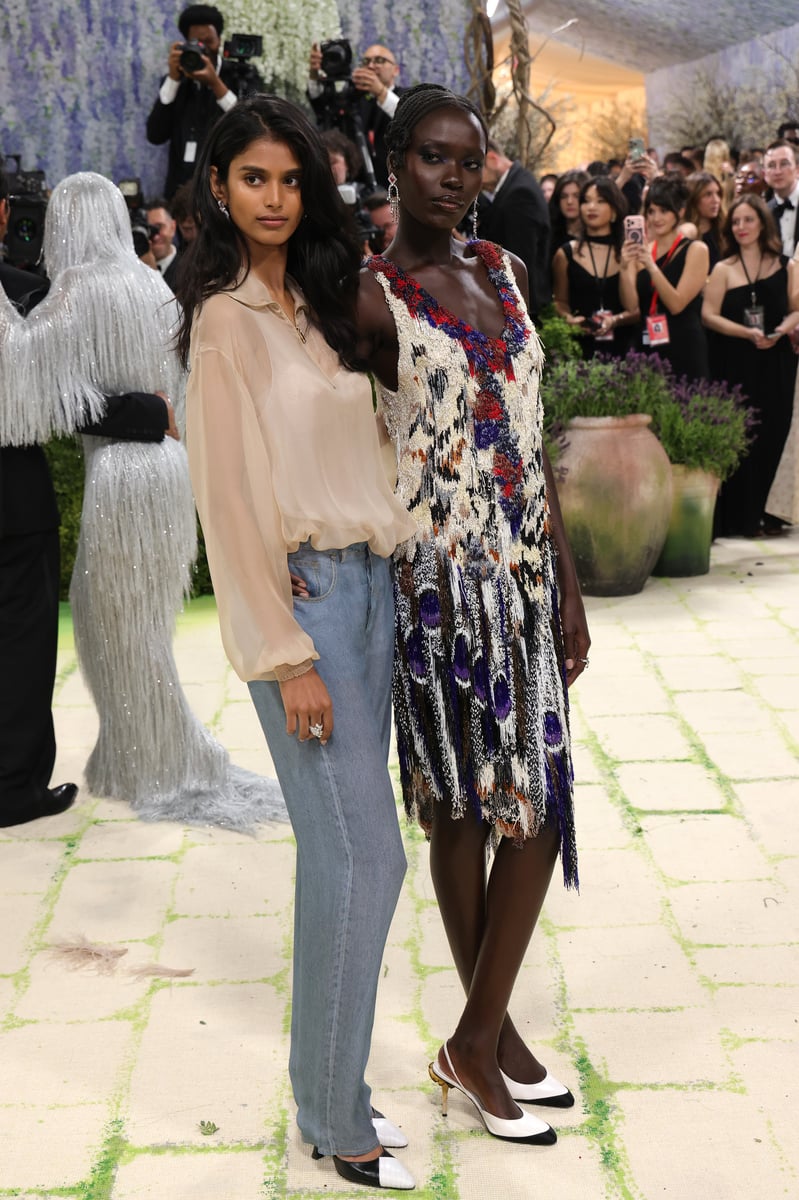
Image: Getty
A Deeper Look at the Outfit
What appeared to be casual attire on the surface actually had a deeply emotional backstory. The jeans she was wearing were actually silk muslin pants printed with a trompe l’oeil denim effect—essentially, very fancy, very expensive, soft pants. This look was a re-imagined version of the outfit she wore to open the Chanel Métiers d’Arts show in December, which was held on a New York City subway platform.
That moment was a nod to how Mandava was discovered: she was waiting for a train in Brooklyn when a modelling agent scouted her. Mandava told British Vogue that turning that memory into something elevated for the Met felt like carrying the original spirit forward.
“I had to pause when I saw the sketch because that subway show was already one of the most significant nights of my career,” Mandava said. “Turning it into something re-imagined for the Met felt like carrying that memory forward but in a more elevated way that still respects the original spirit and the theme of the evening.”
The Backstory Behind the Backlash
Given celebrities usually have a significant say in their Met looks, it’s likely Mandava was very much on board with the narrative. However, the choice has sparked a debate about whether it was a smart move for the brand.
The reason the internet is so livid isn’t just about a pair of fake jeans. For the South Asian community, this isn’t happening in a vacuum. It’s happening in a context where their culture is constantly being minimised or erased by the very institutions that claim to celebrate them.
There’s a long history of South Asians being ‘othered’ or sidelined at these events. Last year, Shah Rukh Khan, one of the most famous men on the planet, was interviewed on the Met Gala carpet, and the hosts clearly had zero idea who he was or his impact on global cinema.
Cultural Appropriation and Erasure
Gatekeeping of South Asian historical artefacts from South Asian icons is another issue. When superstar Diljit Dosanjh wanted to honour the Maharaja of Patiala at the 2025 Met Gala by borrowing the iconic 1,000-carat Cartier necklace, his stylist told the New York Times that it was “sealed in a museum.” Forced to pivot, they commissioned Indian jeweller Golecha to create inspired pieces instead.
While the necklace may have been genuinely unavailable, it doesn’t sit right for many fashion fans that Cartier actually lent that exact piece of South Asian culture to Emma Chamberlain just a few years prior. Cartier also recently lent the Taj Mahal diamond, which holds a rich South Asian history, to Margot Robbie for the Wuthering Heights press tour, where it was repeatedly dubbed the “Elizabeth Taylor necklace,” effectively scrubbing the cultural relevance from the piece on a global press tour.
Trends and Misrepresentation
Beyond that, almost every awards season this year we’ve seen traditional South Asian embroidery, jewellery, and neck scarves trending, only to be credited as “Grecian” or “Scandi-chic.” When you look at Mandava’s jeans through that lens, you realise why the community is so protective.
In a world where South Asian icons are ignored, their jewellery is gatekept, and their craftsmanship is credited to other cultures, seeing a South Asian woman in denim-print pants at the Met Gala, regardless of how meaningful the story is, feels like another missed opportunity for true representation.
Could we have incorporated that beautiful, inspiring story into a more intricate outfit that felt fit for the event? I think so. On a night about power and presence, people wanted to see their representative given the same grandeur as everyone else.
So no, it’s not just about a pair of jeans.