
Bulgaria Claims Victory at 70th Eurovision Song Contest
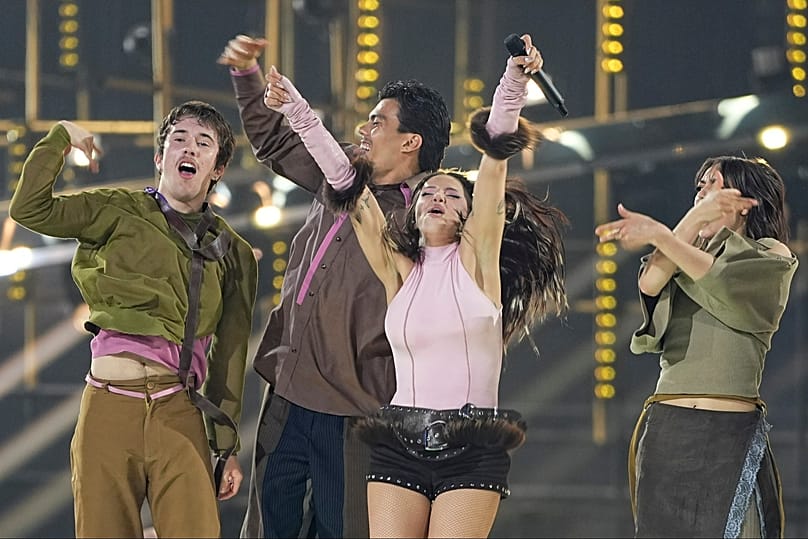
Bulgaria has made history by winning the 70th edition of the Eurovision Song Contest, with singer Dara securing the title with her high-energy anthem “Bangaranga.” The song captivated both the audience and the national juries, showcasing a blend of infectious beats and a meticulously choreographed dance routine. This victory marks Bulgaria’s first-ever win in the competition, a significant milestone for the country.
Dara, a prominent figure in the Balkan music scene and a mentor on “The Voice Bulgaria,” was not considered a frontrunner for the win. However, her performance proved to be a standout moment, earning her the top spot in the grand final held in Vienna, Austria.
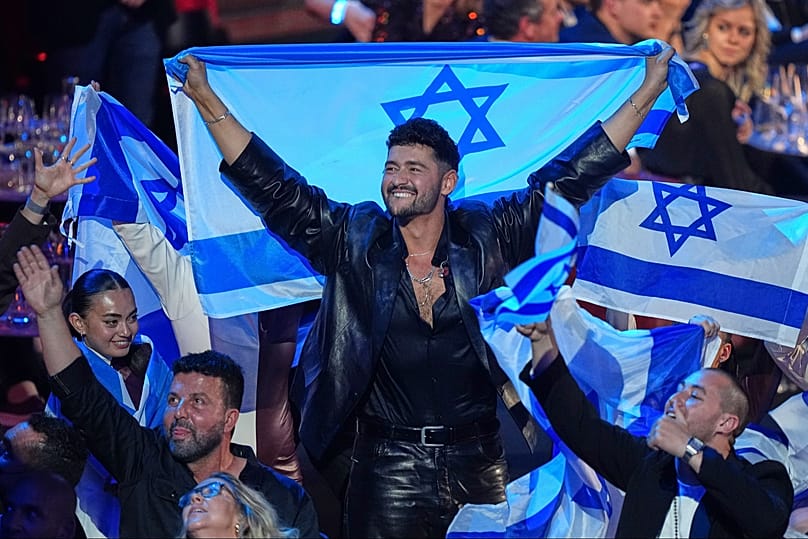
Until the final public vote was announced, it seemed as though Israel’s Noam Bettan was set to take home the trophy. Bettan received enthusiastic cheers from the crowd during his performance of “Michelle,” a rock ballad sung in Hebrew, French, and English. Despite the positive reception, there were moments of disapproval from some audience members.
Romania’s Alexandra Căpitănescu finished third with her provocative rock song “Choke Me,” while Australian star Delta Goodrem came in fourth with the smooth midtempo ballad “Eclipse.” Italian performer Sal Da Vinci placed fifth with “Per Sempre Si,” or “Forever Yes.” The Finnish duo of Pete Parkkonen and Linda Lampenius, who were strong favorites in the betting markets, ended up in sixth place.
Insights from an Eurovision Historian
Eurovision historian Dean Vuletic highlighted that the contest often surprises audiences. “Eurovision has never really been a contest for big stars. It’s largely been a contest for underdogs,” he said. “People like to see the underdog on stage. They like to see the artist-in-the-making on stage or an artist from a smaller, poorer country on stage.”
Pop and Politics at Eurovision
The event took place against a backdrop of heightened security due to pre-show demonstrations protesting Israel’s participation in the contest and its ongoing conflict in Gaza. Several countries chose to boycott the proceedings, leading to a wave of protests across Austria. Hundreds of demonstrators gathered near the venue, holding signs that read “Block Eurovision.” Pro-Palestinian groups also organized an outdoor concert on Friday under the theme “No stage for genocide.”
For many, this year’s 70th anniversary of the world’s largest and oldest song contest will be remembered as one of its most controversial in recent years, marked by months of protests and internal disputes.
Related Developments
Several high-profile artists and bands, including Massive Attack, Kneecap, and Sigur Rós, called on fans to boycott the event over Israel’s participation. Spain’s culture minister described allowing Israel to participate as “wrong from the beginning.” Spain, a key contributor to Eurovision as part of the ‘Big 5,’ decided to step aside, creating a financial and audience gap for the European Broadcasting Union (EBU) to address.
Other countries that boycotted the ceremony included Ireland, The Netherlands, Iceland, and Slovenia.
Pomp and Performance
The performers had just three minutes to make an impression, and Dara used every second effectively. “Bangaranga” is a prime example of the kind of pop hit that Eurovision excels at, featuring a powerful call: “Surrender to the blinding lights. No one’s gonna sleep tonight. Welcome to the riot.”
Dara was among several female artists who delivered strong performances. Germany’s Sarah Engels impressed with a soulful ballad, while Poland’s Alicja brought a gospel-tinged R&B sound. Ukraine’s Leléka enchanted the audience with her act, and Sweden’s Felicia and France’s Monroe each offered unique styles, from techno-pop to opera-pop.
If you missed the action in Vienna, be sure to check out our blog where we covered each act, provided assessments of the performances, and detailed the drama of the voting process.