The Future of AI at Google I/O 2026
In 2026, Google is pushing the boundaries of artificial intelligence (AI) to be an integral part of everyday life. From shopping and writing emails to making dinner reservations and planning vacations, the tech giant is aiming to make AI a seamless part of everything users do. This vision was on full display at Google I/O 2026, where the event livestreamed on YouTube starting at 10:30 PM (IST) on May 19. The keynote began with a powerful message: “Take a second to realize how far we have come.”
Over the next two hours, Google made several groundbreaking announcements, focusing on AI, a new agentic era, and hardware innovations. One of the most notable hardware reveals was a new pair of smart glasses developed in collaboration with Samsung.
Without further ado, let’s explore the major announcements from Google I/O 2026.
Gemini 3.5 Flash: A New Era of AI
A significant portion of the keynote was dedicated to Google’s Gemini AI models. The company officially launched the Gemini 3.5 Flash, which is now the default model across several Google AI products. According to Google, this version is faster, more efficient, and outperforms previous iterations in most benchmarks. Additionally, Google confirmed that the more powerful Gemini 3.5 Pro will launch in June this year.
Pricing Changes for Gemini Subscriptions
For those who have been hesitant about purchasing a Gemini subscription due to cost, there’s good news. Google announced revised pricing for its AI subscription plans, making them significantly cheaper than before. The AI Ultra tier now starts at $99.99 (approximately Rs 9,685) per month, down from $250. The previous $250 tier still exists but has been reduced to $200 (approximately Rs 19,370) monthly. The updated plans include AI Plus ($7.99), AI Pro ($19.99), and AI Ultra.
Google also introduced compute-based usage limits instead of prompt-based ones, meaning heavier tasks like video generation will consume more quota than simple text prompts.
Introducing Gemini Spark
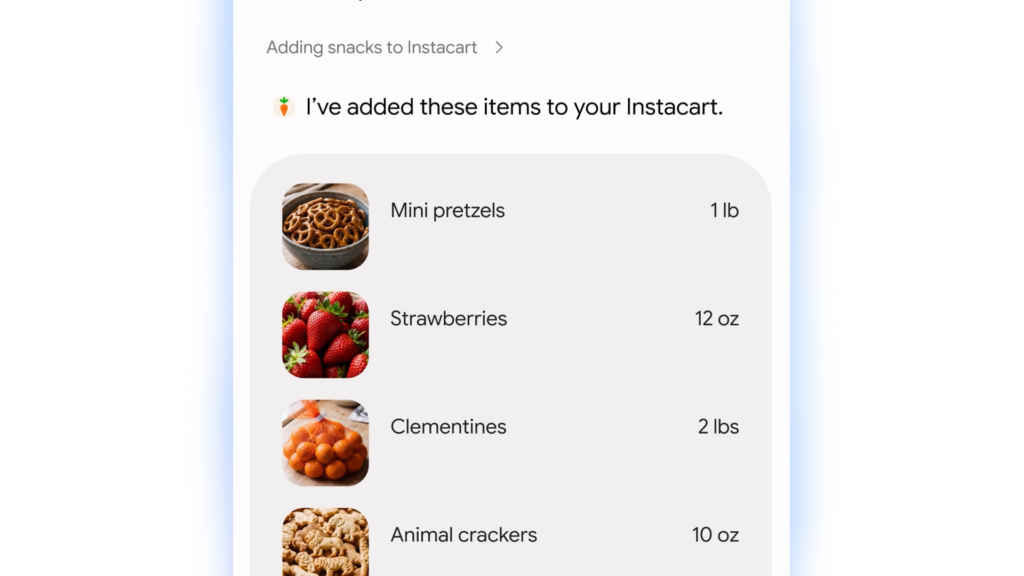
Gemini Spark is a new cloud-based AI agent designed to work in the background and perform tasks on behalf of users. During the keynote, Google’s Josh Woodward demonstrated how users can access the Gemini Spark button and check all the background tasks it has completed. He asked Spark to write an email and plan a party, which it did in minutes.
What makes Spark unique is its ability to connect with Gmail, Docs, Uber, OpenTable, Lyft, Zillow, and other third-party services to manage workflows. To ensure user control, Google introduced the Agent Payments Protocol (AP2), allowing users to set spending limits, approved stores, and purchase restrictions for AI agents. Initially, Spark will be available to AI Ultra subscribers in the US.
Redesigning Google Search
Another major announcement was the redesign of Google Search, which is getting its biggest overhaul in 25 years. The new AI-powered Search Box can understand natural language conversations and accept images, videos, files, and Chrome tabs as inputs. Google also made AI Overviews interactive, allowing users to ask follow-up questions directly within search results.
The company introduced Search Agents, AI assistants that monitor websites, blogs, listings, and social media pages for updates. Examples included apartment hunting and sneaker drop tracking. Google also expanded Personal Intelligence in Search, enabling Gemini to pull context from Gmail, Photos, and Calendar for more personalized results.
Additionally, AI-powered calling is coming soon, allowing Search agents to call businesses on behalf of users to gather information or complete bookings.
Smarter Gmail, Docs, and Workspace
Google also unveiled several AI features for Gmail, Docs, and Workspace. Gmail Live is a conversational voice-based assistant for inbox searches, letting users ask questions about flight timings, school schedules, or meeting details without manually searching through emails.
AI Inbox is getting smarter with personalized draft replies, faster access to Docs and Sheets, and AI-powered task management tools. Meanwhile, Docs Live can transform rough notes into structured documents in real time using Gemini AI.
Google also introduced Daily Brief, a feature that generates personalized summaries using Gmail, Calendar, and tasks. It is rolling out first in the US for AI Plus, Pro, and Ultra users. Another tool called Google Pics allows users to create posters, social media visuals, and edited graphics through AI prompts.
Google and Samsung’s Smart Glasses
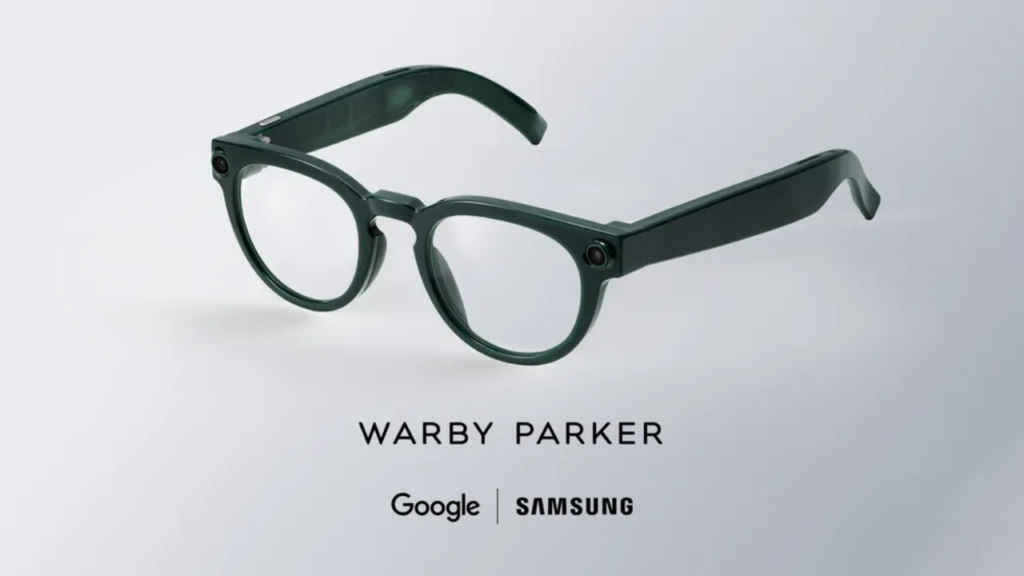
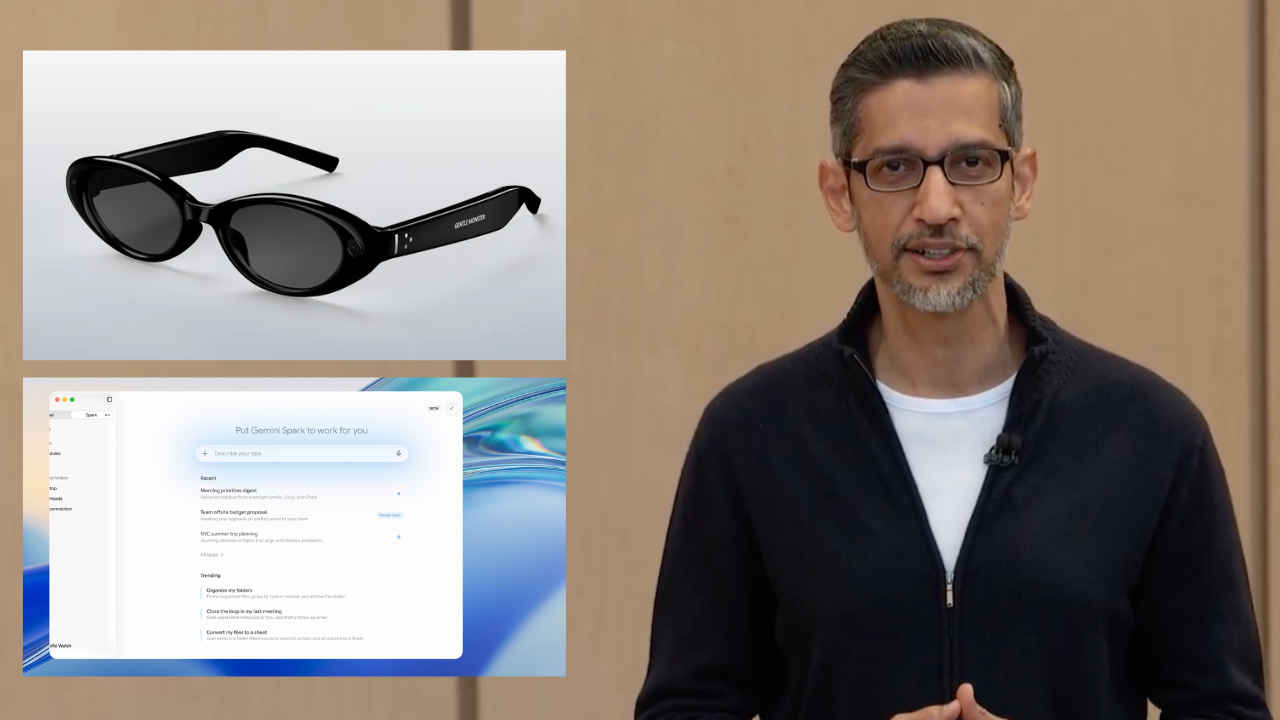
After months of speculation, Google finally revealed its AI smart glasses in collaboration with Samsung and Qualcomm. Shahram Azadi presented the glasses, which are designed to deliver AI assistance without users needing to constantly look at their phones. There are two types: audio glasses, which provide spoken responses and AI assistance through built-in speakers, and display glasses, which show information directly in front of the user’s eyes. Audio glasses will launch first later this fall.
To make the glasses more fashion-focused, Google partnered with Warby Parker and Gentle Monster. Early designs were showcased during the keynote, with more styles expected later this year. The glasses are deeply integrated with Gemini, allowing users to activate the assistant via voice commands or by tapping the frame.
AI-Powered Shopping
Shopping is also becoming AI-powered. A new Universal Cart feature combines products added across Search, Gemini, Gmail, and YouTube into one central shopping hub powered by Google Wallet. Google also introduced the Universal Commerce Protocol (UCP), allowing AI agents to complete purchases and bookings directly through partners like Amazon, Walmart, Shopify, and Meta.
Gemini Omni: Advanced Video Generation
Google announced Gemini Omni, a new multimodal AI model designed for advanced video generation and editing. Unlike standard text-to-video tools, Omni can accept text, images, audio, and videos as inputs and generate content accordingly. The company demonstrated conversational editing tools capable of changing backgrounds, adding effects, adjusting scenes, and even generating avatars.
Google also updated its AI filmmaking platform Flow with Gemini Omni Flash integration, enabling users to perform multi-step cinematic edits, create music, add characters, and modify scenes through prompts. All AI-generated videos created through Omni will include Google’s SynthID watermarking technology.
Additional Announcements
Google also revealed that its AI watermarking technology, SynthID, is being adopted by companies like OpenAI, ElevenLabs, and Kakao. Chrome and Search users will soon be able to identify AI-generated content by checking for SynthID markers directly inside browsers and search results.
YouTube received several AI-focused updates, including Gemini Omni for YouTube Shorts Remix, allowing creators to generate and edit AI-enhanced Shorts using conversational prompts. Google also expanded likeness detection tools to help creators identify AI-manipulated versions of their faces and videos.
Another feature called Ask YouTube will allow Google Search users to surface relevant tutorial videos directly inside search results for complex questions. Finally, Google previewed CodeMender, an AI-powered security tool capable of automatically detecting and fixing software vulnerabilities.
Opinion: Are We Ready for Google’s AI Vision?
After reviewing all these announcements, it’s clear that Google no longer sees AI as just an app or a tool used occasionally. Instead, it wants people to rely on AI for even the most basic online tasks, such as shopping, writing emails, planning vacations, and creating videos.
With Gemini becoming more deeply integrated into Search, Gmail, shopping, and wearables, users may need to decide how much control they are comfortable giving AI systems. While the technology showcased at I/O feels futuristic and useful, it also points to a future where AI could become the main layer between people and their devices and the internet. The question remains: Are we really ready for that?