A Glimpse Behind the Glamour of ‘Once Upon a Time in Hollywood’
Despite the nostalgic charm and cool atmosphere that surrounds Once Upon a Time in Hollywood, there was a more intense reality hidden behind the scenes. While many imagine film sets as places of effortless creativity, the production of this film revealed a strict hierarchy that still defines Hollywood filmmaking.
During an improvised moment on set, Brad Pitt made a move that caught everyone off guard. He stopped a take after noticing that a line had deviated from the script. This simple action immediately challenged the authority of Quentin Tarantino, who was directing the film.
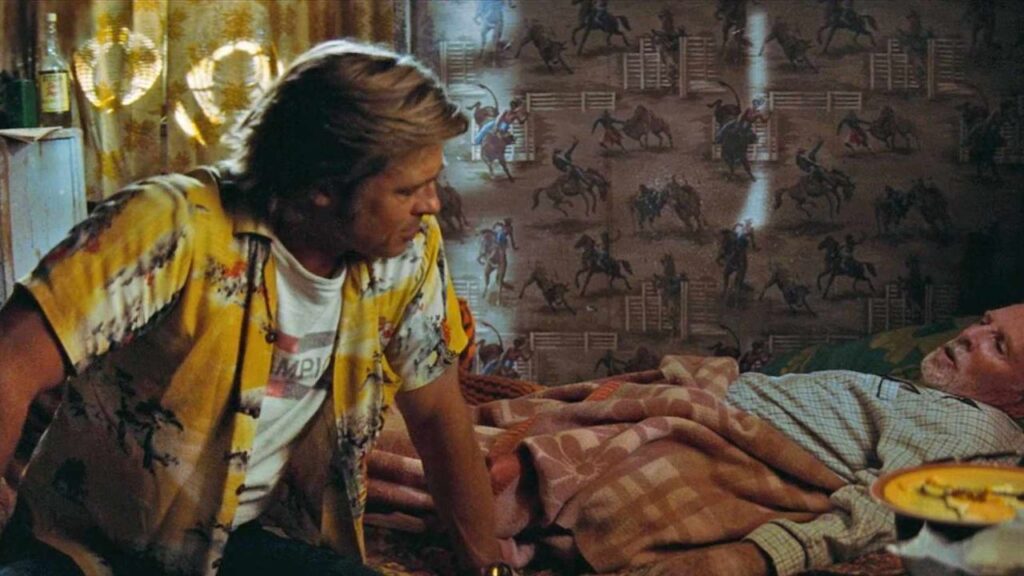
The tension between Pitt and Tarantino became evident during a scene involving Bruce Dern. According to Dern, during the emotionally charged Spahn Ranch sequence, Pitt interrupted filming himself. He noticed that the dialogue had strayed from what was written in the script and decided to stop the take.
Dern shared his experience with People, recalling the moment: “When Brad Pitt wakes me up in Once Upon a Time… in Hollywood, I’m in the bed and I get up and I’m a little groggy and stuff and I just say, ‘I’m not really sure what’s going on,’” he said. “I’m looking at him. [Pitt] cut the camera. He cut the camera. The look on Quentin’s face — I mean, he was insanely grave — and he said, ‘Brad, what did you just do?’”
Pitt may have intended to clarify the improvised line, but Tarantino quickly made it clear that such actions were not acceptable. He warned Pitt that interrupting a scene like that could cost him his place in the industry. For Tarantino, controlling the camera and guiding the flow of a performance was strictly his responsibility.
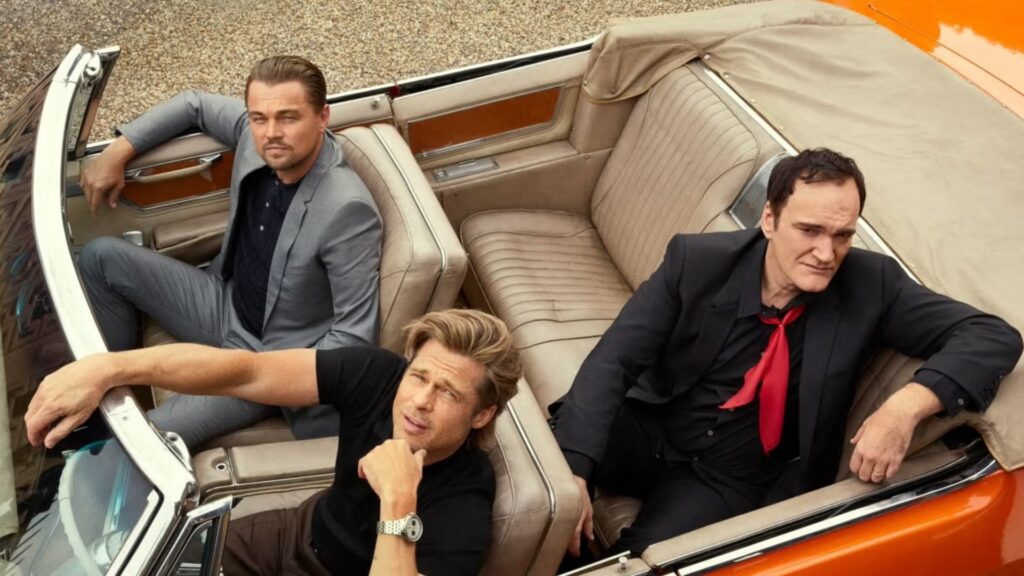
Bruce Dern’s story offers a rare glimpse into the inner workings of Hollywood, revealing the emotional complexities that often go unnoticed. Movie productions are filled with passion, ego, and creative tension, and global stardom doesn’t change these dynamics. Dern’s anecdote dismantles the glamorous image of Hollywood and exposes the fragile emotions that lie beneath the surface.
What makes this exchange particularly revealing is how it challenges the public perception of Brad Pitt. Known for his effortless charisma and relaxed confidence, Pitt came across as intensely focused on precision and structure during this moment. Fans might have expected such traits from Leonardo DiCaprio, who co-starred with Pitt in the film.
Meanwhile, Tarantino’s reaction reinforced his reputation as a filmmaker who values control, rhythm, and performance. Even on a set filled with improvisational energy and free-flowing performances, Dern’s story highlights the boundaries that are never meant to be crossed in Hollywood.
This incident also brings attention to the broader conflicts that exist within the industry. It serves as a reminder that even the most celebrated films are shaped by the tensions between creative vision, personal egos, and the rigid structures that govern the filmmaking process.
For those interested in learning more about the making of Once Upon a Time in Hollywood, there are several related stories that explore the intricate details of the film’s production, including how Tarantino recreated 1960s Los Angeles with meticulous attention to detail.