A Journey of Identity and Imagination
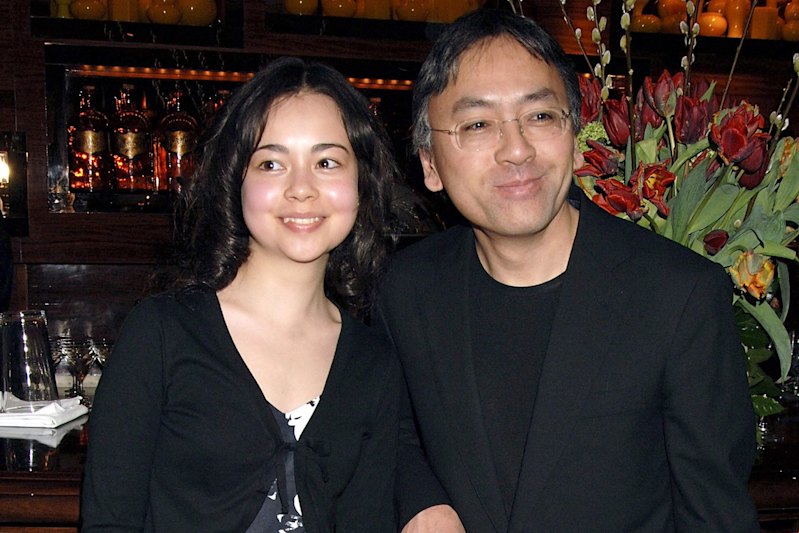
Naomi Ishiguro, daughter of the renowned novelist Sir Kazuo Ishiguro and Scottish social worker Lorna MacDougall, has carved a unique path in the literary world. Growing up in London, she was often given small gifts from Japan by adults who assumed her half-Japanese heritage would make her interested in Japanese culture. However, her early experiences with Japan were limited to items like DVDs of My Neighbour Totoro and Pokémon merchandise. These fragments formed a filtered image of Japan through a British cultural lens.
“I only went to Japan once as a child,” she recalls. “But you’d get these bits and you form a picture of what it looks like, but they’re obviously filtered through the cultural lens of Britain.” She never imagined that she would one day write a fantasy trilogy filled with Shinto spirits, Japanese dragons, and black-clad gangs fighting with samurai swords.
Her journey into writing began with an interest in pre-Norman Anglo-Saxon poetry during her university studies. While this might seem niche, it reflects her deep engagement with the Anglosphere. “I was very lucky. Growing up in London, everyone was multicultural,” she says. “But I still definitely felt quite self-conscious about it.”
This sense of self-consciousness persisted even as she grew older. The night before our meeting in London, she found herself in a pub where men at a nearby table asked her to settle a bet on her origins; one had bet on Singapore. “There is still always that element of being told you’re foreign,” she says. As a child, she felt wary of engaging too deeply with Japanese culture, fearing it might challenge her place in Britain.
From Short Stories to Fantasy
Her first book of short stories, Escape Routes, blends elements of magic with everyday life, drawing inspiration from European folktales. One of the longest stories in the collection follows a town ratcatcher summoned by a reclusive king. Her first novel, Common Ground, explores the awkward friendship between a middle-class boy at a grammar school and a Romany boy he meets on the common. This work reflects the influence of Ken Loach, whose empathetic social realism has seeped into the pages of the novel.
In recent years, there has been a surge of interest in Europe in all things Japanese, and Ishiguro herself has become a devotee of fantasy trilogies, Japanese animation, and Comicon. Her new book, The Rainshadow Orphans, is the first in a trilogy, a format favored in fantasy literature. “I read a lot of trilogies and I love fantasy myself,” she says. “And I love animated series that are very long form; I think you can get a real richness of the world that way.”
A World of Magic and Meaning
The Rainshadow Orphans revolves around a family cobbled together by circumstance, each member bringing their own strengths and struggles. Sprightly martial arts queen Toshiko, gentle healer Jun, and obsessive hacker Mei are the adopted children of Reiko, who was murdered by gangland terrorists called the Lucky Crows. Now teenagers, they live in a hidden bunker on a strip of land called Rainshadow City, a shanty town set on the edge of a mythical archipelago. Refugees from poorer islands are confined there and exploited as a casual labour pool.
“I was thinking about the refugee camps in France, these liminal spaces where you don’t belong, when you also can’t belong anywhere else,” says Ishiguro. “Where people are saying ‘go home’, but there’s no home to go to.” Beyond the fence, the empress governs with her small son being raised to succeed her. Her troops, the Imperial Guard, are unmistakably samurai, while a shadier group of enforcers resemble yakuza.
An adventure revolves around the search for a powerful pearl stolen from the throat of a pink-furred dragon. The world itself is a steampunk hybrid where people fight with swords or bows and travel on sailing ships, but also have advanced computer technology. “I think I was interested in a world that hadn’t really done industrialisation, but had skipped straight to a technological revolution,” she says. “Maybe I’ve read too much English romantic poetry, but I always see industrialisation as the enemy.”
Spirit Beings and Cultural Reflections
This world also swarms with spirit beings that only a few people can see. The Empress’s lonely little son Haru is comforted by a Pokemon-adjacent squirrel that scampers around his princely quarters. “That’s loosely inspired by Shintoism, where gods are physically present in something like a tree or a boulder,” says Ishiguro. “These are gods that are not divine, but are manifestations of spiritual and natural energy.”
Not all spirit beings are benign; they can be as spiteful and capricious as Greek gods or the fairy folk of Celtic myth. Who knows what they might do next?
A Creative Journey
Born in 1992, Naomi Ishiguro grew up with one of the foremost living writers in the English language, which made a writing career feel like an available possibility, but certainly not inevitable. At school, she threw herself into theatre. In her late teens, she toyed with being a dancer. A few years later, working in a bookshop in Bath Spa, she busked in the touristy central city as a singer-songwriter and worked the open-mic nights around town. When the pandemic hit, she trained as a teacher.
“I think you just do what you can do,” she says. “I was always terrible at dancing, even though I love contemporary dance. But I see it all as sort of part of the same thing, honestly. It’s all storytelling. All creativity.”
Her drama teacher was her most important mentor – “a huge, huge influence in my life” – but she didn’t want to spend years writing plays in the vain hope that someone would put them on. Eventually, she did the same master’s degree in creative writing – at the University of East Anglia – as her father had done in 1979.
She had always written stories. In an interview a few years ago, she said her parents would read and dismiss them. That sounds brutal. “It’s a long time ago. I just remember them saying that this wasn’t up to scratch. You can do better, that kind of thing.” She was a great reader of 19th-century novels and was inclined, as a grand teenage authoress, to similar levels of melodrama.
“We’re so susceptible to the narrative voice we’re reading; it gets under your skin. I think they were a bit like ‘you need to stop with this overwrought, pseudo-Victorian voice and find your own’.”
A New Chapter
Before she took her sharp swerve into fantasy, Ishiguro had all but decided to give up writing. Common Ground was published in 2021, to respectful reviews but, given the culture was in the COVID-19 lull, little fanfare. At that point, she trained as a teacher. “I just needed to train in a different career and gain some life stability.” More than that, her writing had stalled.
“I just kept writing the same book again, but a worse version. I had a whole draft of something that I just threw away in between.” Then The Rainshadow Orphans emerged, seemingly from nowhere. “But I think the project was sort of brewing in my mind while I was making lesson plans, thinking of fun things for the kids to do.”
With that deadline, she set herself targets: two hours’ work before the first coffee; two hours after that; lunch; several hours in the afternoon. She is very disciplined. “I think most novelists are. You have to be because it’s like you’re writing these huge things completely by yourself.”
Her mother, who has an eagle eye for grammar, has always been her father’s first reader. Naomi Ishiguro has a circle of writers of her age and inclinations who read each other’s work; her parents read a very early draft of The Rainshadow Orphans, but are yet to receive finished books. “I think they just think ‘leave the younger generation to themselves’. I think we want to give each other space.”
She laughs at the suggestion that she is now her father’s peer. “Definitely not. I mean, he’s won the Nobel Prize. But I think it’s nice to be able to connect through doing something similar but different.” She hasn’t set out to be a literary author. “I write about young people. It’s a bit more joyous and magical; I don’t aspire to say anything huge about the human condition. I’m not looking at the language. I’m looking more at politics – not party politics, but like how humans relate to each other. I think we have different purposes when we write and we use the tools differently.” She just shares the name and, lurking somewhere, a memory of all things Japanese.
The Rainshadow Orphans by Naomi Ishiguro is published by Atria Australia on May 26 ($35).