The Trump Victory Arch Project Gains Momentum
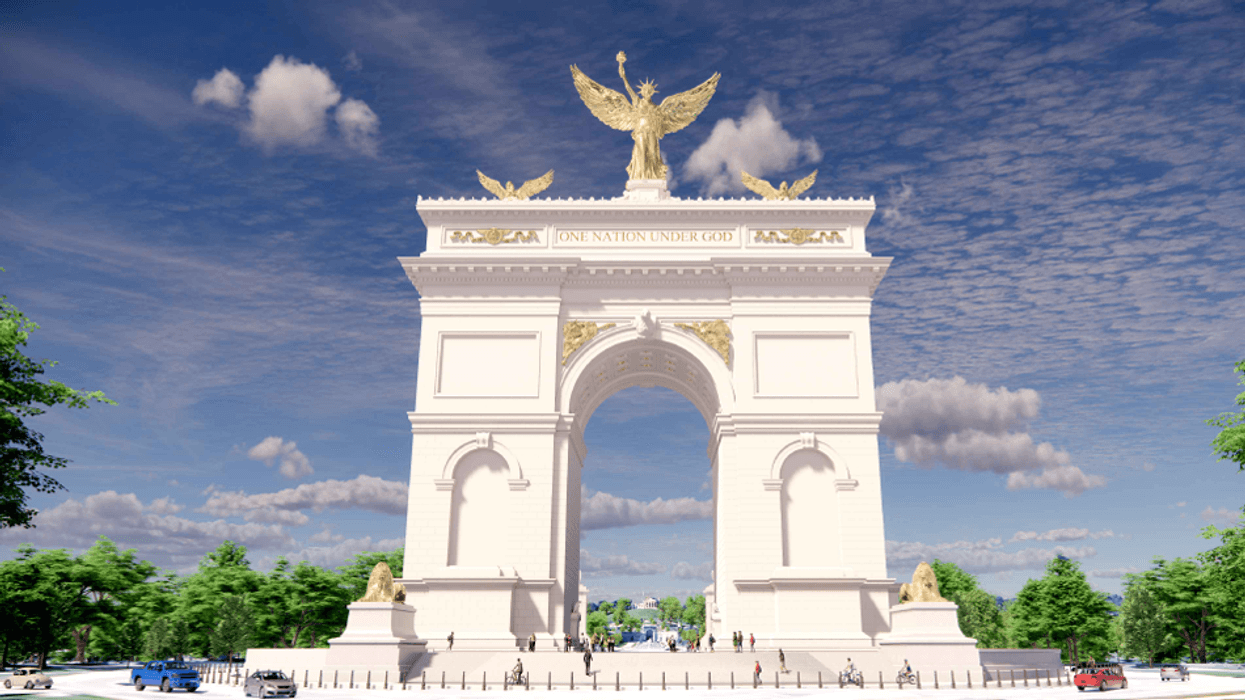
President Donald Trump has received a boost in his efforts to reshape Washington, D.C., with a recent decision by a commission of his appointees to move forward with the “victory arch” project. This ambitious plan aims to create a new monument at a strategic location near the U.S. Capitol, directly across the Potomac River from the Lincoln Memorial. The structure, often referred to as the “Arc de Trump,” is part of Trump’s vision for a symbolic and monumental addition to the city’s landscape.
Despite the support from the commission, there were some adjustments made to the original design. The U.S. Commission of Fine Arts, which includes several of Trump’s appointees, decided to scale back certain elements of the Independence Arch. Notably, the statuary that was originally planned to be placed on top of the arch was modified. This change was influenced by concerns raised by critics who argue that the arch could overshadow other iconic landmarks and disrupt the scenic views from the Lincoln Memorial to Arlington National Cemetery.
Design Changes and Concerns
The revised design still features the arch, which stands at an impressive 250 feet tall—significantly taller than the 99-foot Lincoln Memorial. However, the height of the structure would not match that of the Washington Monument, which reaches 555 feet. Despite this, the scale of the arch has sparked debate among urban planners and historians.
James McCrery II, the vice chairman of the commission and an architect, had previously expressed a preference for the arch without the figures on top. This adjustment would have reduced the arch’s height by about 80 feet. While the figures were ultimately approved, other design elements were removed. For instance, the lions on the base of the arch and the plans for an underground tunnel to access the structure were both scrapped.
The decision to remove these elements came after discussions about the potential impact of the arch on the surrounding environment. The proposed site, which is located on a traffic circle, has led to concerns about how the construction might affect local traffic and pedestrian movement.
Construction Plans and Legal Challenges
The project has also faced scrutiny over its legal framework. Reports indicate that the Trump administration is moving forward with construction without seeking approval from Congress. The administration is relying on a 100-year-old authorization that originally allowed for the construction of a different monument on the same plot of land. This approach has drawn criticism from lawmakers and legal experts who argue that it circumvents standard procedures and oversight.
The controversy surrounding the project has sparked public outrage, with many questioning the use of taxpayer funds for what some see as a vanity project. Critics have pointed to the potential cost and the lack of transparency in the decision-making process. The White House has defended the initiative, stating that it aligns with the goal of creating a lasting symbol of American values.
Ongoing Developments
Preliminary surveys and testing of the site have already begun, marking a significant step forward in the project’s timeline. However, the ongoing debate over the arch’s design and legal authority highlights the challenges that lie ahead. As the project progresses, it will likely continue to attract attention from both supporters and detractors.
With the Trump administration pushing forward, the fate of the victory arch remains uncertain. The final outcome will depend on a combination of legal, political, and public opinion factors. Regardless of the result, the project has already become a focal point in the broader conversation about the role of monuments and public spaces in American cities.