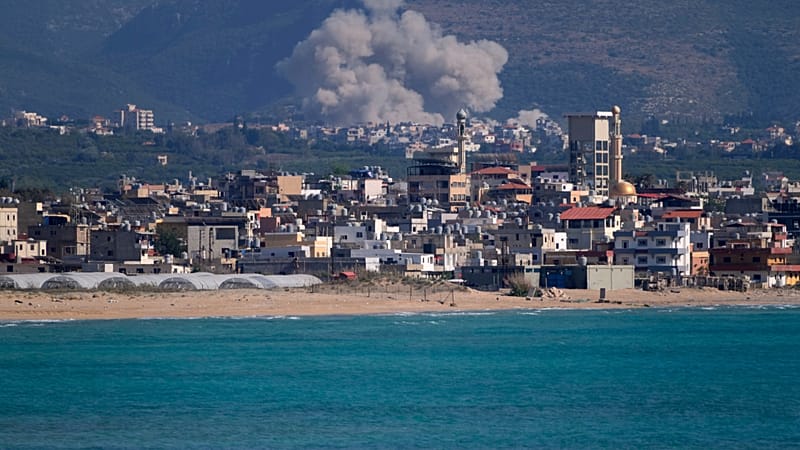
Escalation of Violence in Southern Lebanon
At least 14 people were killed in Israeli strikes on southern Lebanon on Monday, according to the country’s health ministry. The attacks continued despite warnings from Iran that it would retaliate against Israel if the bombing of Lebanon persisted. The situation remains tense as both sides continue their military operations.
The strikes targeted several areas, including Marwanieh and Tyre. In Tyre, an Israeli attack near a Red Cross centre resulted in five deaths and eight injuries, with four of the injured being Red Cross paramedics. The Lebanese health ministry reported these casualties in a statement.
A separate incident saw damage to a UNESCO World Heritage site in Tyre due to Israeli bombardment the previous day. This cultural site, which holds significant historical value, was reportedly affected by the ongoing conflict.
In another strike on Marwanieh, two people were killed, including a child, and ten others were wounded. A dawn attack on Zifta in the Nabatieh district also claimed seven lives, including a Syrian child and a woman, according to the health ministry.
Hezbollah’s Response and Regional Tensions
Iran-backed Hezbollah claimed to have targeted Israeli troops within Lebanon but did not report any attacks on Israeli territory. This suggests that while Hezbollah is actively engaging in the conflict, it has not escalated its operations beyond the borders of Lebanon.
Despite the recent lull in hostilities, Israel has made it clear that it will continue its military operations in Lebanon. Israeli Defence Minister Israel Katz reiterated this stance after Iran’s warning about potential retaliation. He stated that the military would “continue to operate in Lebanon against the terrorist organisation Hezbollah.”
Katz also mentioned that Israel would respond to any attacks on northern Israel by striking Beirut’s southern suburbs. He emphasized that Iran’s threats would not deter Israel from its actions. “We categorically reject Iran’s threats. Any Iranian attempt to link Lebanon and Iran and attack Israel will be met with great force, as happened yesterday,” he said.
Regional Conflict and Ceasefire Efforts
Iran has insisted that a broader ceasefire in the Middle East must include a cessation of hostilities in Lebanon. On Sunday, Iran fired missiles at Israel in response to strikes on Beirut’s southern suburbs. This indicates that the conflict is not confined to the immediate border regions but has broader implications for the entire region.
Lebanon has reported that Israeli strikes have resulted in more than 3,600 deaths since Hezbollah brought Lebanon into the Middle East war on 2 March. This was triggered by rocket fire at Israel to avenge the US-Israeli killing of Iran’s supreme leader.
Following an April ceasefire between Israel and Hezbollah, Israel established a so-called Yellow Line inside Lebanese territory. This area, approximately a dozen kilometers from its northern border, is where ground troops are now operating. The presence of Israeli forces in this region underscores the complexity of the conflict and the challenges of achieving lasting peace in the region.
Ongoing Challenges and Future Outlook
The situation in southern Lebanon remains volatile, with frequent attacks and retaliatory strikes. The involvement of regional actors such as Iran and Hezbollah complicates the conflict further, making it difficult to achieve a stable resolution.
As the conflict continues, the humanitarian impact on civilians is becoming increasingly severe. The destruction of infrastructure, loss of life, and displacement of communities highlight the urgent need for a comprehensive solution to the crisis.
International efforts to mediate and broker a lasting ceasefire remain critical. However, with both sides unwilling to back down, the path to peace appears fraught with challenges. The situation in southern Lebanon serves as a stark reminder of the human cost of prolonged conflict and the importance of diplomatic efforts to prevent further escalation.