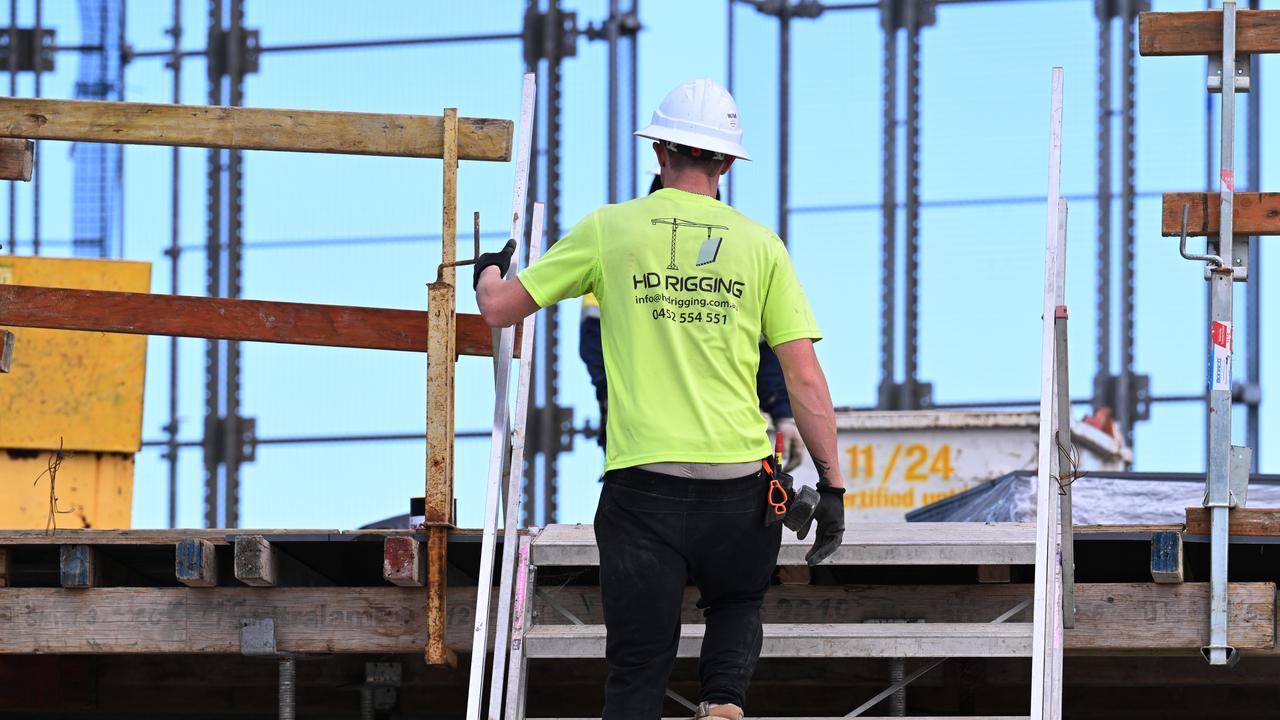
Rising Suicide Rates Among Male Construction Workers in Australia
Australia’s construction industry plays a vital role in the nation’s economic growth, particularly as the country experiences a housing rebound. However, recent data has highlighted a troubling trend: male construction workers are significantly more likely to die by suicide compared to other employed men. This alarming statistic has raised concerns about workplace culture and mental health support within the sector.
According to new research, male construction workers aged 25 to 34 have the highest suicide rates in the industry, with approximately 35 deaths per 100,000 individuals. This is especially concerning given that the construction sector employs around nine per cent of the working population.

New South Wales (NSW) has the highest number of male construction worker suicides among all Australian jurisdictions. With a workforce of over 400,000, NSW recorded 1,176 deaths over the past 19 years, followed by Tasmania, which reported 124 deaths during the same period. National coronial data reveals that male construction workers in NSW have a suicide rate of 24.3 per 100,000, compared to 13.1 per 100,000 for other employed men.
Marti Amos, founder of The Professional Builder, a support platform for construction workers, emphasizes the need for urgent action. He states that bullying, isolation, and psychological pressure must no longer be treated as secondary issues in the industry.
“Many of the younger people the construction industry needs most are entering worksites where bullying, long hours, financial pressure, and isolation can become part of the culture if they are not actively addressed,” he said.
“The latest research shows younger construction workers are at the centre of the sector’s elevated suicide risk. That should be a wake-up call for every builder, subcontractor, and site manager in NSW.”

The issue is compounded by several factors, including mental health stigma, traditional masculine norms that discourage help-seeking, low job control, and periods away from family and support networks. Researchers from RMIT, Deakin University, and the University of Melbourne have identified these as key contributors to the elevated suicide risk.
Mr. Amos also points out that current pressures on the industry are intensifying. Tighter project margins, labour shortages, and rising operating costs are adding to the stress faced by workers. Additionally, the demand to deliver large-scale housing and infrastructure programs, such as the National Housing Accord aiming to build 1.2 million new homes by 2029, is placing even more strain on the sector.
“The sector cannot meet these targets if our apprentices are burning out, leaving the industry, or being exposed to workplace cultures that increase psychological distress,” Mr. Amos noted.
“We talk about materials, planning, finance, and land supply as constraints on housing delivery, but the human constraint is just as serious. If the people building the homes are under unsustainable pressure, the pipeline itself is at risk.”
Support Resources
For those experiencing mental health challenges or suicidal thoughts, several organizations offer support:
- Lifeline: 13 11 14
- beyondblue: 1300 22 4636
These resources are crucial for providing assistance and fostering a safer, healthier work environment in the construction industry.