A Heartfelt Connection
Ewa Lutka-Krawczyk, a 70-year-old woman facing a grim prognosis after being diagnosed with gallbladder cancer, found herself more concerned about her shelter dog, Gaja, than her own health. She had adopted Gaja three years ago, and the bond between them was deep. Ewa’s main request to her doctor was for a few more years of life so that Gaja would not be left behind.
Despite her dire situation, Ewa was admitted to a palliative care ward in a Warsaw hospital this month. Back at home with her husband, Gaja was struggling to eat, clearly waiting for Ewa. From her hospital bed, with a draining tube attached to her abdomen, Ewa expressed her feelings: “She is waiting for me.”
This touching story highlights the importance of new legislation currently being proposed in Poland. The law aims to grant patients in hospices and palliative care wards the right to receive visits from their pets. While many clinics already allow such visits, there is no universal legal framework in place.
A Vision for Change
Dr. Tomasz Dzierżanowski, director of the Palliative Medicine Clinic at the Medical University of Warsaw, has been at the forefront of this proposal. The law was introduced to parliament by a member of Prime Minister Donald Tusk’s centrist party. Dzierżanowski believes that the presence of a beloved pet can significantly ease the physical and spiritual pain of terminally ill patients during a time when society is experiencing an “epidemic of loneliness.”
“We make sure that no patient dies alone,” Dzierżanowski said in an interview with The Associated Press. “When someone is suffering, it is important that someone is there for them. Ideally, that should be another human being. Sometimes, however, there is no one.”
Dzierżanowski often observes older patients who are isolated because they have outlived their friends, as well as young patients who feel alone in palliative care clinics due to the modern world of screens and virtual friendships. He believes that the emotional support provided by pets can fill this void.
A Personal Catalyst
The catalyst for Dzierżanowski’s mission was a seriously ill cancer patient named Waldemar, who was not afraid for himself but for his two cats. Dzierżanowski arranged for the cats to be brought into the ward. The man’s tears of happiness and the cats’ emotional reaction, along with the reactions of other patients and hospital staff, made Dzierżanowski realize that this issue needed to be addressed.
In his clinic, Dzierżanowski allows pets to visit patients when conditions permit. This means that Lutka-Krawczyk can look forward to a visit from Gaja, which pleases her greatly when she learns of it.
Legal Recognition and Benefits
Katarzyna Piekarska, the lawmaker who introduced the legislation, stated that animals in hospitals are already present anyway. “That’s why it needs to be regulated in the law,” she said. The proposed law would provide a legal framework for these visits, ensuring that patients can have the comfort of their pets during their final days.
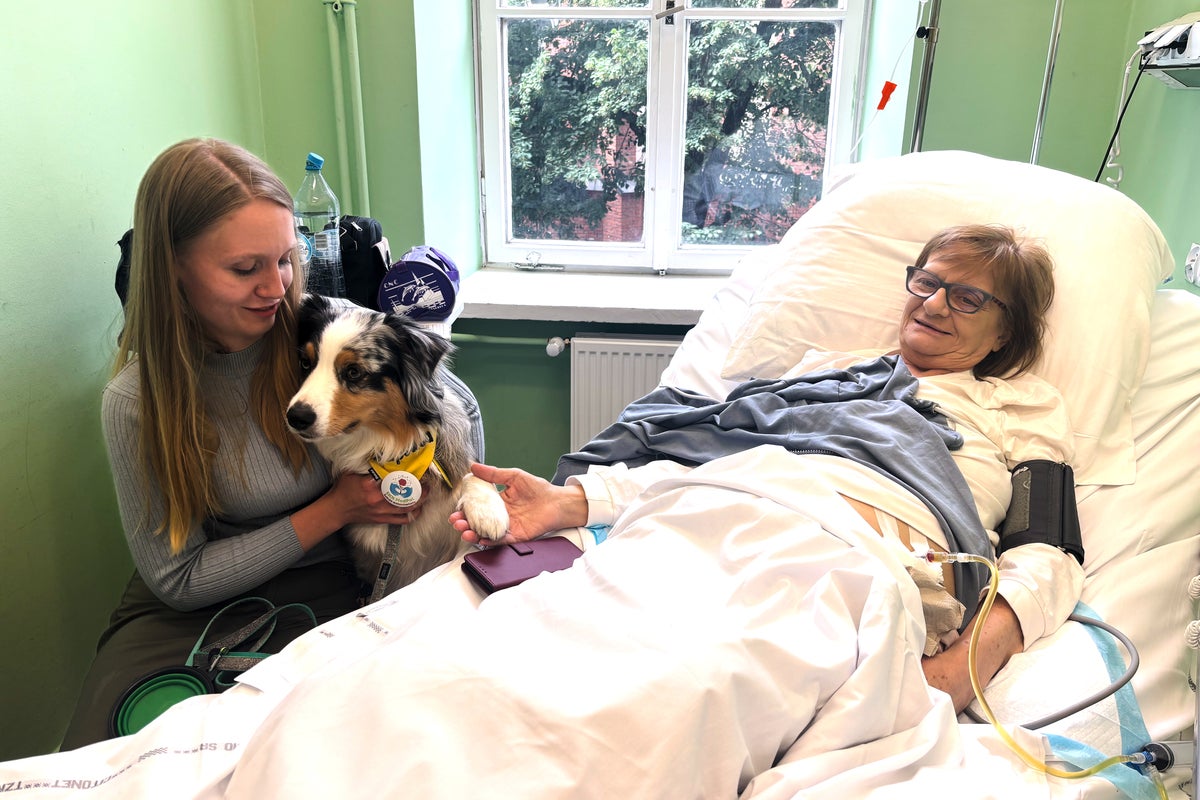
Therapy dogs are also allowed in the clinic. When the AP visited, Kluska, an Australian shepherd, was making rounds with her owner, Małgorzata Brzozowska. Kluska brought some distraction to Lutka-Krawczyk, who held the dog’s paw and smiled.
Another patient, Wojciech Zelik, a 58-year-old admitted with a tumor, propped himself up to admire the dog as Brzozowska got Kluska to perform tricks. “She has such lovely fur to pet, so fluffy,” he said, reaching over and rubbing her head.
Supporting the Healing Process
Brzozowska, a medical student, emphasized that the benefits of therapy dog visits extend beyond the patients. They also help relieve the stress of nurses, cooks, and other staff tending to the terminally ill. Several staff members made a fuss over Kluska, crouching down to pet her in the hallway — with the cook giving her slices of ham.
Brzozowska noted that the benefits are even greater when patients are visited by their own pets. It calms them, their loved ones, and the animals as well. “The dog isn’t as stressed,” she said. “We interpret this as meaning that he simply knows what’s happening, that he knows where the owner, who was always there before, has disappeared to.”