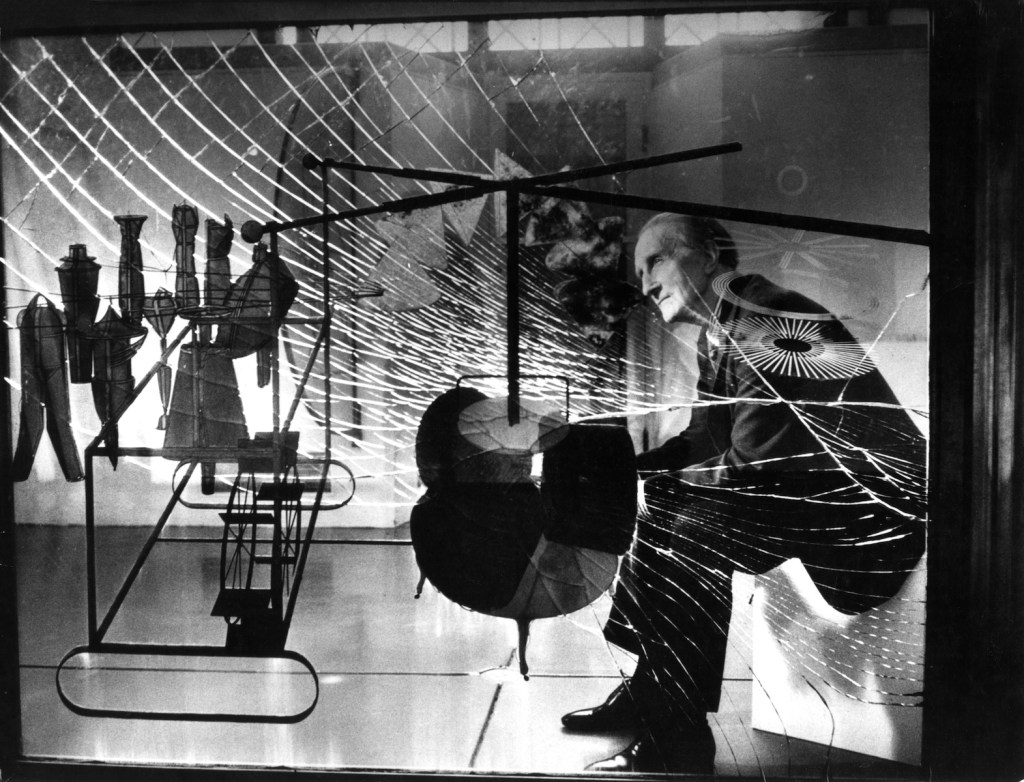
Marcel Duchamp, a pivotal figure in the world of modern art, has left an indelible mark on the artistic landscape from the early 20th century up to the present day. His innovative and intellectually driven approach has influenced countless artists, including contemporary creators like Maurizio Cattelan. One of Cattelan’s most notable works, Comedian, features a banana duct-taped to a wall, which gained widespread attention when it was sold at the 2019 Basel Art Fair for $120,000 and later auctioned for $6.2 million five years later. This piece exemplifies the kind of conceptual thinking that Duchamp helped popularize.
Duchamp’s perspective on art was unconventional. He believed that art functioned more as a cultural phenomenon than as a direct expression of individual creativity. In a 1965 interview with The New Yorker, he famously stated, “Art is a habit-forming drug. That’s all it is…. Art has absolutely no existence as veracity, as truth.” According to him, the role of the viewer was just as crucial as that of the artist. This philosophy underpinned his entire career, challenging traditional notions of what art could be and how it should be experienced.
From the beginning, Duchamp was skeptical about the effectiveness of traditional art forms. Initially trained as a painter, he grew disillusioned with the medium, viewing it as overly focused on visual appeal rather than intellectual engagement. This led him to create a series of groundbreaking works that defied conventional boundaries. His Readymades challenged the distinction between art and everyday objects, while his gender-bending persona, Rrose Sélavy, explored the fluidity of identity. Additionally, works like 3 Standard Stoppages and Rotary Glass Plates blurred the lines between aesthetics and scientific experimentation, paving the way for future movements such as Pop Art, Performance Art, and Conceptual Art.
A significant tribute to Duchamp’s legacy is the upcoming MoMA retrospective, which marks the first comprehensive exhibition of his work in North America in over half a century. The exhibition, co-organized with the Philadelphia Museum and supported by the Centre Georges Pompidou in Paris, will run until August 22, 2026. It aims to introduce new generations of viewers to Duchamp’s contributions while exploring the trajectory of his career. His family background, which included a strong artistic tradition, seemed to foreshadow his eventual impact on the art world.
This retrospective offers a unique opportunity to examine some of Duchamp’s most iconic works and understand the depth of his vision. From his early experiments to his later conceptual pieces, the exhibition will provide a thorough look at an artist who redefined the very nature of creativity.
Key Works and Their Impact
Readymades: These were everyday objects selected by Duchamp and presented as art, challenging the idea that art must be handmade or unique. Examples include Fountain, a urinal signed with a pseudonym, which sparked debates about the definition of art.
Rrose Sélavy: A female alter ego created by Duchamp, this persona allowed him to explore themes of gender and identity. It also highlighted the performative aspect of art, blurring the lines between the artist and the audience.
3 Standard Stoppages: This work involved dropping three meter-long pieces of string onto a canvas from a height, creating random patterns. It questioned the role of chance and the relationship between art and science.
Rotary Glass Plates: An optical experiment involving rotating glass plates, this piece demonstrated Duchamp’s interest in the intersection of art and technology. It invited viewers to engage with the artwork in a dynamic and interactive way.
Through these works and others, Duchamp not only changed the course of modern art but also laid the foundation for future artistic movements. His legacy continues to inspire and challenge artists, curators, and audiences alike. The MoMA retrospective is a testament to his enduring influence and a celebration of an artist who forever altered the way we think about art.