A New Chapter for Thalian Hall
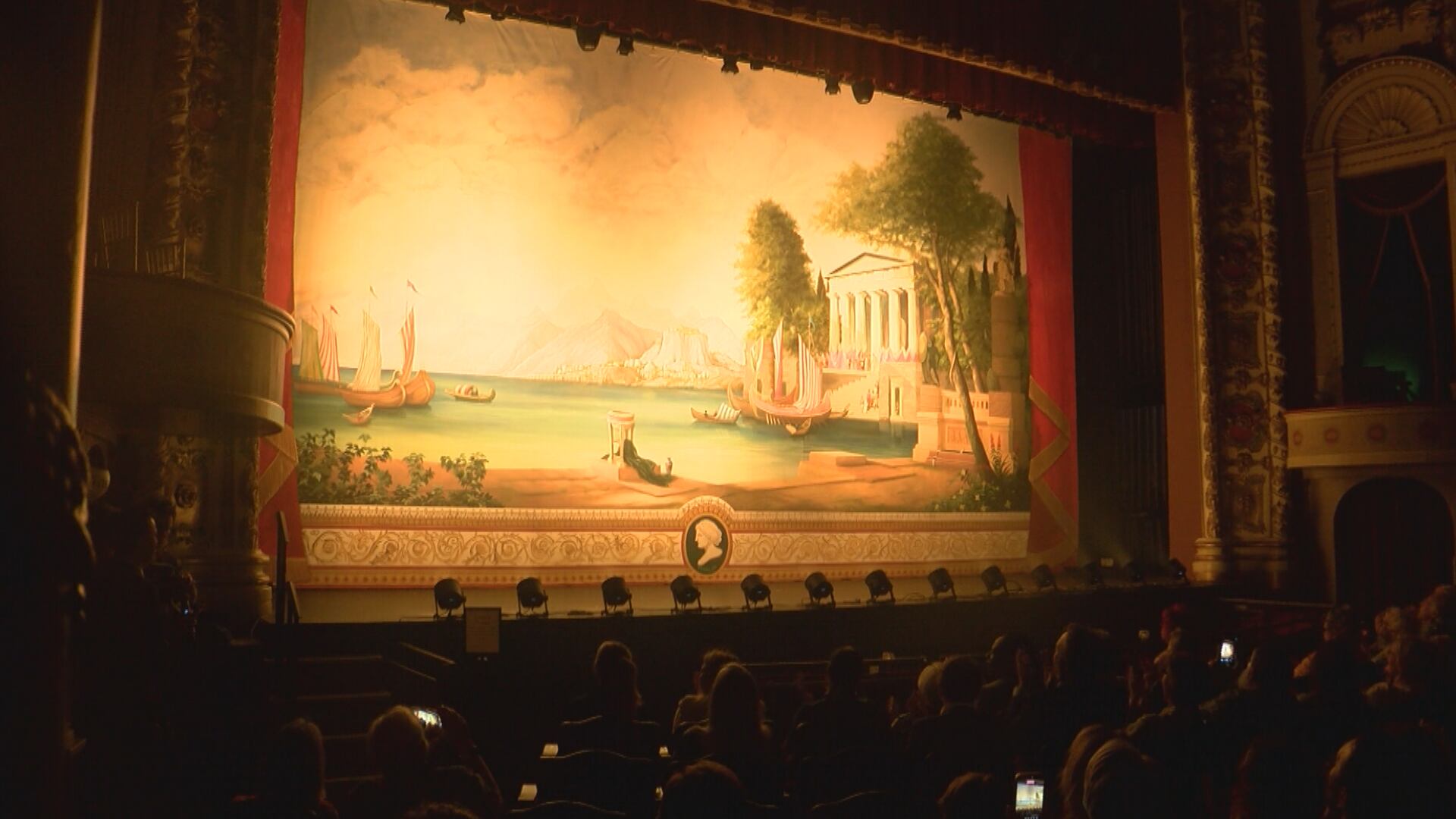
WILMINGTON, N.C. – Thalian Hall has recently unveiled a replica of the stage curtain that was originally painted for its opening night in 1858. This new version is the result of a collaboration between Thalian Hall and the Cameron Art Museum. Local artists have worked to recreate the original piece using techniques similar to those used by the original artist, William Russell Smith.
Shane Fernando, CEO of Thalian Hall, described the significance of the curtain. “It’s Wilmington’s first piece of public art — created for our community — gifted by members of our community to the city, meant to welcome people to the theatre,” he said.
The curtain features a dramatic Greek scene, depicting warriors bringing offerings ahead of the Olympic games. According to Fernando, this artwork represents more than just a historical artifact; it serves as a symbol of the city’s cultural heritage.
Heather Wilson, CEO of the Cameron Art Museum, highlighted the long journey to complete the project. “This curtain captures moments — moments we share together experiencing arts and culture. It’s about our stories and our shared narrative,” she said.
The original curtain is considered the oldest known theatre curtain in the country. Although it remains on display, time has taken its toll. The curtain was damaged in 1939, lost after a 1973 fire, and later found and returned in 1979. Despite these challenges, the original piece continues to be a cherished part of Thalian Hall’s history.
Wilson explained that the replica has found its place at Thalian Hall, where generations of theatregoers can enjoy it for years to come. “It’s a way to preserve and celebrate the legacy of this important artwork,” she added.
Fernando emphasized that the curtain is more than just art. “It meant to welcome people to the theatre,” he said. He also pointed out that the curtain serves as a reminder of Wilmington’s historic past, connecting the present with the rich cultural traditions of the area.
Key Details About the Curtain
- The original curtain was painted in 1858 by William Russell Smith.
- It is the oldest known theatre curtain in the United States.
- The original piece has undergone several challenges over the years, including damage and loss.
- The replica was created using traditional techniques to honor the original work.
- The project took a decade to complete, reflecting the dedication of the artists involved.
- The curtain depicts a Greek scene with warriors offering gifts before the Olympic games.
- It is a symbol of community and cultural heritage for the people of Wilmington.
The Significance of Public Art
Public art plays a vital role in shaping the identity of a community. The Thalian Hall curtain is a prime example of how art can connect people across time and space. By preserving and replicating such works, institutions like Thalian Hall and the Cameron Art Museum ensure that future generations can appreciate and learn from the past.
The curtain not only serves as a visual representation of history but also as a bridge between different eras. It reminds visitors of the importance of cultural preservation and the value of artistic expression in everyday life.
As the curtain continues to be displayed at Thalian Hall, it will undoubtedly inspire new audiences and encourage them to explore the rich history of the theater and the city itself.
Looking Ahead
With the unveiling of the replica, Thalian Hall is taking another step toward honoring its legacy while embracing the future. The collaboration with the Cameron Art Museum highlights the power of partnerships in the arts and the importance of working together to achieve common goals.
As the curtain becomes a familiar sight for both locals and visitors, it will continue to serve as a reminder of the enduring impact of art and the stories that shape our communities.