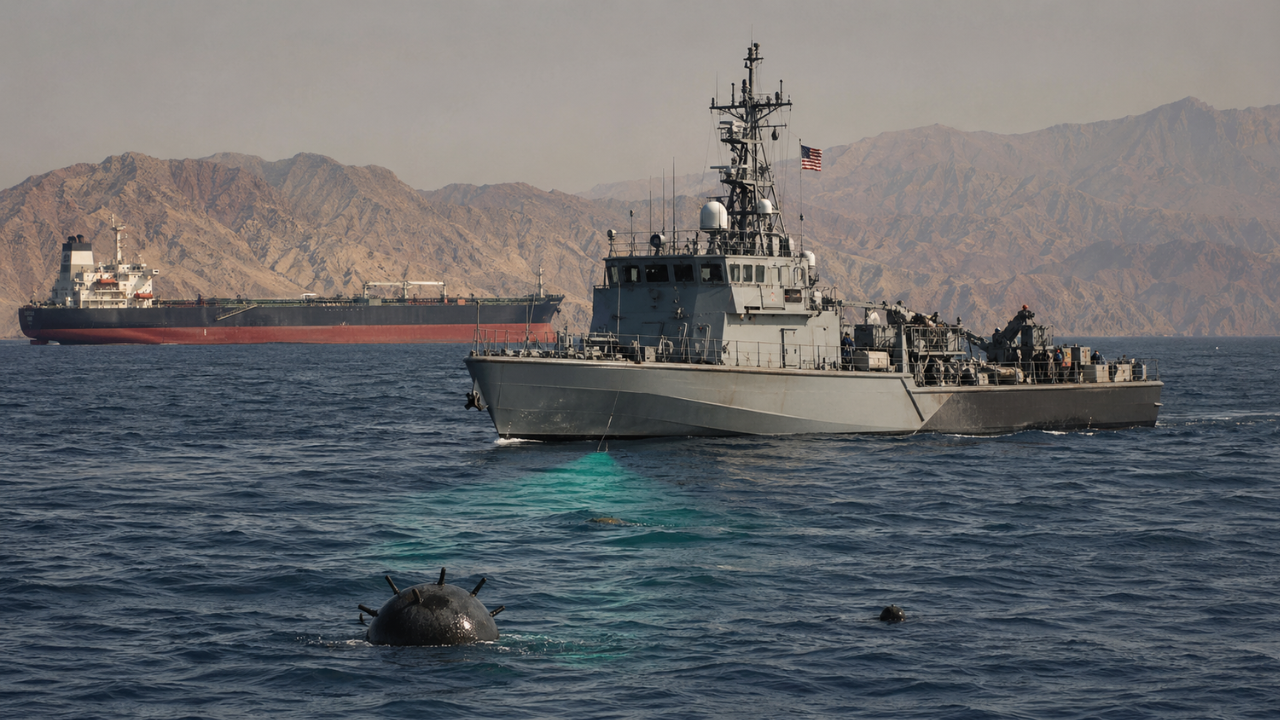
The U.S. Launches Mine-Hunting Operations in the Strait of Hormuz
The United States has taken a significant step in addressing the growing security concerns in the Strait of Hormuz, one of the world’s most critical shipping lanes. Recent efforts by the U.S. Navy to actively hunt for explosive mines highlight the severity of the ongoing crisis in the region. This move comes as global energy markets remain under pressure, with the strait playing a vital role in the transportation of oil and other essential commodities.
President Donald Trump emphasized the importance of this mission, stating that the goal is to reopen the route and restore confidence in global trade flows. The strategic significance of the Strait of Hormuz cannot be overstated, as it serves as a crucial passage for approximately 20% of the world’s oil supply. Any disruption in this area can have far-reaching economic implications.
Why Mine-Clearing Is a Complex Challenge
Despite the apparent simplicity of mine warfare, the task of clearing the strait is anything but straightforward. According to Pentagon briefings, the process could take up to six months, even though officials have been cautious about discussing precise timelines publicly. The U.S. Navy is employing a combination of divers, helicopters, unmanned systems, and specialized vessels to search for and neutralize potential threats.
This complexity arises from the fact that laying mines is significantly easier than removing them. Even a small number of devices or credible claims of their presence can cause commercial traffic to slow down or reroute. This dynamic means that the strait continues to create uncertainty in energy markets, even when some vessels are still passing through.
The Broader Implications of the Mine Crisis
The issue of mines in the Strait of Hormuz extends beyond military operations. It represents a broader effort by the U.S. to stabilize the route and reduce threats to global trade. If insurers and shipping companies do not believe the strait is safe, the consequences will be felt in oil prices, transport costs, and inflation worldwide.
This situation also highlights a shift in the nature of conflict, moving increasingly into economic and maritime territory. The focus is no longer solely on missiles, airstrikes, and retaliation but also on whether the sea lanes that keep the global economy running can be trusted again.
What Lies Ahead
Currently, the U.S. is working on two fronts: reassuring markets and physically reducing the risk in the water. However, mine-clearing is a slow and expensive process, and the psychological impact of the threat can persist long after the physical danger has been mitigated. This means that the Strait of Hormuz may continue to be a point of tension even if the broader conflict subsides elsewhere.
The result is a unique and critical reality: the most significant battlefield in this phase of the conflict may not be on land at all, but beneath the waterline. The presence or even the rumor of mines can affect energy, trade, and diplomacy simultaneously, underscoring the complex interplay between security and economics in today’s global landscape.