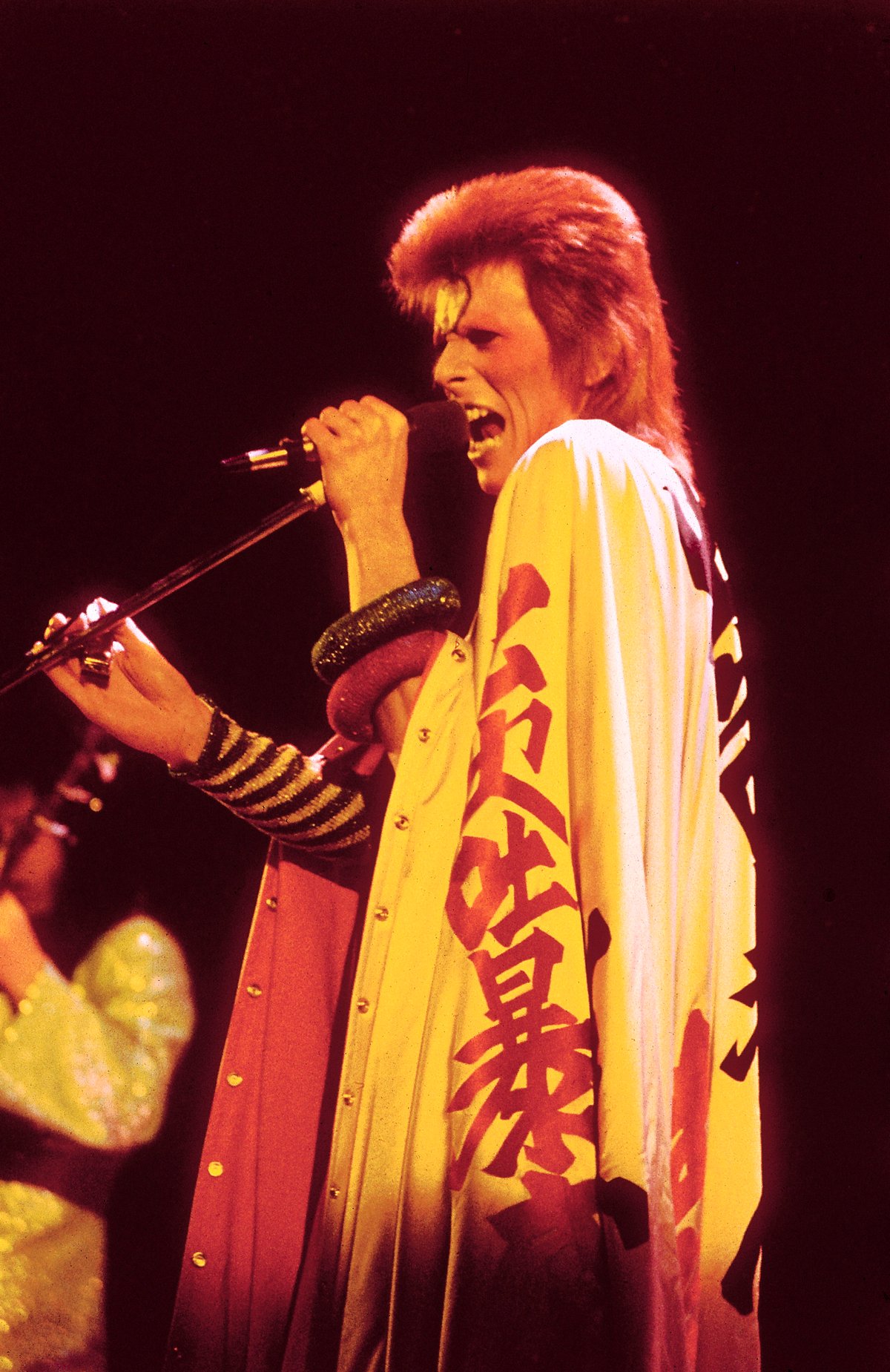
The idea of an immersive exhibition is enough to make any Londoner feel uneasy — from involuntary reactions like spasms and nausea to a deep sense of dread — yet despite this, I found myself in tears after experiencing this one. How and why?
David Bowie: You’re Not Alone is essentially a documentary that delves into the life of the legendary Starman. It shares similarities with Brett Morgan’s 2022 film Moonage Daydream, as it uses Bowie’s own voice for narration and attempts to explore his visionary nature in a non-linear way, rather than following a traditional album-by-album approach.
What makes this documentary unique is its design for the Lightroom’s 360-degree, 12-meter-high screens. The presentation is delivered with such confidence and flair that the experience becomes strangely, often powerfully, effective.
Lightroom is located near Coal Drops Yard, in a part of King’s Cross that has become a hub for new developments catering to a hipster-yuppie crowd. It’s a place that has seen its share of change, and while it may not be the same as the pre-gentrified days of old, it has become a part of an expanding global trend of immersive venues. Previous exhibitions by David Hockney and The Moonwalkers: A Journey with Tom Hanks have helped establish Lightroom’s reputation for artistic excellence. What could have been a simple exploitation of Bowie’s legacy is instead presented with surprising elegance.
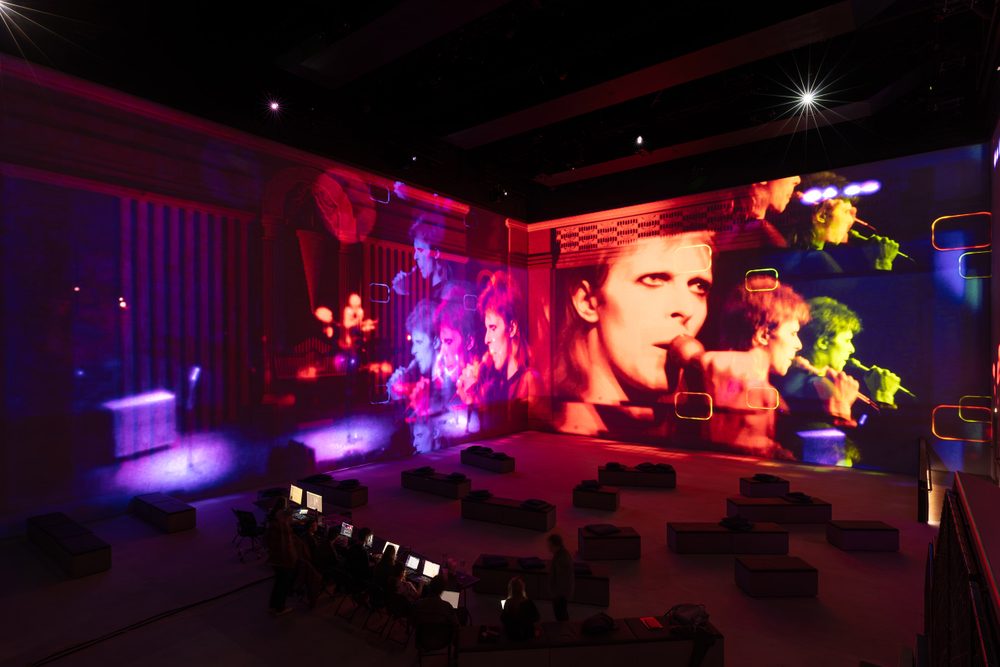
Curiosity was his secret weapon
Writer and director Mark Grimmer brings a wealth of experience to this project, having served as creative director for the V&A’s David Bowie Is exhibition, one of the last major works involving Bowie himself. He skillfully blends rare archival footage with spectacular moments, creating an experience that appeals to both die-hard fans and casual viewers. However, the sheer scale and intensity of the show can leave you feeling powerless in its presence.
The hour-long presentation takes you through various thematic chapters, exploring topics such as Bowie’s working methods and his theatricality. It is a looping experience, allowing you to enter at any time and watch as many times as you wish. However, there is a narrative that builds throughout, and watching the full experience from start to finish is highly recommended. While it is non-linear, the journey begins in suburban Bromley in the 1950s, where Bowie grew up in a council-block environment he described as “bleak, almost Orwellian.” This scene is accompanied by Purcell’s Music for the Funeral of Queen Mary.
You are then transported into his living room (with visuals covering the floor and walls, it feels as if you’re actually moving; at one point I nearly fell off my bench). Here, Bowie heard Little Richard’s She’s Got It on the radio, which transformed his world into Technicolor.
The exhibition then skips over his early 1960s attempts at fame (which include some gems) and moves into the 1970s, where we see how his chameleonic reputation was developed, as he transitioned from Ziggy Stardust to Aladdin Sane and The Thin White Duke. All of this is presented from Bowie’s perspective, with him reflecting on his “grasshopper” tendencies with amusement but also clarifying that, “curiosity is my secret… my enthusiasms drive me.”
There is a fascinating piece of awkward footage from a Russell Harty interview, where Bowie politely dismisses the interviewer’s reductive questions about his appearance and hair color, as if he were a circus act. In the voiceover, Bowie describes himself as very shy, with these characters allowing him to express himself. Yet, his genuine enthusiasm made these personas come alive, “all the way… straight down the line.”
It is here that the show justifies itself. Bowie achieved such monumental artistic success because he was so fully committed to his ideas. The presentation of these ideas is so powerful that it feels like experiencing them for the first time.
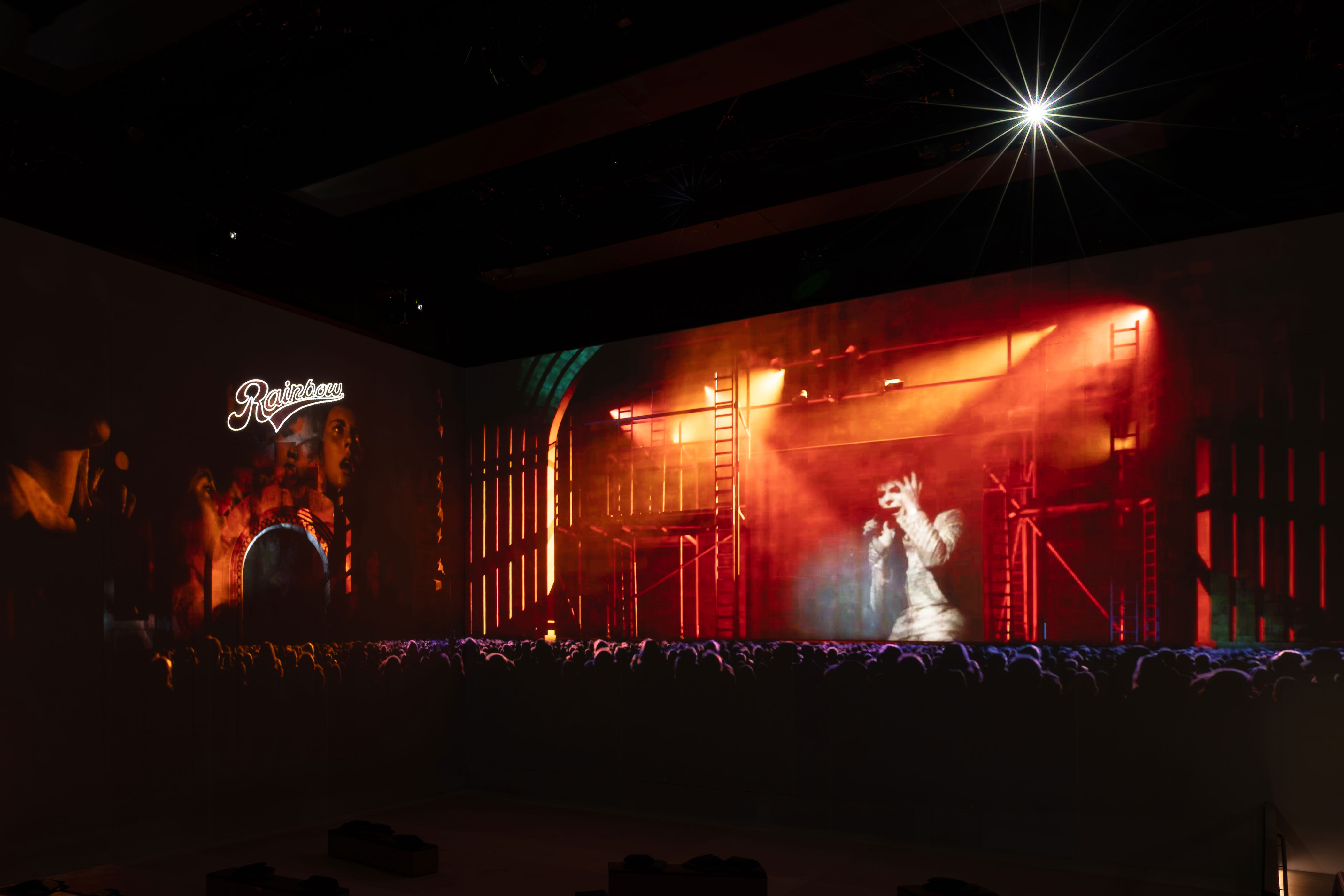
A pure rock ’n’ roll rush
The performances of select cuts from his most iconic songs are standout moments. By cutting between footage from different eras, we see Space Oddity, Heroes, and Let’s Dance delivered in a completely enveloping way that gives you the physical rush of being in the audience.
The format also proves surprisingly effective in conveying the emotion in his music. With the performances displayed on such a grand scale, you can see right into his eyes. He tells us he has always felt like an outsider, making music for “anyone who is weird, or feels different to normal society.” Ultimately, his message is for them — the dazzling end to the show is Rock ’n’ Roll Suicide played at the final Ziggy show at Hammersmith Odeon in 1973, with its closing refrain of “you’re not alone, just turn on with me, and you’re not alone.” Somehow, this immersive experience delivers the heart of Bowie to you in a way that leaves you breathless.
David Bowie: You’re Not Alone is at Lightroom until Oct 10.