Unique Flora of the Stirling Range National Park
If you take a hike across the mountain tops of the Stirling Range National Park in Western Australia, you might be lucky enough to come across a plant found nowhere else in the world. This area is home to 1,500 native flora species, many of which are rare and endangered. However, these unique plants faced a significant threat when bushfires swept through the park in 2018 and 2019.
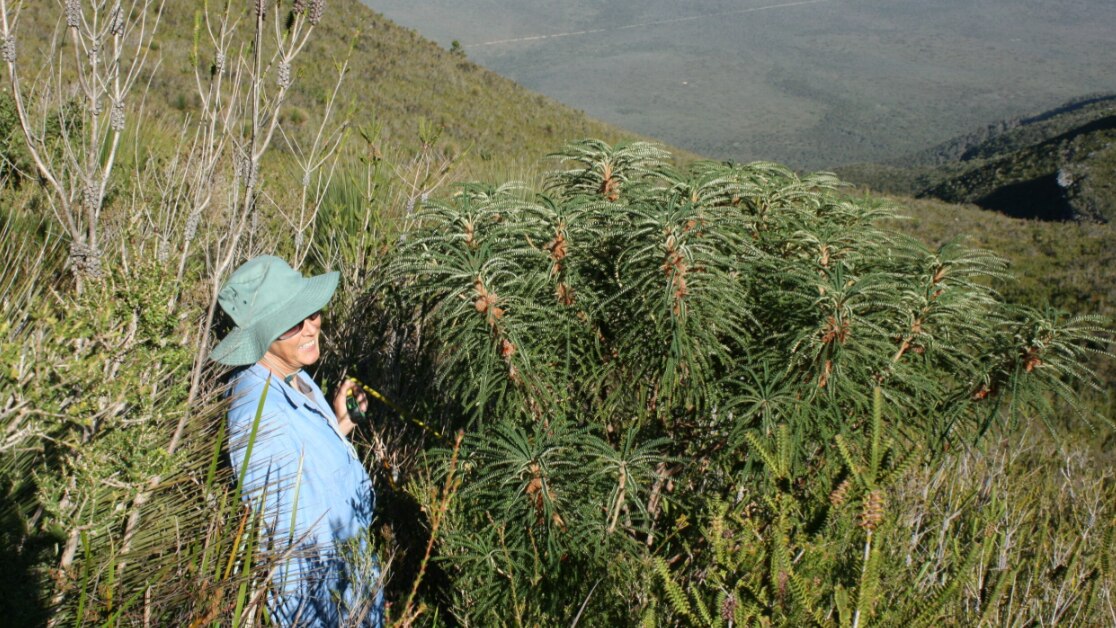
In total, 26 threatened flora species were burnt, including 18 critically endangered species. Experts like Sarah Barrett have been working tirelessly to ensure their survival ever since. Dr. Barrett, a conservation officer with the Department of Biodiversity, Conservation and Attractions (DBCA), highlighted the particular concern around banksia montana, which is considered one of the most endangered species.
“Before the fire, we had 37 mature individuals left in the world, and they were all restricted to the Eastern Stirling Range, and all of those were burnt in the fire,” she explained. Following the fires, the team identified tiny seedlings and took steps to protect them by fencing off the areas and spraying them with phosphite to improve their defenses against dieback.
Insurance Seed Collections
Off the mountain, recovery efforts were also being undertaken using collections stored at the Western Australian Seed Centre in Perth from the past two decades. “We’ve been fortunate that we’ve been collecting seed over that period, so we had these insurance seed collections,” Dr. Barrett said. Some of the populations that were collected are now extinct.
Andrew Crawford, the centre’s collections manager, emphasized the careful handling of the seeds to ensure their longevity. “Those seeds go into heat-sealable foil bags, so the moisture content is fixed, and then they go into the seed vault, which is basically a big freezer where the seeds are stored at minus-20 degrees,” he said. “They’re stored there until we need them at some point in the future to help with the recovery of those species.”
Future Planning for Recovery
To support the recovery of the flora, seed production sites were established in the Porongurup National Park and Redmond State Forest. Research scientist Rebecca Dillon mentioned that 1,000 plants from 14 species were planted at each site and later transplanted into the national park, using a helicopter to access remote areas.
Ms. Dillon noted that while the efforts were having a positive impact, threats such as a drying climate remained a major challenge. “With all the surveys that have been done in the past and then prior to the fires and after the fires, there’s actually a change in the distribution of the plants in their natural populations,” she said. “We’re noticing they’re retreating off the more north-facing sides of the hills and the ridges over to the back slopes where it’s cooler and wetter.”
Ongoing Efforts for Conservation
Years after the fires, the team continues its recovery efforts both on and off the mountains. “It’s taking care of those plants, so it may involve phosphite spraying or it might involve fencing if the plants are being eaten,” Ms. Dillon said. “And then as they come online, we’ll be collecting seed again from the plants that have established.”
Dr. Barrett shared some success with the banksia montana populations. “Although we say we started with 1,000 seedlings of banksia montana, due to drought, due to fire, due to disease, we now have less than 300 young plants, some of which are flowering and starting to set seed,” she said. “But if we were to end up with 100 mature plants in a couple of years’ time, we would be very happy.”