The Rise of the Nomadic Family
Around half a million people left the UK to live elsewhere last year, and it’s not just retirees. A survey of more than 3,000 young people by the British Council showed that 72 per cent of those aged 18 to 30 would consider living and working abroad.
According to LiveCareerUK, an estimated 165,000 British digital nomads live around the world, drawn to this lifestyle for a better work-life balance, a cheaper cost of living, and warmer climates. The i Paper’s Expat Files follows Britons who have taken the leap and settled elsewhere, detailing the ups and downs of their journey.
A Family on the Move
Ruth Rowe, 35, is “slow travelling” around the world with her husband Steven, 36, and their two children Aurora, five, and Atlas, three. They left the UK at the end of 2023 and have so far travelled to 15 countries across Asia, Europe, and North, Central and South America. Ruth tells Hannah Bentley how they manage the children’s education and why they don’t have plans to return home.
Steven and I were on our honeymoon when Covid hit. We’d gone travelling for six months and were in Hong Kong, but the trip was cut short. I definitely brought out the travelling side in Steven. It’s a big part of who I am, and was one of the reasons why I was drawn to working on cruise ships before becoming a nanny for 12 years. I gave that up to look after our daughter, Aurora, who was born in 2020. Steven runs his own fully remote strength and nutrition company, Strong Foundations Coaching, with clients everywhere from the US to the UK, Australia and Asia.
In the UK, we lived in Hereford and loved it. We had a lovely life there, in a converted barn in the middle of the countryside, with lots of friends and family around. But I think we knew we weren’t finished with travelling – and we never really saw having children as a reason not to travel.
When we started looking at nurseries for our Aurora, who was two at the time, we found one that we really liked, but we ended up missing the application deadline. It made us ask ourselves: “What do we actually want?”
It just didn’t feel right to send her off to nursery for five days a week just because that’s what everyone around us was doing. We discussed what we wanted our children’s lives to look like and said: “Well, if she’s not going to go to nursery, why don’t we sell everything, leave the country and go see the world with them?” It was what we’d always wanted.
Because the business is remote and we were renting, we didn’t have anything tying us down. We sold absolutely everything – furniture, belongings, clothes, our car. We now have a box of keepsakes at a family member’s home, and that’s it. We made sure we had at least two months of costs covered, and when we got our rental deposit back, we used that to pay for our flights and visas to Sri Lanka in November 2023.
Managing Expenses While Traveling
In Hereford, we were paying about £1,300 in rent each month, and because our earnings are fairly consistent, we decided that would be our accommodation budget. We don’t have loads of savings, we’re on one wage and living on a budget – so depending on the country, it can impact what we can afford. In some places, like Colombia, we might be in a three-bedroom apartment with a garden and a pool; in others, we’re staying in a one-bed apartment.
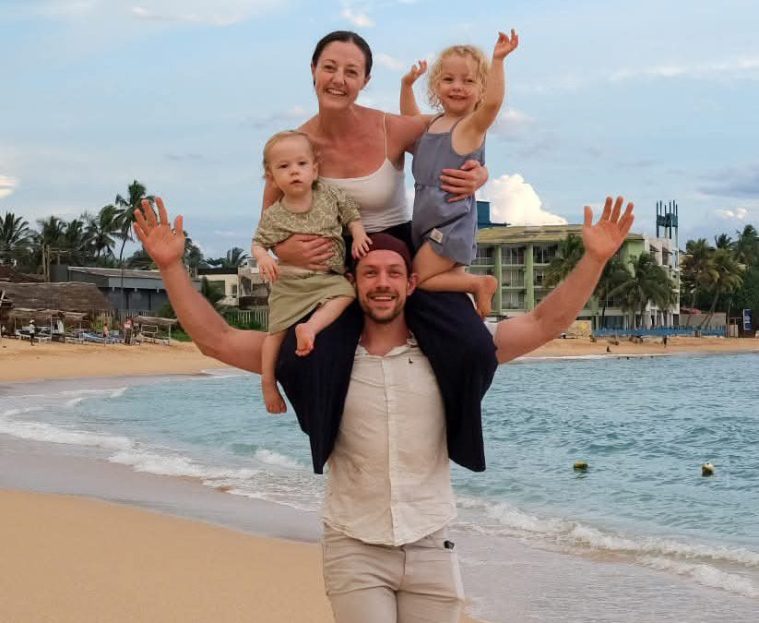
We spend about £600 a month on food shops – the same as we did in the UK. You could definitely feed a family on £50 a week in Thailand, for example, but we prioritise nutrition and good-quality protein sources such as meat and high-protein yoghurt, which tend to be more expensive. That said, we also buy more affordable local protein options, like fresh prawns in Sri Lanka, which cost about £4 per kilo.
Imported food can be very expensive. In Thailand, I remember seeing a 200g box of cherries for £12. So we tend to get fruit and veg from local vendors, and we always try local dishes, which the kids get really excited about. In Bolivia, eating out was very affordable – we could go to a steak restaurant and have picanha – a tasty cut of beef – and four sides for £9.
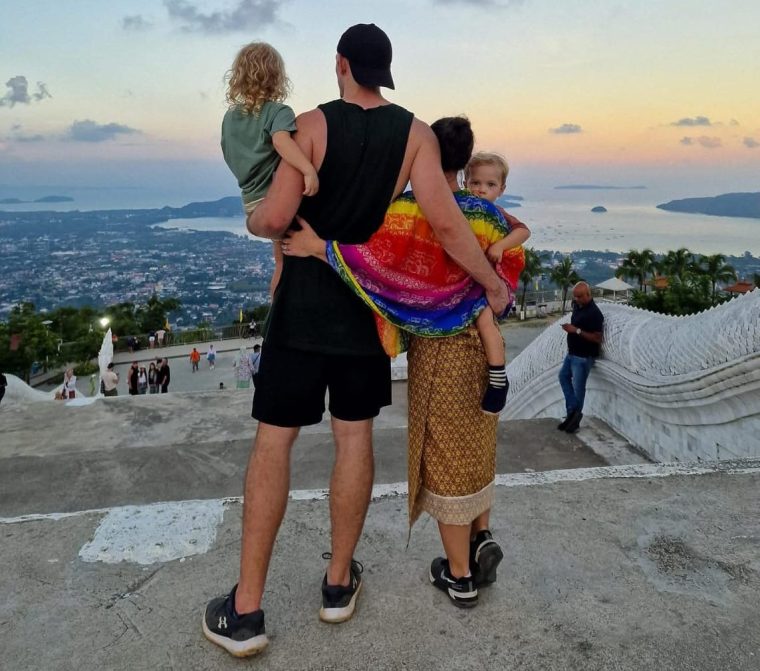
In the UK, we were probably spending around £800 a month on bills – like Wi-Fi, gas, electricity. That money now goes into an account to fund visas and flights. When we visit a country, we usually stay a month in each city. It allows us to see a lot, but costs can vary significantly. Sri Lankan visas, for example, were much higher than we expected – we ended up spending £600 for five months. So, to save money, we looked at other countries next with cheaper visas, like Indonesia, where we could stay for three months for around £20 each per month. After flights and visas are paid for, anything left over goes into savings for the children.
Simplifying Lifestyle and Prioritizing Experiences
We’ve saved money by cancelling the many subscriptions we had back in England, like TV memberships, National Trust passes, gyms, coffee subscriptions, and HelloFresh. Now we’re very intentional about what we spend money on, prioritising experiences – like visiting tea plantations or an elephant sanctuary in Sri Lanka – over material things. We only buy what we need, as everything has to fit in our suitcases. If we buy a new top, for example, we donate an old one.
Steven and I have developed a really strong communication skill set. We live in each other’s pockets, so we have to be honest about when we need time to ourselves or feel overwhelmed. Travelling has also strengthened the kids’ relationship as brother and sister. They’re best friends and do everything together. This time as a family has created a strong connection between the four of us. If the kids were in full-time school, there’d be much less time to really get to know them. I do most of the childcare, but Steven is still around when he is working, so they show him their work or he reads them stories in the middle of the day.
Education on the Go
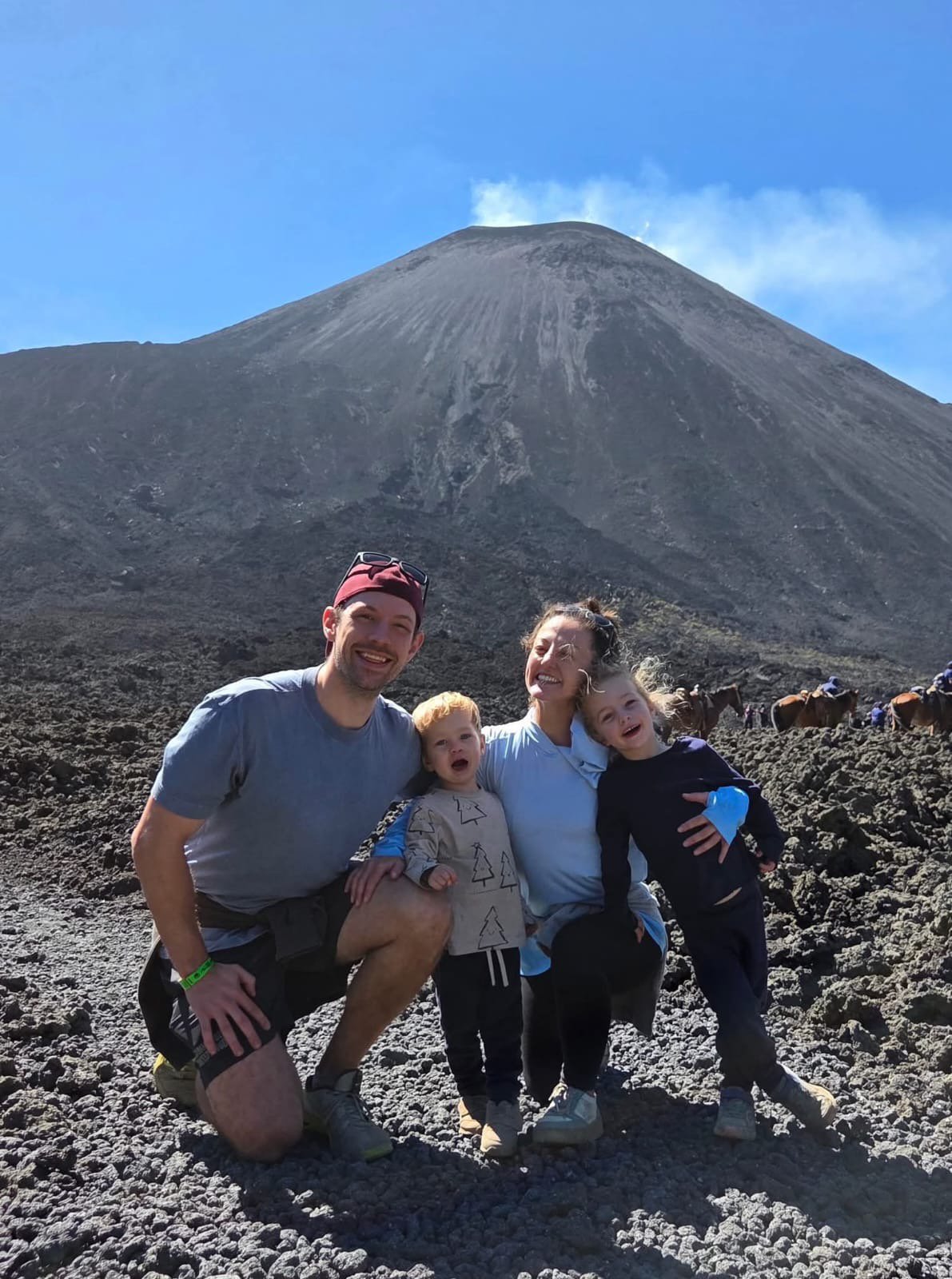
The children have a real passion for learning because it hasn’t felt like a chore, and it’s often rooted in real-world experiences. Schooling might mean visiting a cork museum in Portugal, or learning about volcanoes while hiking one in Guatemala with a guide teaching us all about volcanic rock. I homeschool them, and right now they’re learning phonics and maths. Yesterday they were learning about the bladder and kidneys, drawing and colouring in the organs. Their education doesn’t align exactly with the national curriculum, because it’s not forced. We let them learn at their own rate and we encourage things when they show an interest.
They’re also developing a lot of life skills. We encourage them to pay for things so they understand money. We also encourage them to be part of conversations, which meant that in South America they were learning Spanish and even having conversations with people. They’ve both developed such confidence and maturity in how they communicate.
Now that Aurora is five, people sometimes ask if we’re coming back and whether we’ll put her in school. We aren’t worried about them falling behind because we believe children learn at their own rates. Learning doesn’t just happen within a classroom setting. We don’t feel like there’s any need to compare our kids to anyone else’s, or justify how they’re learning. We’re doing what feels natural and don’t have any plans to stop travelling.
A Typical Day on the Road
As for a typical day: some days Steven works nine to five; other days he’ll start at 4am to get a couple of hours in before the kids wake up, so we can all have breakfast together. Then the children and I might go swimming – at the beach or in a pool, depending on where we are. In the afternoon, I’ll do some learning with them at home, and we try to get the kids into jiu-jitsu and gymnastics classes if we’re somewhere long enough, so they have some consistency. We might watch the sunset on the beach with a pizza – we did that a lot in south-east Asia – and then, no matter what country we’re in, the kids will finish their day with stories in bed.
When we’re arriving somewhere new, it takes us all a couple of days to find our feet, but this really doesn’t faze Aurora and Atlas, as they end up adapting quite quickly. They get excited about finding new snacks they can try, what parks we’re visiting, or if there’s a beach nearby. Stability comes from us, not where we are or what we’re doing. Just us being together is where they feel their most stable.