The Early Years of a Naturalist
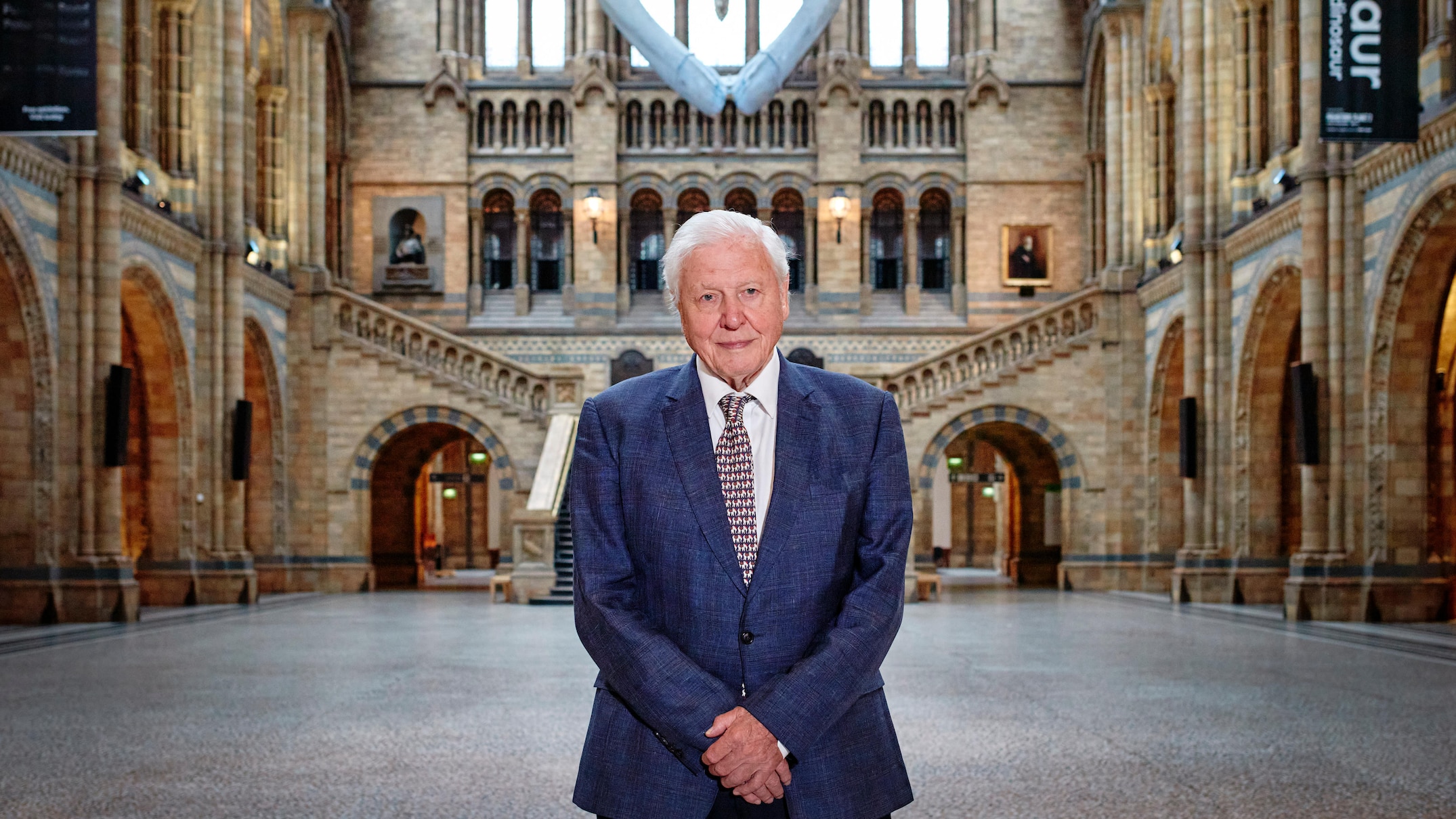
British broadcaster Sir David Attenborough has brought the natural world to living rooms for the past seven decades. His early childhood was marked by a deep sense of wonder and curiosity, especially when exploring the English countryside during the interwar period. As he recounted in the BBC documentary Attenborough’s Journey in 2010:
“When I was a boy growing up in the Midlands in Leicester, the rocks and limestones you found in the east of the country were full of the most magical things. You hit a stone, and it suddenly fell open, and there was this amazing coiled shell. Beautiful and extraordinary, and nobody had seen that for 150 million years except you.”
This experience ignited his passion for collecting and understanding the natural world. He also mentioned having a small museum as a boy, which included items like a Victorian bun penny, a shed skin of a grass snake, some fossil ammonites, and a piece of amber given to him by a refugee from Nazi oppression.
His first pet, a fire salamander, further fueled his fascination with nature. “The most remarkable thing about it to my young eyes was its colour,” he said. “It was a dramatic glossy black with brilliant sulphur-yellow blotches. It seemed as glamorous and as spectacular to me as any tropical species.”
Early Career and the BBC
After completing a natural sciences degree at the University of Cambridge, Sir David was called up for two years of national service in 1947. Following this, he married his wife Jane and worked in educational publishing. His love for adventure led him to apply for a radio job at the BBC. However, he didn’t get the job initially. Instead, he was offered a television role, which he accepted despite not having seen much television before.
He took a chance, quit his job, and underwent a three-month BBC traineeship with no guarantee of employment. His efforts paid off, and he was eventually offered a six-month position as an assistant producer. This marked the beginning of his long and influential career at the BBC.
Bringing Nature to TV Screens
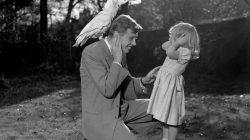
Sir David produced black-and-white shows filmed in a studio. In the 1950s, he came up with the idea to film rare animals abroad in their own environment with the London Zoo’s reptiles curator, Jack Lester. The show, called Zoo Quest, took Sir David to Sierra Leone, where a range of animals were filmed and then captured to be housed in London Zoo.
Jack Lester was supposed to be the star of the show, but he fell ill during the filming of the first two seasons. Sir David stepped up to host segments of the program, showcasing animals caught during the trips in a studio. After Lester’s death, Zoo Quest continued, with Sir David venturing to countries such as Guyana, New Guinea, Paraguay, and Tonga.
Australia and the Great Barrier Reef
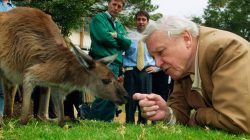
Sir David first visited Australia in the 1960s, where he filmed art, culture, and interviews with First Nations people. He described the region as rich in wildlife, including marsupials like wallabies and bandicoots, gorgeous birds, and bizarre reptiles.
Australia holds a special place in his heart, as reflected in his 2015 documentary on the Great Barrier Reef. “North Queensland is a wonderful, wonderful place,” he said. “It’s got everything. It’s got mountains, it’s got tropical rainforest, it’s got the [Great] Barrier Reef, it’s got wonderful creatures that occur nowhere else.”
Boss of BBC 2
In 1962, after his first Australian work trip, Sir David went freelance. He wanted to spend half his time filming and the other half studying anthropology. In 1965, the BBC offered him a role running the new TV channel BBC 2. He agreed on the condition that he could make a program every 18 months to stay connected with the latest technologies.
Sir David set the tone for what BBC2 should be, introducing programs unlike anything else on television. He also played a key role in bringing colour television to British screens. With Wimbledon as the answer, the BBC could produce several hours of colour transmissions daily, making it the first in Europe to transmit in colour.
Life on Earth and Beyond
In the 1970s, Sir David went freelance again. After completing a seven-part series on tribal art, he was approached by the BBC to helm a major nature program. His plan was a 13-episode series titled Life on Earth, which traced the evolution of life from the sea to land.
The penultimate episode, “Life in the Trees,” captured one of the most significant moments of his career at Dian Fossey’s Rwandan gorilla sanctuary. Crawling towards the sounds of feeding mountain gorillas, he came eye to eye with an adult female, delivering one of television history’s most impactful moments.
Reaching Icon Status
Sir David’s contributions have been recognized globally, with over 50 species and genera named after him. The most recent is a species of wasp named after him for his 100th birthday. He also revealed that his favorite is Attenborosaurus, a family of aquatic reptiles.
A Voice for the Environment
Reflecting on his career, Sir David emphasized the importance of understanding and protecting the natural world. “I did not make them because I had premonitions of impending eco-disaster. I did so because I know of no pleasure deeper than that which comes from contemplating the natural world and trying to understand it.”
He has also spoken about the responsibility of humankind in preserving species and the environment. “We are the most remarkable species the world has ever seen… and that puts a great responsibility in our hands.”
An Advocate for Science
Sir David has been a regular guest on The Science Show with Robyn Williams, discussing the politicisation of science. “Science is about looking unblinkingly at the facts,” he said. “When they don’t match what you thought, then you change the way you think.”
A Lifelong Voyage to Understanding
As he reached 100 years old, Sir David still encouraged people through his documentaries to live sustainably with nature. “Through the course of my life, we have been on a voyage of ocean discovery,” he said. “I’m sure that nothing is more important. For if we save the sea, we save our world.”
You can celebrate Sir David Attenborough’s 100th birthday by watching a selection of thought-provoking and landmark documentaries on ABC iview.