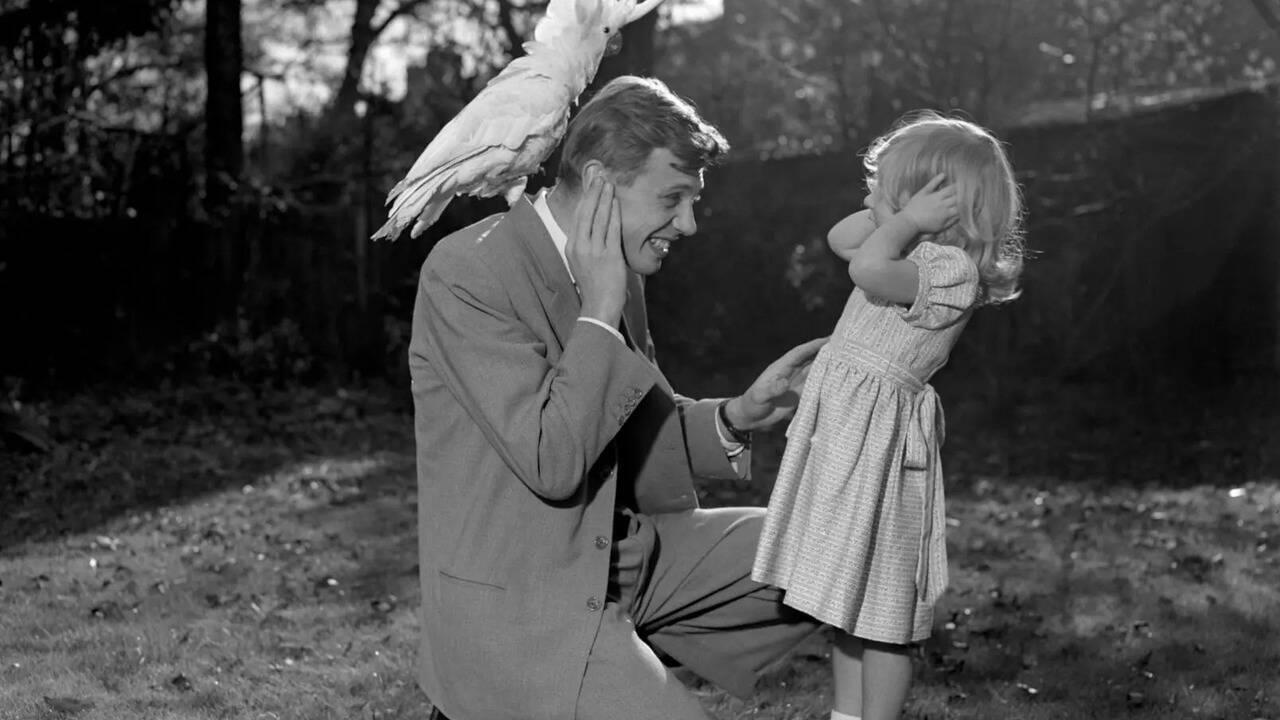
A Centenary Celebration for David Attenborough
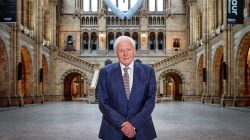
David Attenborough, the world-renowned wildlife presenter, is celebrating his 100th birthday, a milestone that has sparked widespread admiration and recognition. The BBC has organized a special event at the Royal Albert Hall, while cinemas are showcasing his iconic nature films. Friends and colleagues have also taken time to commend his remarkable contributions to the field of natural history.
Despite the festivities, it is likely that Attenborough feels somewhat uneasy about the attention, according to Alastair Fothergill, a producer who has worked on some of his most famous documentaries. “He’s always been very clear to all of us that work with him: ‘Remember, the animals are the stars, I’m not,’” Fothergill shared with The Associated Press. “So, yes, surprisingly for one of the most famous men on the planet, he doesn’t like being famous at all.”
However, the accolades this week have been hard to ignore as scientists, politicians, and conservationists have come together to honor the man who has brought the wonders of nature into homes around the world for over seven decades.
The Impact of Attenborough’s Work
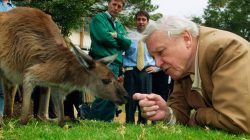
Through BBC programs such as Life on Earth, The Private Life of Plants, and The Blue Planet, Attenborough has captivated audiences with his hushed, melodic voice, which conveys a deep sense of awe for the natural world. His work has transported viewers to remote locations like the Himalayas, the Amazon, and the unexplored forests of Papua New Guinea, offering a glimpse into the beauty, ferocity, and sometimes bizarre aspects of nature.
Behind the stunning visuals, there has always been a commitment to scientific accuracy, helping educate people on complex topics such as evolution, animal behavior, and biodiversity. As evidence of environmental degradation mounted, Attenborough began to sound the alarm about climate change, ocean plastic, and other human-induced threats to the planet.
Ben Garrod, an evolutionary biologist and broadcaster, believes that Attenborough initially saw himself as a neutral observer but was compelled to speak out when he realized that politicians, business leaders, and the public were not taking the crisis seriously. “He is showing you the majesty, the ferocity, the fragility of the natural world. He shouldn’t have ever had to have turned to policymaking and advocacy,” Garrod said.
A Journey of Discovery
Born in London on May 8, 1926, the same year as the late Queen Elizabeth II, Attenborough grew up on the grounds of what is now the University of Leicester, where his father held a senior position. His fascination with nature began during childhood, as he explored the surrounding countryside, collecting treasures such as abandoned bird nests, shed snake skins, and fossils.
“I’d find a fossil and show it to my father and he’d say ‘Good, good, tell me all about it.’ So I responded and became my own expert,” Attenborough recalled in a 1981 interview with Smithsonian Magazine. He went on to study geology and zoology at the University of Cambridge.
In 1952, Attenborough joined the BBC, working behind the scenes on a variety of programs. His career took a significant turn when he was asked to produce a short piece about the coelacanth, a “living fossil” discovered off the coast of East Africa. This experience ignited his passion for wildlife filmmaking.
Pioneering Wildlife Filmmaking
Attenborough’s determination led to a decade-long stint as host and producer of Zoo Quest, a series that kick-started his career in the field. One of the most memorable moments of his career came during the 1979 series Life on Earth, when he encountered a family of mountain gorillas in a forest on the border of Rwanda and what was then Zaire (now Congo).
During that scene, voted one of Britain’s top TV moments of all time, a young gorilla lay across his body while several babies tried to remove his shoes. Attenborough grins, laughs, and is speechless with delight. “I honestly don’t know how long it was,” he later told the BBC. “I suspect it was about 10 minutes, or even a quarter of an hour. I was simply transported.”
Legacy and Influence
Jean-Baptiste Gouyon, a professor of science communication at University College London, notes that Attenborough has combined his knowledge of television, an understanding of his audience, and his commitment to science to create a character who can deliver complex issues surrounding wildlife, conservation, and natural history to a mass audience. “Basically he gave wildlife television a figure, a front of the house person … which has come to embody television discourse about nature,” Gouyon said.
On this, his centenary, Attenborough has been overwhelmed by birthday greetings from preschool groups to care home residents and countless individuals and families of all ages. In a recorded audio message, he expressed his gratitude, saying, “I simply can’t reply to each of you all separately, but I would like to thank you all most sincerely for your kind messages.”
Fothergill added that Attenborough is not planning to stop anytime soon. “He said to me recently he feels unbelievably privileged that a man in his late 90s is still being asked to work. And, you know, he will go on forever. He will die in his safari shorts.”