Return of Australian Women and Children Linked to Islamic State
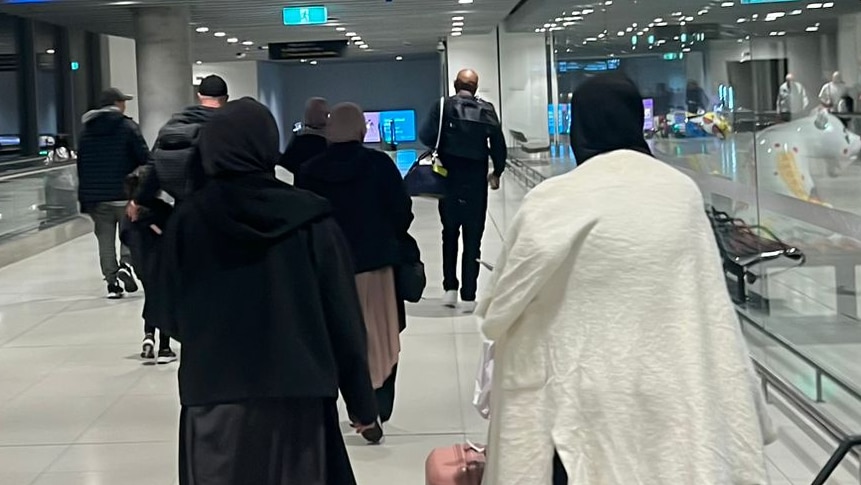
Thirteen Australian women and children associated with the Islamic State (IS) group have returned home from Syria, several years after the terrorist organization lost its territorial control. A group arrived at Melbourne airport on Thursday night, while another woman and her child landed in Sydney shortly afterward.
Two of the women who landed in Melbourne have been charged with offenses related to slavery. Additionally, a 32-year-old woman has been charged with terror-related offenses after arriving at Sydney International Airport on Thursday evening. Here’s what is known about the group and what lies ahead for them.
What is the Islamic State Group?
The Islamic State, also known as ISIS, ISIL, or Daesh, is a Sunni extremist group that emerged during the Iraq War and later seized large parts of Iraq and Syria. At its peak in 2014, the group had over 65,000 fighters and declared a so-called “caliphate” — an Islamist state governed by its radical interpretation of Islamic law. It imposed brutal rule over millions of people through mass killings, torture, sexual slavery, and public executions, while also inspiring or directing terrorist attacks around the world.
IS grew out of Al Qaeda’s branch in Iraq but became even more extreme, aiming to build a global Islamist state. Australia first listed the group as a terrorist organization in 2005 under its former Arabic name, before re-listing it under its current name in 2007.
According to the Department of Home Affairs, more than 200 Australian men, women, and children traveled to Syria and Iraq to join IS between 2012 and 2019. The department stated that dozens more Australians had assisted IS by helping fighters overseas or by planning or carrying out terrorist attacks in Australia.
Although IS lost the last of its territory in 2019 after a years-long military campaign led by the United States and its allies, the group remains active. An estimated 14,000 to 18,000 fighters are still living in Syria and Iraq, while some of its most active branches are now based in Africa.
How Did Australian Women Get Involved with IS?
Some Australian women traveled to Syria and Iraq with husbands and partners who supported IS. Others traveled with family members and later married IS fighters after arriving in the region. In recent years, some of the women have told media, including the ABC, that they got stuck in Syria by accident or were coerced into going.
What Do We Know About the Women Who Returned?
A group of four women and nine children linked to IS fighters landed in Sydney and Melbourne last night. The women include 53-year-old grandmother Kawsar Abbas, her daughters Zahra Ahmed (33) and Zeinab Ahmed (31), as well as a former health science student, Janai Safar (32).
Ms. Abbas is the wife of Mohammad Ahmad, who previously told the ABC the family traveled to Syria in 2014 for their son’s wedding and became trapped there as the conflict escalated. He said he never supported IS. Zahra Ahmed is the widow of Muhammad Zahab, a Melbourne recruiter who died in an air strike in 2018. A 2019 investigation by Four Corners found many Australians who traveled to join IS were linked to Zahab.
As some of the women were boarding their connecting flight in Doha, they told the ABC they were relieved to be returning to Australia. “We just want our children to be safe. It was like hell [in Syria] for them,” one woman said. They said many of their children, who were born in Syria, had never visited Australia and it was “like paradise” to them.
All the women and children are Australian citizens and hold Australian passports.
Where Were They Living?
The women and children have been living in detention camps in northeastern Syria since the collapse of IS territory in 2019. The 13 recent arrivals were part of a broader group of 34 Australian women and children who tried to leave the Al Roj camp in February, only to be turned back shortly after leaving. Many foreign women and children linked to IS have spent years in overcrowded camps such as Al Hawl and Al Roj.
Humanitarian groups have warned of deteriorating security, limited medical care, and the risk of radicalization at these camps.
[map of camps]
The women and children who arrived last night left the Al Roj camp in April. The ABC understands that they were based in Syria’s capital, Damascus, before booking their flights home this week.
Who Was Arrested?
The two women arrested in Melbourne are believed to be Kawsar Abbas and Zeinab Ahmed. They have both been charged with crimes against humanity, including enslavement, and Kawsar Abbas is also accused of slave trading. The AFP said it would be alleged that the 53-year-old woman traveled to Syria in 2014 with her husband and children, and was complicit in the purchase of a female slave for $US10,000 ($14,000) and knowingly kept the woman in the home. The 53-year-old woman has been charged with four crimes against humanity and the 31-year-old woman with two. Each offense carries a maximum penalty of 25 years in prison.
The woman arrested by the NSW Joint Counter Terrorism Team in Sydney is believed to be Janai Safar and is expected to face Downing Centre Local Court today. She was charged with entering, or remaining in, declared areas and being a member of a terrorist organisation. Both offenses carry a maximum penalty of up to 10 years’ imprisonment. The AFP said it would be alleged the woman traveled to Syria in 2015 to join her husband, who had previously left Australia and joined IS.
What Awaits the New Arrivals?
AFP Assistant Commissioner Counter Terrorism Stephen Nutt said operational planning for the potential return of people from the Middle East began in 2015. “Australian joint counterterrorism teams methodically investigated all Australians who traveled to declared conflict areas and will ensure those who are alleged to have committed a criminal offense are put before the courts,” he said. “This remains an active investigation into very serious allegations.”
In 2022, four Australian women and 13 children were repatriated from Syrian camps and returned to Sydney. Authorities said the operation was carried out after extensive security and welfare assessments.