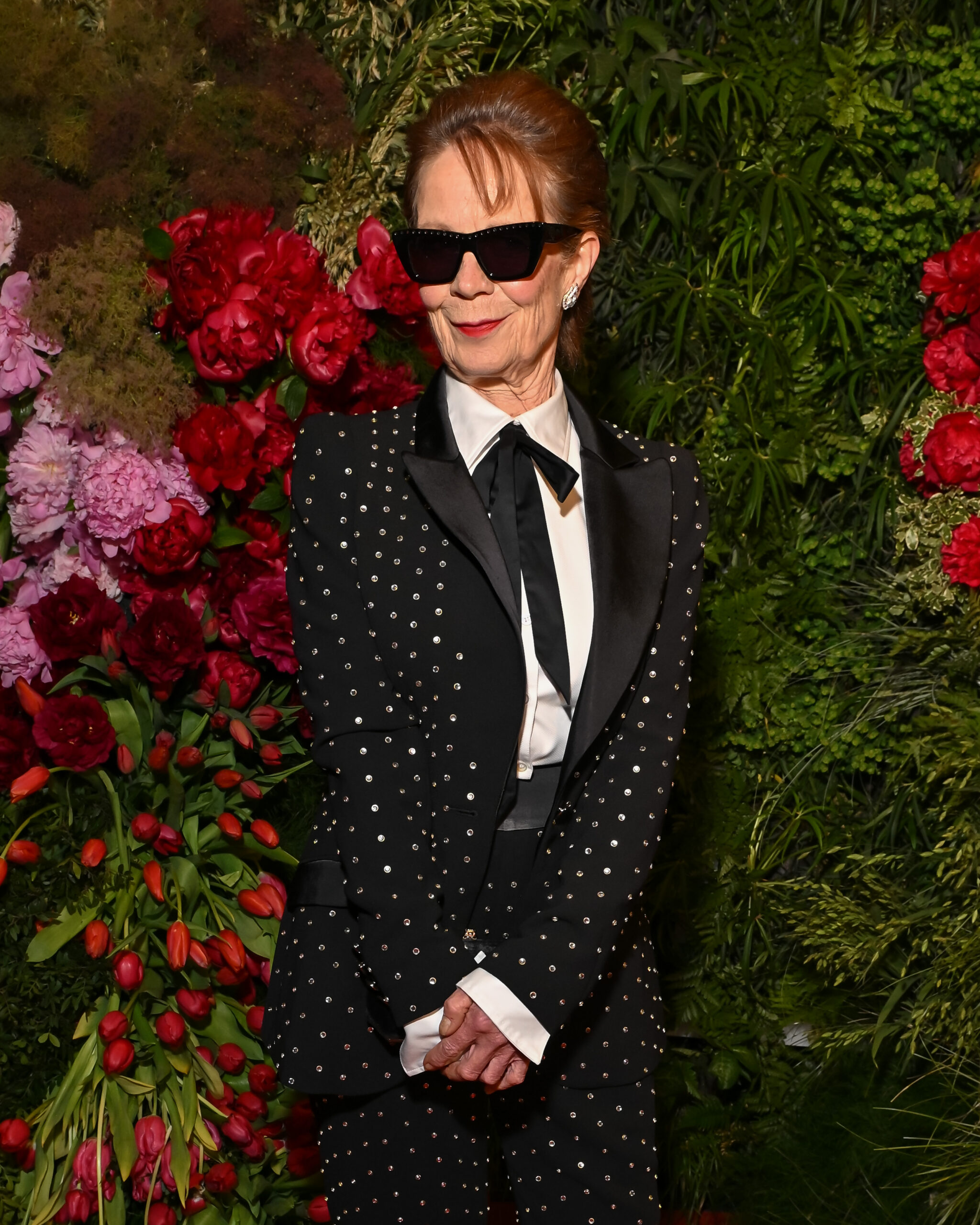
A Life of Adventure and Resilience
Celia Imrie is one of the most recognisable faces in stage and screen. The Olivier award-winning and Screen Actors Guild-nominated actress has always been a trailblazer, breaking traditions throughout her career. She never married and became pregnant with her first child in her forties, showcasing her independent spirit and determination.
In 2025, Celia made a memorable return to the small screen with Celebrity Traitors and on streaming with Netflix’s The Thursday Murder Club. At 73 years of age, there are few signs of Celia slowing down anytime soon. With that in mind, we’re revisiting our exclusive interview with the English actress from the April 2018 issue of The Australian Women’s Weekly. Read that exclusive below.
An Unforgettable Encounter
Just imagine the scene. You’re cruising on the glorious Queen Mary 2. You decide to throw caution to the wind and join the fencing class, and after a frenetic clash of swords, you lift your mask to discover that the rather balletic, energetic lady you have been lunging at is none other than Celia Imrie, the plummy-voiced star of the Marigold Hotel films, Calendar Girls, Bridget Jones’s Diary and bestselling novelist to boot.
It could happen, really. Celia regularly hops from Southampton to New York on the liner and always throws herself into the on-board activities.
“I’ve probably done the journey about seven times now. I’m mad about the sea,” she explains excitedly. “I go line dancing. I do the quiz. And, you know, in the middle of the ocean doing a fencing class is rather an extraordinary experience and wonderful.”
Celia swears “the ship is big enough for you to get lost in,” but also admits she’s frequently recognised. “It means that you have to be very polite and say hello to people, but I never mind that, actually. It doesn’t cost anything to say hello and smile.”
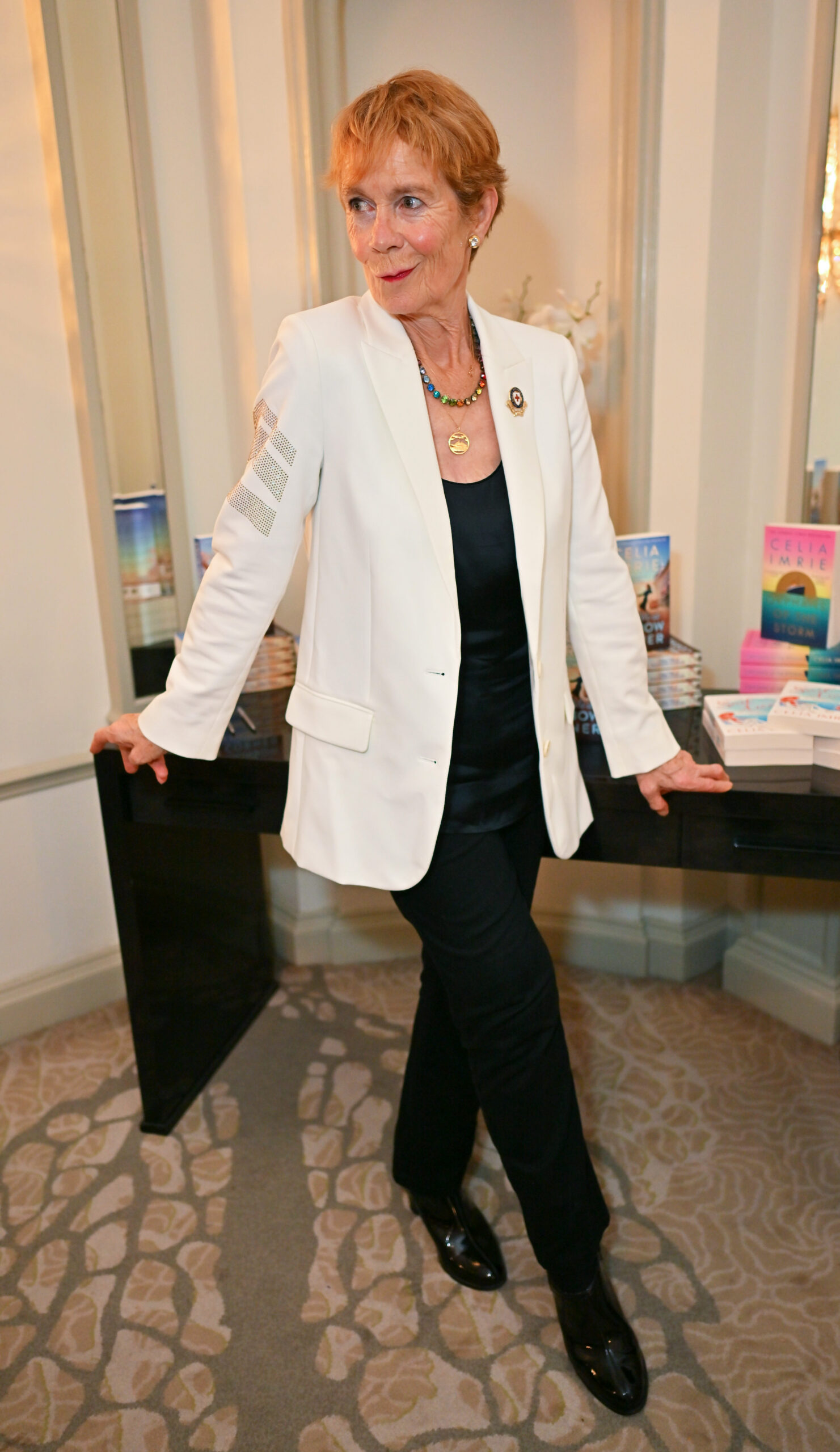
A Life Inspired by the Sea
Celia Imrie is exactly as I had imagined she would be – warm, thoughtful, a bit naughty and dripping with refined English courtesy. But there’s also a sense of determined urgency about her. Even though she hates to be defined by age, at 65, she’s acutely aware that she must grab life by the throat to make each day count. The cruise is pertinent. Her new novel, the witty romp Sail Away, about a sixty-something actress, Suzy, whose play is cancelled and has to take a job on a liner to work her way back home, is inspired by Celia’s ocean jaunts. The setting is a deliberate departure from the sunny Belleville-sur-Mer backdrop of her first two best-selling novels.
These were inspired by Celia’s second home in Nice, where she escapes chilly London to write in the beautiful apartment she purchased overlooking the Mediterranean. But that idyll was shattered 20 months ago when a man in a 19-tonne cargo truck drove into crowds of people celebrating Bastille Day on the Promenade des Anglais, murdering 86 and injuring 458 others. Celia was in the middle of this terrorist attack, running for her life.
“I have imagined all these years that Nice gives me a special firework display for my birthday because on the 14th of July – Bastille Day – there is a display over the sea, which is doubly beautiful because it is reflected in the water. And very often I have a party because my birthday is the next day,” Celia tells me.
“Therefore, I was there down on the Promenade enjoying the fireworks with friends. I realised something was wrong when a rather handsome young couple came running towards me. She was running in very, very high-heeled shoes, and it was very, very fast, and I remember thinking ‘blimey’. But whatever they had seen was coming towards me. I was with a friend and trying to work out what on earth was going on, and luckily, she very cleverly said, ‘Celia, for God’s sake, let’s run’. I didn’t know what I was running from, but it was terrifying. It was with seconds to spare that I ran up a side street, and had I not, God knows.”

A Day That Changed Everything
“I was in the path of the truck. It was ghastly. When I got back home, there were dead bodies outside my flat. I didn’t know what was happening. You heard gunshots and things. The not knowing was horrifying, and I am very lucky to be alive, and that’s the truth. I don’t have enough horrifying words to tell you how awful it was, but the French have great dignity and grace, and President Macron came down a year later and in a way somehow has made the Promenade des Anglais, the route of the horror, stop being a graveyard, because that’s what it was.”
After this, Celia felt she couldn’t write about Nice in the same way; everything had changed. “When the attack happened, I felt it was too difficult to be light-hearted, which I’m trying to be in my writing; the place was in such shock and in respect to everybody there who had to digest the trauma of it all.” And while she remains truly committed to her French life, Celia did actually sail away, both in reality on the Queen Mary 2 for work in the US, and in fiction with a new cast of characters who meet on an ocean-going liner.
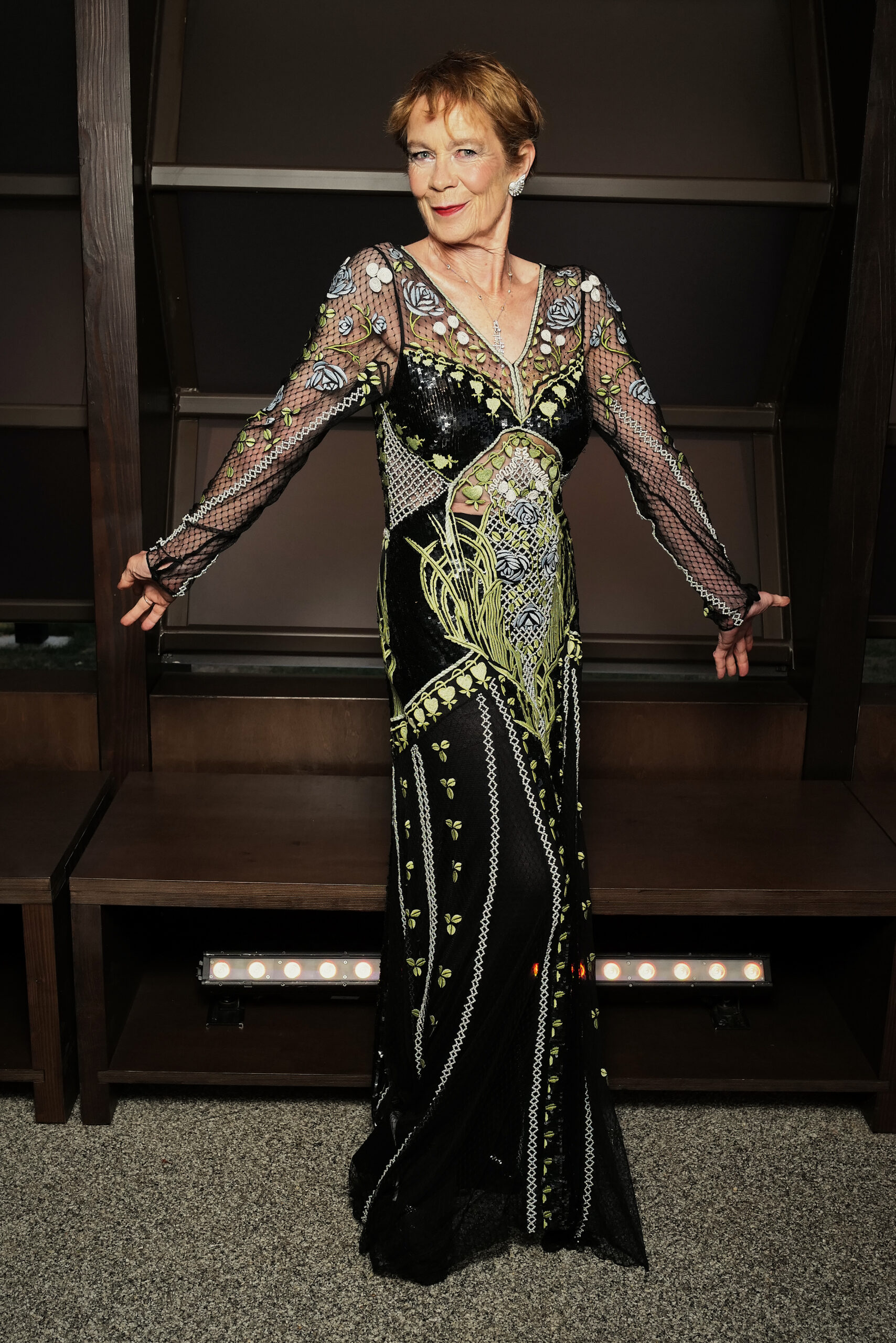
A Health Scare and a New Perspective
Celia Imrie’s 2005 health scare
Following a health scare in 2005, when doctors discovered Celia had two pulmonary embolisms – blood clots in the lung – the actress avoids flying whenever she can and has developed a personal passion for the gentilities of sea travel. “People say ‘How long does that take?’ as if it’s the most awful experience in the world, but it’s probably about six nights to get to America. I think it’s a wonderful way to travel, and I think that it will become more and more popular because airports can be such hell now, can’t they?” she posits.
Both the health scare and the Nice tragedy, and possibly, I suggest, the unstoppable march of time, have instilled Celia with an infectious lust for living to the full, which is reflected in the devil-may-care literary heroines she has penned and galvanised her into action in her own life. “Without being dramatic, I think I’m very lucky actually, and it just pulls you up and makes you feel grateful for what you’ve got and celebrate every day, which is what I try to do. I know I’m sort of slightly running out of time.”
A Life of Passion and Independence
Celia was born in the heart of England’s green and pleasant land, stockbroker-belt Guildford in Surrey. She was the fourth of five children, and her radiologist father, David Imrie, was 60 when she was born.
“He was a Scot, and he went from red hair to white, but I only ever remember him with white hair. We five were a bit of a noise because he used to have patients to the house, and I think we were a bit more noise than he bargained for.”
Celia’s glamorous mother, Diana, was equally ill-prepared for raising a rumbustious brood and handed over much of the real parenting to the “completely wonderful” Nanny Thelma, whom Celia adored. “I think she [mum Diana] was too busy giving parties and riding her bike and betting on the horses,” Celia explains. “That sounds as if she didn’t care about us; she absolutely did, but she just knew that she wasn’t domesticated. She was very hot on manners and would like me to have married a god-fearing earl with plenty of money.”
Overcoming Challenges
In the Imrie household, Celia had to fight to be heard. “I was number four out of five, so I wasn’t really the eldest, the youngest, the only boy, the Nanny’s favourite, and so that’s why I think I’ve spent my whole life showing off really,” she chuckles. Her passion back then was dancing and especially ballet, which she proved to be extremely good at, and soon had her whole future mapped out. “I wanted to be a prima ballerina and marry Rudolf Nureyev,” she says.
Celia Imrie on her eating disorder
At age 11, her dreams of marrying Nureyev were dashed when she was told she was “too big boned” to make it. At that moment, Celia stopped eating – a rather simplistic attempt to make herself smaller – and fell victim to what then was a very new and misunderstood disease, anorexia nervosa.
Following a stint in hospital in London, she seemed to be getting better, but then at 14 the illness returned, and Celia ended up being given electro-convulsive therapy coupled with anti-psychotic drugs and insulin. Today, such treatment would be considered barbaric, and it certainly left its mark on Celia.
“It’s very weird. I mean, I can remember seeing it happening to the woman in the same room as me, but you don’t know what is going on half the time because they give you so many drugs. Mostly I shudder when I think of it,” says Celia. It’s not something she likes to dwell on, but Celia says she has “got to the stage where I think I would quite like to be able to help girls.”
“If you can save one person, it’s like saving the world, and I am a terribly good example of somebody who has come through it. It’s a terrible, terrible waste of life, and I regret very much the worry that I put my mother, father, Nanny, brothers and sisters through. But you can conquer it, and I am here to tell the tale.”
Breaking Conventions
She was never one for conventions
Battling convention, Celia’s father was not happy with his daughter’s choice of profession, while her mother “never stopped us from doing what we wanted to do in terms of our life choices. But I also think that she had quite a difficult time with her possibly disapproving friends, with this daughter who decided to go on the stage. In those days, it wasn’t really done.”
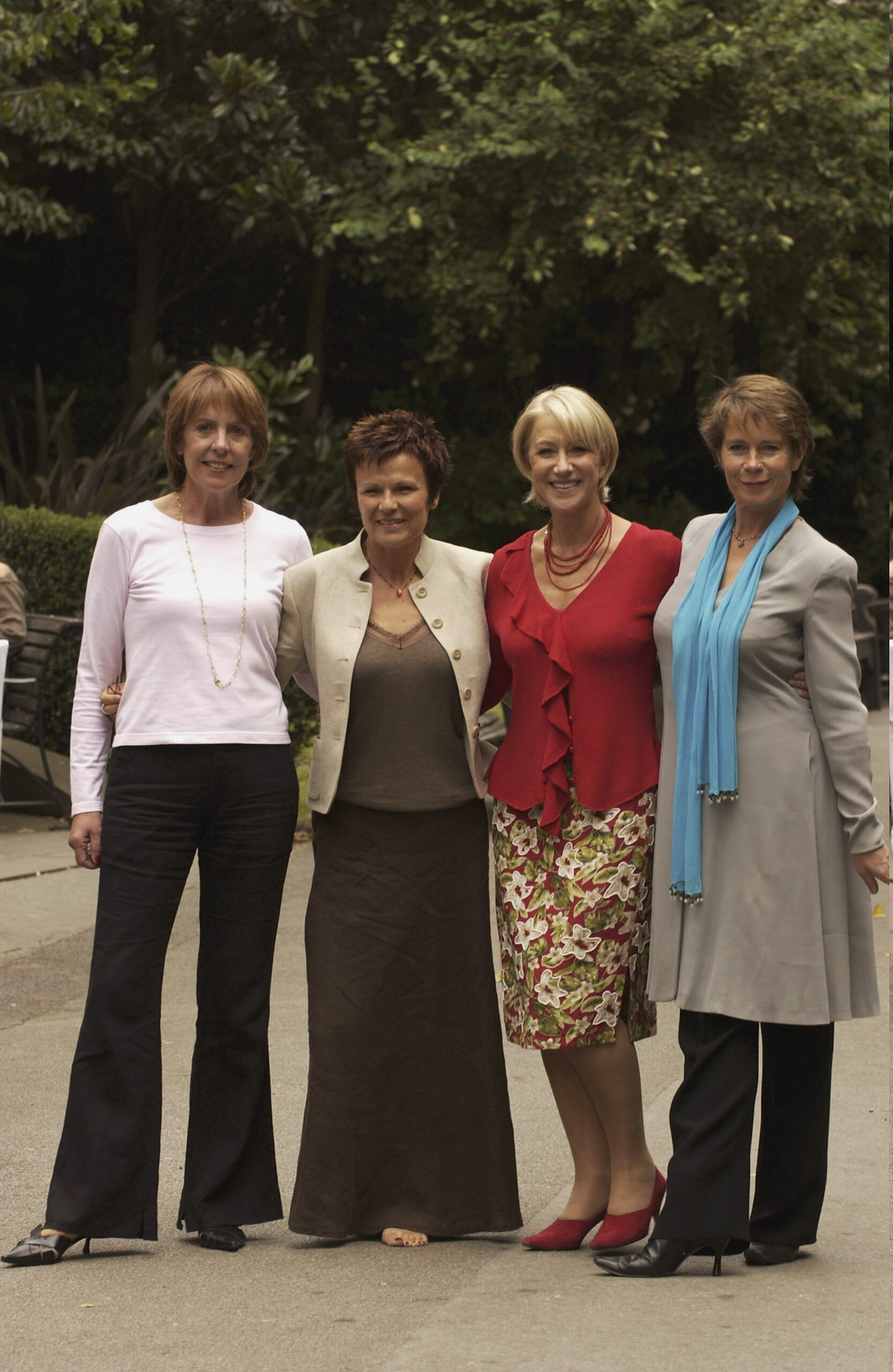
Fortunately, it didn’t stop Celia, and she’s never been out of work. Today she’s part of a fearless, hugely talented group of Britain’s most in-demand actresses – all of a certain age – including Dames Judi Dench, Maggie Smith, Helen Mirren, Imelda Staunton, Joanna Lumley and Penelope Wilton. Her portfolio of work ranges from Shakespeare to Chekhov to Nanny McPhee, but it was the movie Calendar Girls, in which Celia posed naked with a pair of large iced buns protecting her modesty, which brought her global adulation.
A Big Break: Calendar Girls
Getting naked was a tough call for Celia. “It could be a kickback from anorexia, but I don’t like taking my clothes off in front of myself, let alone everybody else. However, there were only a few parts going in that film, and so when I was thrilled enough to land the part, I thought, well, I cannot now make a fuss.”
Celia’s character is the first to pose in the buff for the Women’s Institute calendar shoot when Helen Mirren’s character famously announces: “We’re going to need considerably bigger buns!”
It’s a scene Celia cannot live down.
“When I was out for a walk by the sea, these gents shouted out, ‘Oh look, it’s bigger buns’ and I thought ‘Oh dear, how embarrassing’,” she laughs. Celia’s characters are serial transgressors – in the Marigold Hotel movies, she plays the mischievous, extremely flirty Madge Hardcastle. And in her own life, Celia also refuses to bow to convention.
Becoming a Mother in Her Forties
Celia Imrie on getting pregnant in her forties
At 42, she gave birth to her son Angus. Fearing she may have left it too late and having never had a desire to be married, Celia made an arrangement with her close friend, actor Benjamin Whitrow (who played Mr Bennet in the BBC adaptation of Pride and Prejudice). “I said to Ben, ‘Look, I’m not going to ask you for a penny, and I will bring the child up on my own if you can agree with that’.”
Benjamin died in 2017 at the age of 80, and while Celia has never previously admitted to a romantic relationship between them, she tells me, “Actually, there was much more to it than that because we did love each other and we had a very happy time when we were all together. I didn’t encroach on him, and he was very happy most of the time and certainly his relationship with Angus was really quite wonderful.”
Angus is clearly the product of two very loving and supportive parents and is proving to be a chip off the old block, forging a career in their footsteps as an actor. But it wasn’t always easy for Celia. “I did cop it from some people who didn’t think it was the very best thing to have done, but it seemed to work,” she says.
Unsurprisingly, Celia’s mother was one of the more fervent naysayers.
“I remember saying to her, ‘Mum, would you mind very much if I had a baby and I wasn’t married?’ [Celia was already pregnant when she asked]. There was the longest pause I ever can remember, and then she said, ‘I’d hate it.’ I have a feeling that it’s because she was worried about her rather posh friends,” recalls Celia.
“It was difficult, but I can assure you she came round and absolutely adored Angus, so I am very relieved and happy about that.”
Advice for Young Aspirants
So, will she retire?
At an age when most people are thinking of retiring, Celia couldn’t be busier or happier. I ask her what advice she would give young girls wanting to follow in her footsteps.
“You have got to want to do it or die. I love not knowing what is going to happen next – some people would hate that. And you have to not mind if you’ve got not a very salubrious place to live …, but it’s a great life.”
If you need help, call Butterfly’s National Helpline, 1800 334 673; Lifeline, 13 11 14; or Beyond Blue, 1300 224 636.