A Journey of Art, Controversy, and Reconciliation
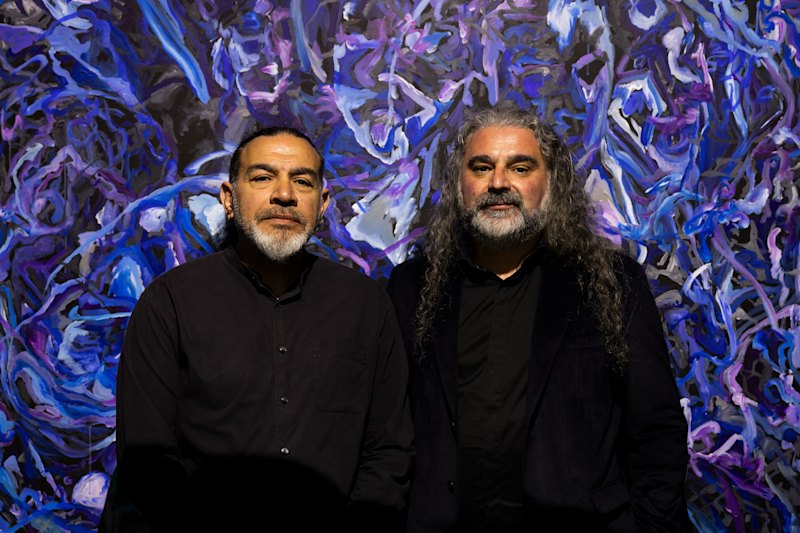
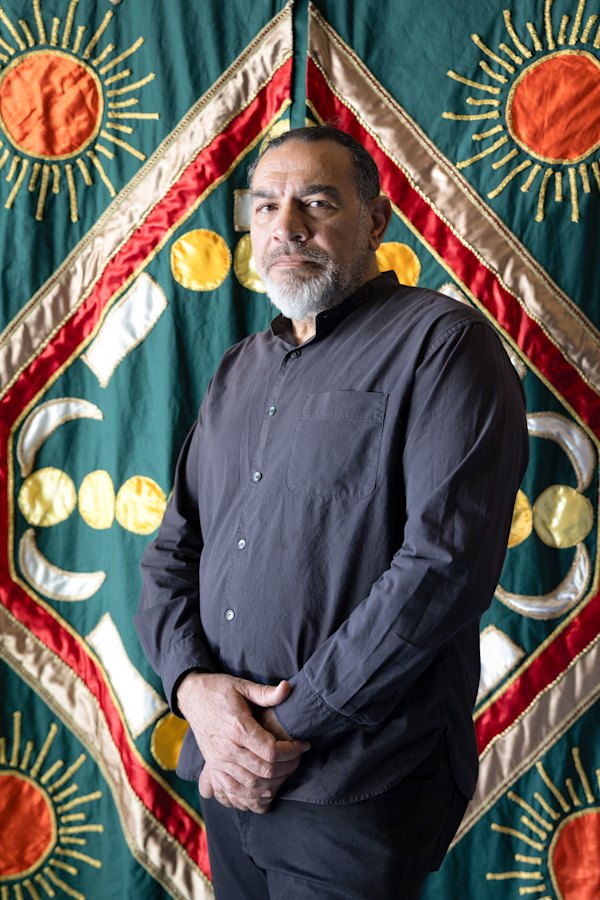
Australian artist Khaled Sabsabi has made a powerful return to the global stage with his major new works at the Venice Biennale. After a tumultuous year marked by political controversy and public scrutiny, Sabsabi has emerged stronger, standing firm in his belief that art should be open, inclusive, and capable of fostering meaningful dialogue.
Speaking at a preview of the world’s most prestigious art fair, Sabsabi emphasized his commitment to creating work that encourages contemplation and reflection rather than division. He rejected the notion of hate-based violence and drew inspiration from Sufi teachings, which emphasize spiritual growth and inner peace.
The opening in Venice marks the culmination of a long and challenging journey for Sabsabi. His initial selection as Australia’s representative was rescinded shortly after it was announced, leading to the resignation of arts officials who supported him. However, an extraordinary campaign followed, ultimately restoring his position and allowing him to showcase his work on one of the most prominent platforms in the art world.
A Bold Statement Through Art
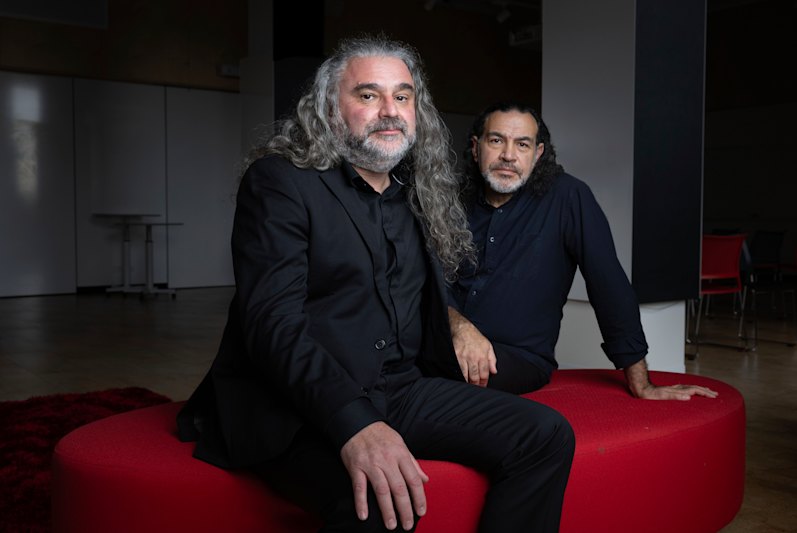
Australia has invested heavily in its pavilion, securing a prime location in the central precinct of the biennale near St Mark’s Square. This prestigious space is reserved for the artist chosen every two years to represent the country. Sabsabi, along with his creative partner, curator Michael Dagostino, has managed to have his work featured not only in the Australian pavilion but also in the main exhibition space at the event, selected by the curator for the entire biennale.
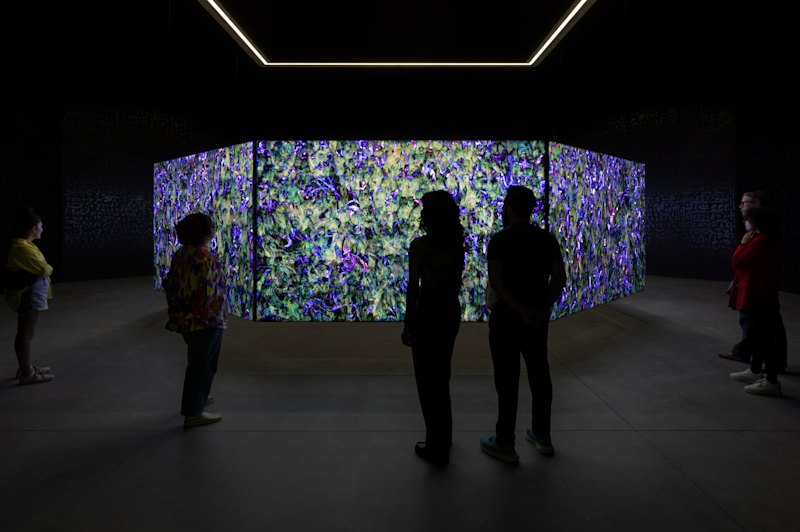
Inside the Australian pavilion, visitors are greeted by a multimedia installation that combines vivid colors, a constant hum, and a soundscape edited from recordings made in western Sydney. The work uses eight large panels to display images based on painting and video, changing in brightness and color as visitors move around the darkened space.
“It’s a work that is open and inclusive. It is a work that welcomes all people,” Sabsabi said during an interview at the pavilion. “It’s a space of contemplation. It’s a space of reflection.”
The Influence of Spirituality and Everyday Life
Born in northern Lebanon in 1965, Sabsabi came to Australia with his parents at the age of 12 and became an established artist in the 1990s. His later work has been influenced by his interest in Sufism, a mystical branch of Islam that emphasizes spiritual growth and inner peace.
The soundscape in his installation draws from everyday gatherings in western Sydney, capturing the essence of ordinary life. “I’ve always had the idea that beauty exists in the everyday—beauty and knowledge and the sacred exist in the everyday,” he explained.
When asked about the role of spirituality in art, Sabsabi reflected on the relationship between the creator and the creation. “For me, that moment when the creator makes an object, the creation, I find something very fascinating within that relationship,” he said.
Dagostino added that social and political factors can influence how people perceive the spiritual or other aspects of a work of art. “Works fall in and out of relevance all the time,” he noted.
Navigating Conflict and Understanding
While Sabsabi’s work has a spiritual dimension, he acknowledges that faith can also be a source of conflict, particularly in regions like the Middle East. “If you start off with the notion of acceptance and respect, it can lead to some sort of understanding,” he said. “Every faith speaks about the divine love.”
The biennale opens to the public this Saturday, May 9, and runs until November. While there is no official date or location set for showing the new works in Australia, Sabsabi and Dagostino are working on plans for a future exhibition.
International media had the opportunity to view the works during the pre-opening stage of the biennale, with many visitors sharing videos on social media. They also saw a companion piece at the main exhibition of the biennale, which was made possible by a pivotal decision by the event’s curator, Koyo Kouoh, to ensure Sabsabi was represented despite the controversy last year.
A Legacy of Resilience and Innovation
Elizabeth Ann Macgregor, former director of Sydney’s Museum of Contemporary Art, praised Sabsabi’s work in the Arsenale show, calling it “astounding” and “stunning.” Her endorsement was shared widely on Instagram, highlighting the growing appreciation for Sabsabi’s artistic vision.
The Australian pavilion is funded by the federal government, but this year’s exhibition also received support from private donors, including investor and philanthropist Simon Mordant and the Turnbull Foundation, established by former Prime Minister Malcolm Turnbull and former Sydney Lord Mayor Lucy Turnbull.
Despite the challenges faced, Sabsabi’s work has found its place among the most respected in the biennale. Only three other artists in the history of the event have achieved the rare honor of being featured in both the main exhibition and their country’s national pavilion.
A New Chapter in the Biennale
The biennale has become a focal point for global discussions on inclusion and representation. Amid the furore over the participation of Russia and Israel, the event has taken a controversial stance, allowing Russia to exhibit despite the war in Ukraine. This decision led to the resignation of the jury, which had wanted to exclude countries accused of crimes against humanity.
The Russian pavilion hosted lively celebrations during the pre-opening day, while the Israeli pavilion appeared to be closed due to the ongoing stand-off. Despite this, the biennale organizers have not excluded Israel from the event, maintaining a stance of neutrality.
With the jury gone, the decision on the winner of the biennale’s major award, the Golden Lion, will now be determined by a popular vote from visitors. This shift in process reflects the evolving nature of the event and the importance of public engagement.
Sabsabi and Dagostino’s presence in the biennale underscores the power of art to transcend political boundaries and foster dialogue. As the event continues, their work stands as a testament to resilience, creativity, and the enduring human desire for understanding.