Political Tensions and Protests at Eurovision Dress Rehearsal
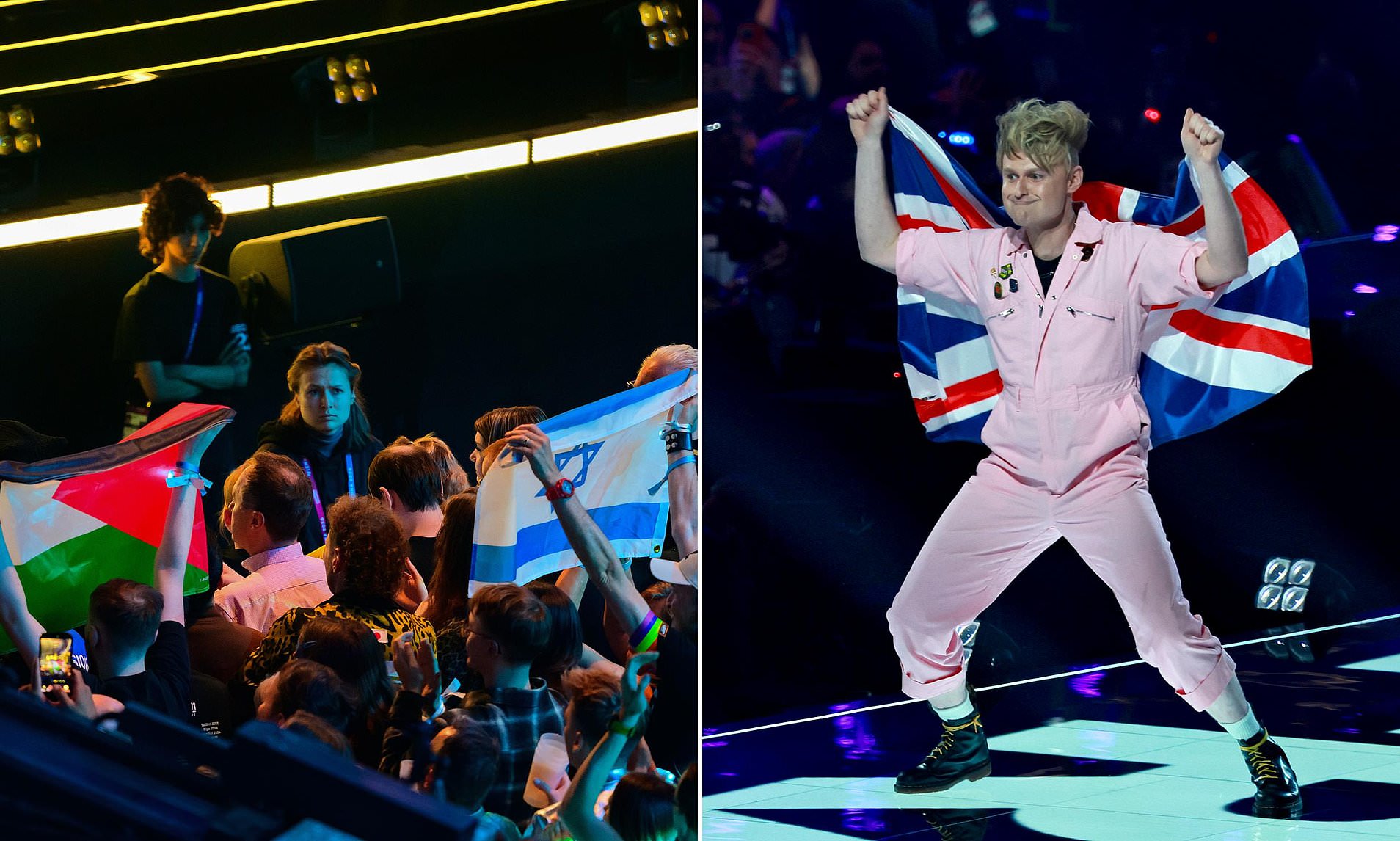
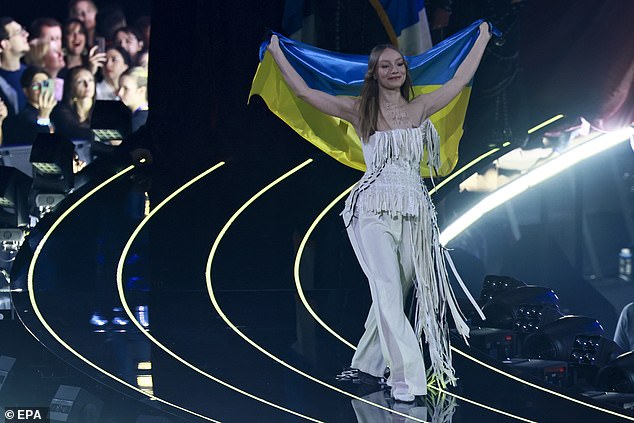
During the dress rehearsal for this year’s Eurovision final, Palestinian flags were visible in Vienna, highlighting the political tensions that have been simmering ahead of the contest. Alongside the Palestinian flags, Ukrainian and Israeli flags were also spotted in the concert hall as both nations prepared to compete for the grand prize on Saturday night.
The dress rehearsal, which took place on Friday evening, featured performers from 25 countries participating in the 70th edition of the contest. However, the event was not without controversy, as five countries—Spain, Ireland, Iceland, the Netherlands, and Slovenia—were absent this year. Their national broadcasters staged a boycott over Israel’s inclusion in the competition.
Spanish Prime Minister Pedro Sánchez expressed his country’s stance in a statement, saying that Spain was not in Vienna but had “the conviction that we are on the right side of history.” He added, “In the face of illegal war and also genocide, silence is not an option. And we cannot remain indifferent to what continues to happen in Gaza and in Lebanon.”
Protesters gathered in a Vienna square on Friday for a pro-Palestinian ‘song protest,’ featuring music and speeches. Meanwhile, Israel’s entry, 28-year-old Noam Bettan, was reportedly under protection from the security agency Shin Bet, Mossad, and elite Austrian units. Bettan had previously expressed being “shocked” by protests during his semi-final performance.
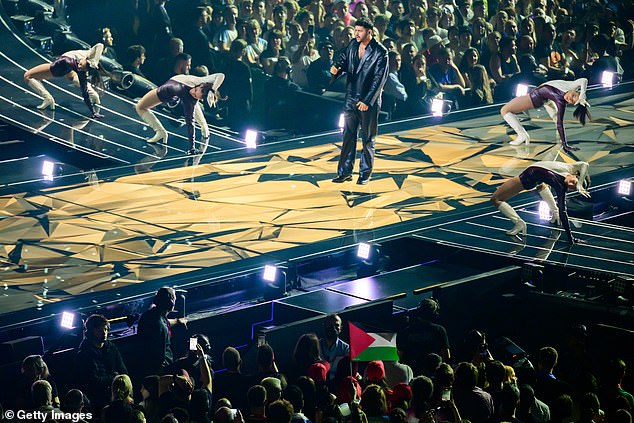
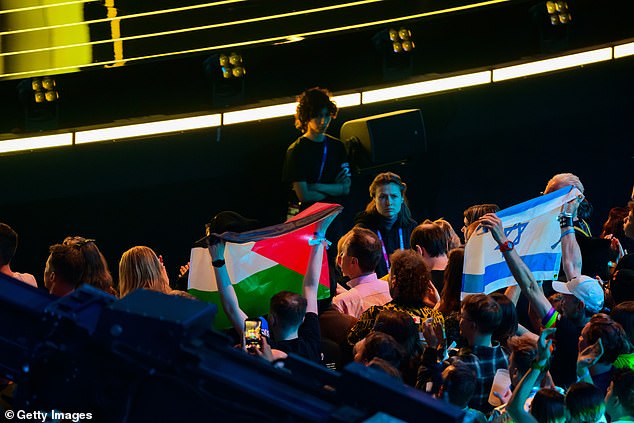
During Bettan’s performance on Tuesday night, audience members were removed from the Wiener Stadthalle after one displayed the message “Free Palestine” across his chest and others chanted “stop the genocide” during his song. Despite these incidents, host broadcaster ORF’s programme director Stefanie Groiss-Horowitz confirmed that audience microphones would remain on during Saturday’s final, stating, “We made the decision and we’re going to stick to this decision. And we are sure that love will win.”
Ireland’s broadcaster RTÉ criticized the country’s involvement in the contest, calling it “unconscionable given the appalling loss of lives in Gaza.” Similarly, Dutch broadcaster Avrotros stated that the Netherlands’ participation was “incompatible with the public values that are essential to us.”
Israeli broadcaster Kan defended their absence, describing it as a “cultural boycott” that “harms freedom of creation and freedom of expression.” Eurovision organizers have faced criticism for allowing Israel’s continued participation amid the ongoing conflict in Gaza, with some drawing parallels to Russia’s expulsion from the contest following its 2022 invasion of Ukraine.
War-torn Ukraine is not expected to repeat its 2022 triumph, with Finland emerging as a strong contender for the title. Finland’s entry, “Liekinheitin” (Flamethrower), is a violin and vocal duet that has captured attention.
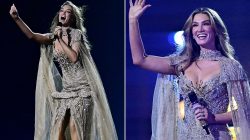
Australia’s Delta Goodrem performed in Thursday’s second semi-final with her song “Eclipse,” and bookmakers consider the 41-year-old established star as Finland’s closest competitor for the crown. Australia has appeared at Eurovision by invitation since 2015, and Goodrem’s performance was enjoyed by the 10,000 fans in the arena.
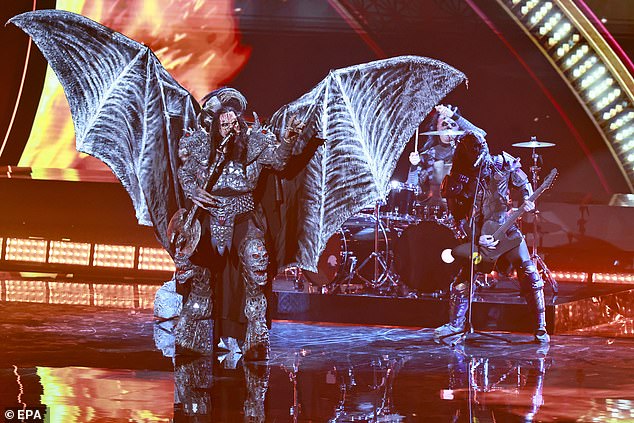
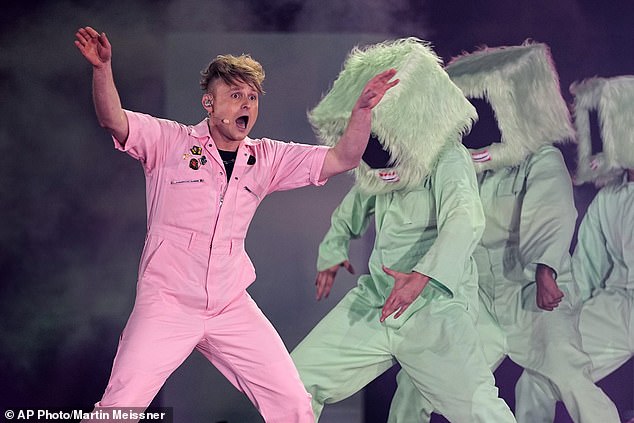
Goodrem stood on top of a golden glittering piano, then soared into the air on a riser as sparks fell from the ceiling, delivering a visually stunning performance.
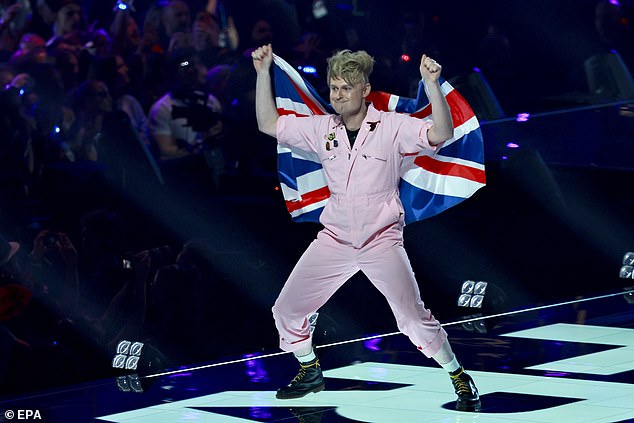
The UK’s entrant, Sam Battle, who performs as Look Mum No Computer, is favored to finish near the bottom of Saturday’s leaderboard. However, Battle remains optimistic, stating, “There are gonna be people that don’t like the UK for the sake of it being the UK, but that’s the way it is. We can’t change that. So we’ve just got to crack on. Keep calm and carry on.”
His song “Eins, Zwei, Drei” talks about being “sick of munching roly-poly with custard” and mentions that pounds “feel counterfeit,” needing “some euros to counter it.” Some have interpreted the song as an apology for Brexit, but Battle told the Sun that there was “no real aim” and that the song was about “quirky British things.”
The Eurovision Fun website and commentator described Battle’s dress rehearsal performance as “arguably the weakest performance of the night so far.” They noted that the singer, perhaps intentionally holding back, relied more on vocal flourishes rather than properly delivering the verses. Additionally, he was not wearing the actual stage outfit. At this point, it seems unlikely that the UK will avoid a bottom-five finish.