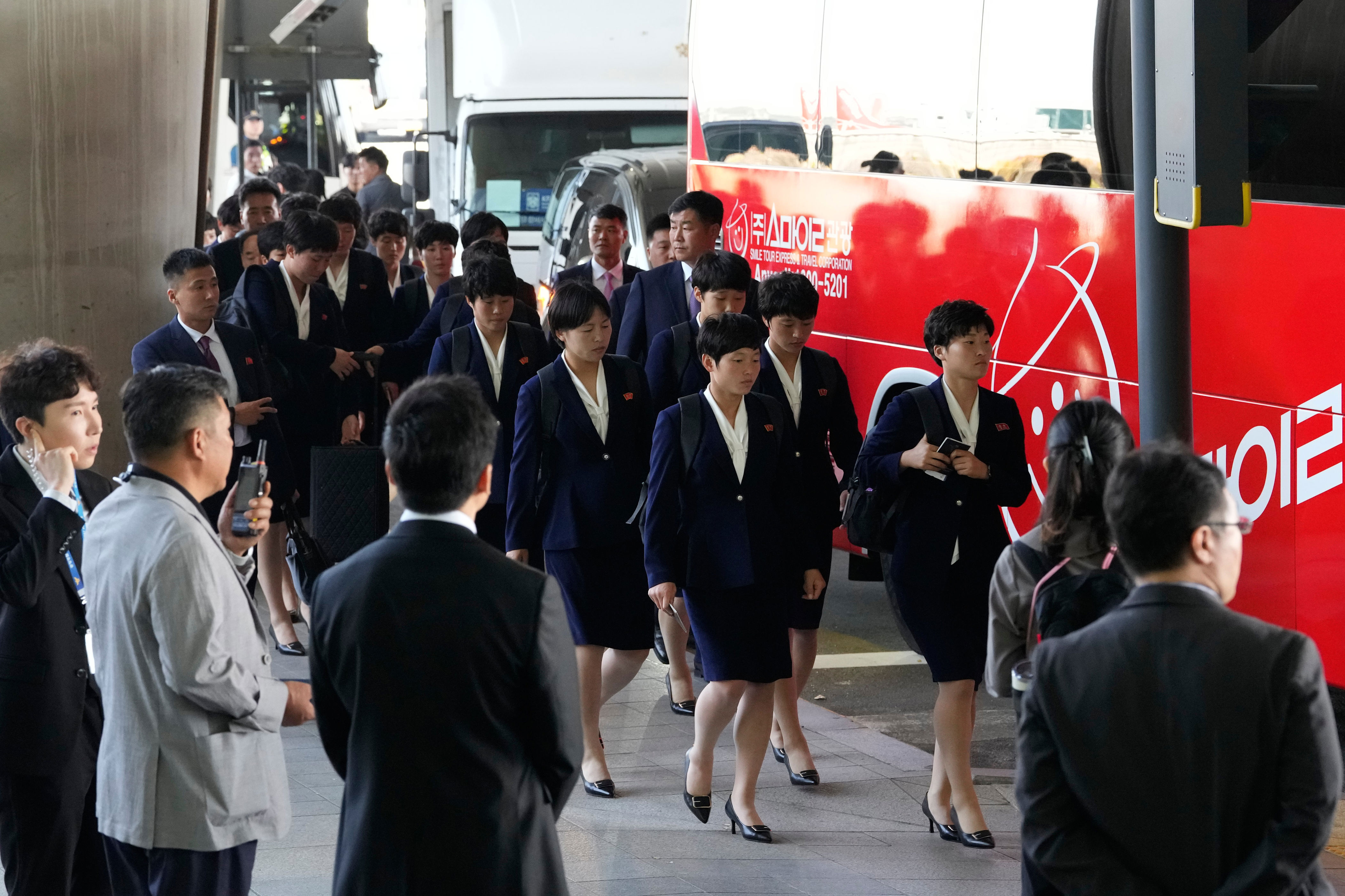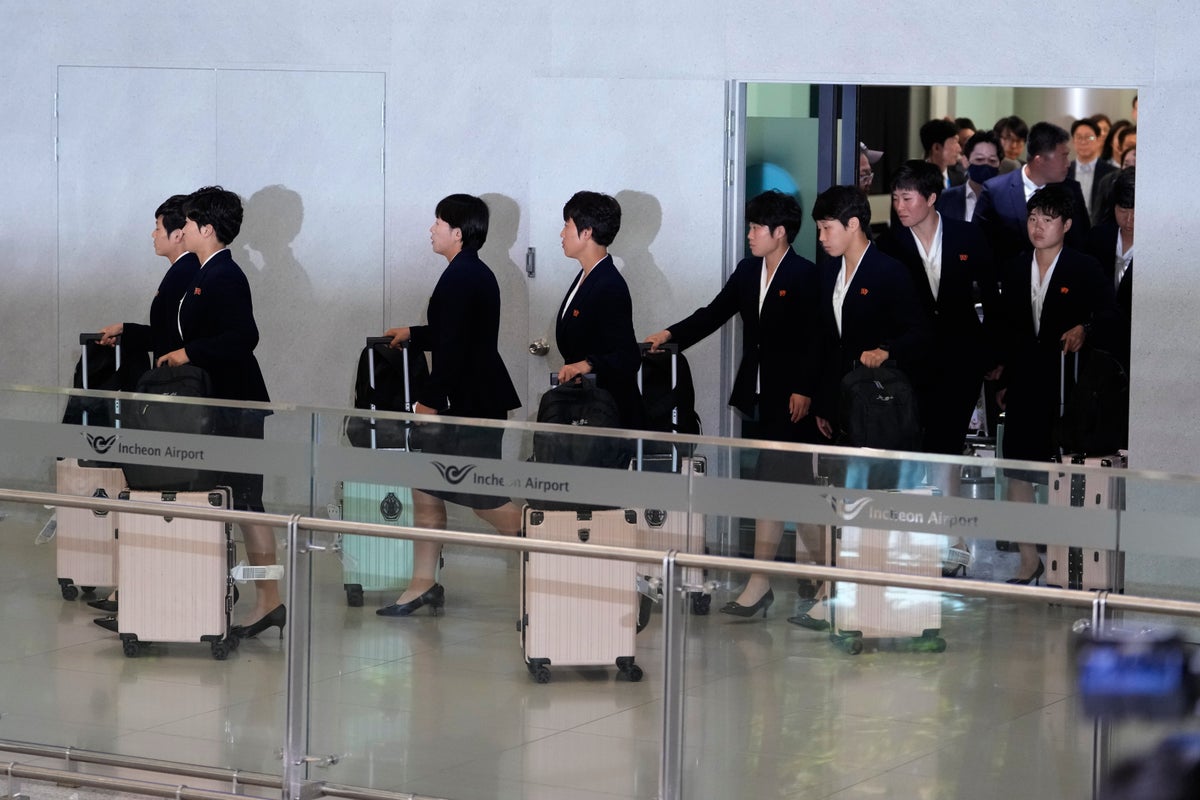
A North Korean women’s football team arrived in South Korea on Sunday, marking the first visit by athletes from the North in eight years. This event takes place amid ongoing political tensions between the two nations. A total of 39 players and staff from North Korea’s Naegohyang Women’s FC landed at Incheon International Airport, just west of Seoul, aboard a plane from China. The team did not make any public comments, although some activists shouted “Welcome! Welcome!” and people used their mobile phones to film their arrival.
The North Korean team is set to face South Korea’s Suwon FC Women in the semifinals of the Asian Football Confederation Women’s Champions League in Suwon, a city south of Seoul. Historically, sports events have sometimes been used by the two Koreas to create feel-good moments when relations were more amicable. However, this latest football fixture is unlikely to signal a significant thaw in their long-strained ties, as North Korean leader Kim Jong Un continues to maintain a confrontational stance against South Korea.
“We should be cautious about interpreting their visit to South Korea as a sign of an improvement in South-North relations,” said Lee Wootae, a senior research fellow at Seoul’s Korea Institute for National Unification, in a recent report. “It would be more accurate to view this as a limited South-North Korean contact within the framework of international sports.”
In recent years, Mr. Kim has repeatedly referred to South Korea as his country’s principal enemy and taken steps to eliminate the idea of shared statehood, instead promoting a hostile “two-state” system on the Korean Peninsula. Analysts suggest this move likely stems from Mr. Kim’s wariness of South Korea’s cultural influence and his belief that South Korea is no longer useful in dealings with the US.
North Korea last sent its athletes to South Korea in December 2018 for a table tennis event. At that time, North and South Korea were engaged in a flurry of exchange and cooperation programs following the North’s participation in the Pyeongchang Olympics in South Korea earlier in 2018. The brief period of inter-Korean detente came to an end after a US-led diplomacy on ending North Korea’s nuclear program collapsed in 2019 due to disputes over international sanctions on the North.
North Korea has since conducted a series of weapons tests to expand its nuclear arsenal and rejected South Korean and US offers to restore diplomacy. South Korea’s current liberal government, led by President Lee Jae Myung, advocates for rapprochement with North Korea. The government has announced it will provide financial support to civic groups planning to organize a 3,000-member squad to cheer for both North and South Korean teams at Wednesday’s match.
“We will enthusiastically cheer for them by chanting the names of both teams and their players, while faithfully adhering to AFC guidelines,” the civic groups said in a joint statement.
North Korea is a powerhouse in women’s football, particularly at the youth level. It has won the Under-17 Women’s World Cup four times and the Under-20 Women’s World Cup three times. Naegohyang Women’s FC defeated Suwon FC Women 3-0 in the group stage in Myanmar last November.
Melbourne City FC and Tokyo Verdy Beleza are set to face off in the other semifinal on Wednesday. The final is scheduled for Saturday at a stadium in Suwon.