Koalas and the Threat of Rising Temperatures
Extreme heat poses a significant threat to the health and survival of Australians each year. A recent study published in Biology Letters has revealed that koalas, like humans, are also vulnerable to the effects of even moderate temperature increases. The research highlights the alarming impact of rising temperatures on these iconic marsupials.
The study found that when the seven-day average temperature maximum reached 27 degrees Celsius or higher, the risk of hospitalisations and deaths among koalas increased significantly. This conclusion was drawn by analyzing case notes from 11,862 koala hospitalisations in New South Wales (NSW) alongside weather records from 2000 to 2022.
Koala hospitalisations or deaths were found to be 1.5 to 3.5 times more likely during seven-day periods where average temperatures exceeded 30°C compared to a 25°C baseline. Valentina Mella, a behavioural ecologist from the University of Sydney who led the study, described the connection between hospitalisations and temperature thresholds as “scary.”
“We found that all the koalas in inland NSW were the ones exposed the most to these high temperatures because it’s just hotter there,” she said. Dr. Mella warned that longer periods of hot weather and drought, driven by climate change, combined with factors like habitat fragmentation and disease, could lead to local extinctions in north-west NSW.
“These are the first populations that are going to go,” she added. “In fact, we have already seen this because the population in Gunnedah is now functionally extinct. The remaining animals are infertile. Once they die, there’s going to be no new animals to take their place.”
Natalie Briscoe, an ecologist from the University of Melbourne not involved in the study, acknowledged the difficulty of capturing the impact of climate and weather on animal survival, except in cases of mass die-offs like those seen with flying foxes. However, she praised the approach of using koala admissions into care to understand this association.
“The findings align with what we know. We have good reasons for expecting hotter temperatures to have a negative impact on koalas based on their physiology, diet and behaviour and past studies documenting responses of individual populations to extreme heat. Unfortunately, things are likely only going to get worse for koalas under climate change, and particularly those in northern and inland areas.”
How Koalas Cope with Heat
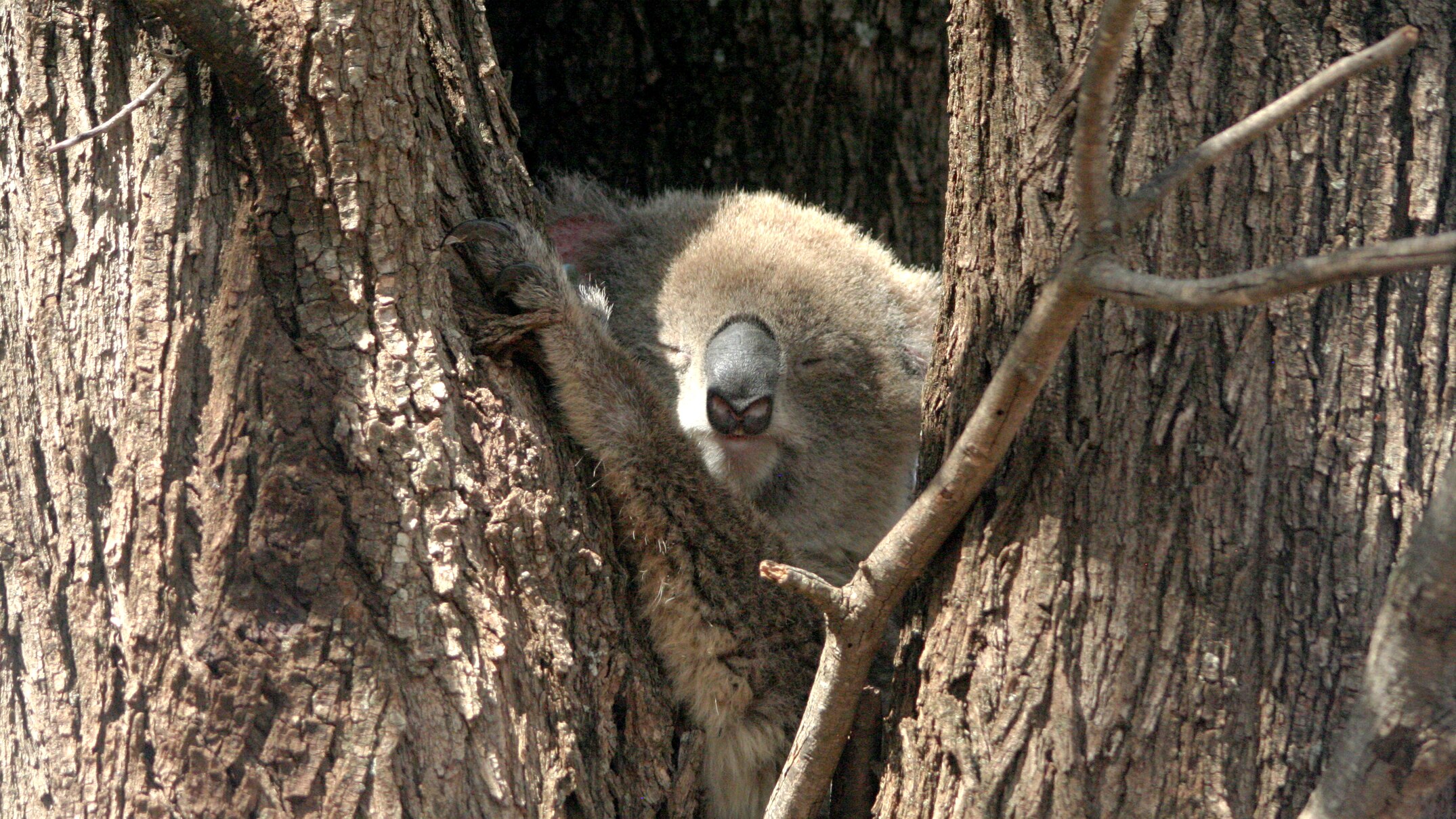
Koalas have developed several strategies to deal with hot weather. They can conserve water by producing highly concentrated urine and reabsorbing water from the colon to produce dry pellets or scats. Additionally, they use behavioural tactics such as tree hugging to dissipate heat against cooler tree trunks.
The main way koalas keep cool is by panting, similar to dogs. However, this process leads to water loss, which becomes a problem during droughts. Dr. Mella explained that in north-west NSW, when temperatures reach 30°C, koalas become severely dehydrated and are often seen sitting at the base of trees.
Koalas typically obtain their water from the eucalyptus leaves they consume. However, Dr. Mella noted that trees reabsorb moisture from their leaves when there is no rain, making the leaves taste like cardboard to the koalas.
[map]
Nutritional Challenges for Koalas
Kara Youngentob, a landscape and nutritional ecologist at the Australian National University not involved in the study, highlighted that koalas also lose their appetite when they get hot, which can be problematic even with small temperature increases. Unlike humans, who can go two weeks or more without eating if they have water, koalas can only survive a few days without food. They have minimal fat reserves and must eat every night.
Dr. Youngentob explained that koalas live in a delicate nutrient balance because they must process toxic eucalyptus leaves for little reward. “They need to meet a balance of energy and protein in a diet that has very little energy and protein,” she said.
What Can Be Done to Help Koalas?
Dr. Mella suggested that water stations could be placed in hot regions like north-west NSW, along with shade structures for koalas. “We do that for cattle and we do that for animals that we use for our needs, so we really should be doing it for wildlife as well,” she said.
Other researchers, such as Dr. Youngentob, are exploring ways to breed eucalypts with high protein and fewer toxins for koalas. The concept of “nutritional refugia” involves creating climate refugia with habitats where koalas can survive without needing to eat as much.
However, koalas require more than just trees with their preferred food to thrive. Bill Ellis, an ecologist from the University of Queensland not involved in the study, emphasized the importance of non-food trees for the species’ survival. “They can’t survive without the shady trees that they sit in during the day,” he said. “When it gets hot, they will find cooler parts of their home range and cooler trees and they hop in those trees.”
Dr. Ellis stressed the importance of private properties retaining patches of bush, especially along creek lines. “What we really need to do is incentivise that kind of behaviour and also inform [land owners] about what’s going to work,” he said.