A Controversial Decision in State of Origin 1
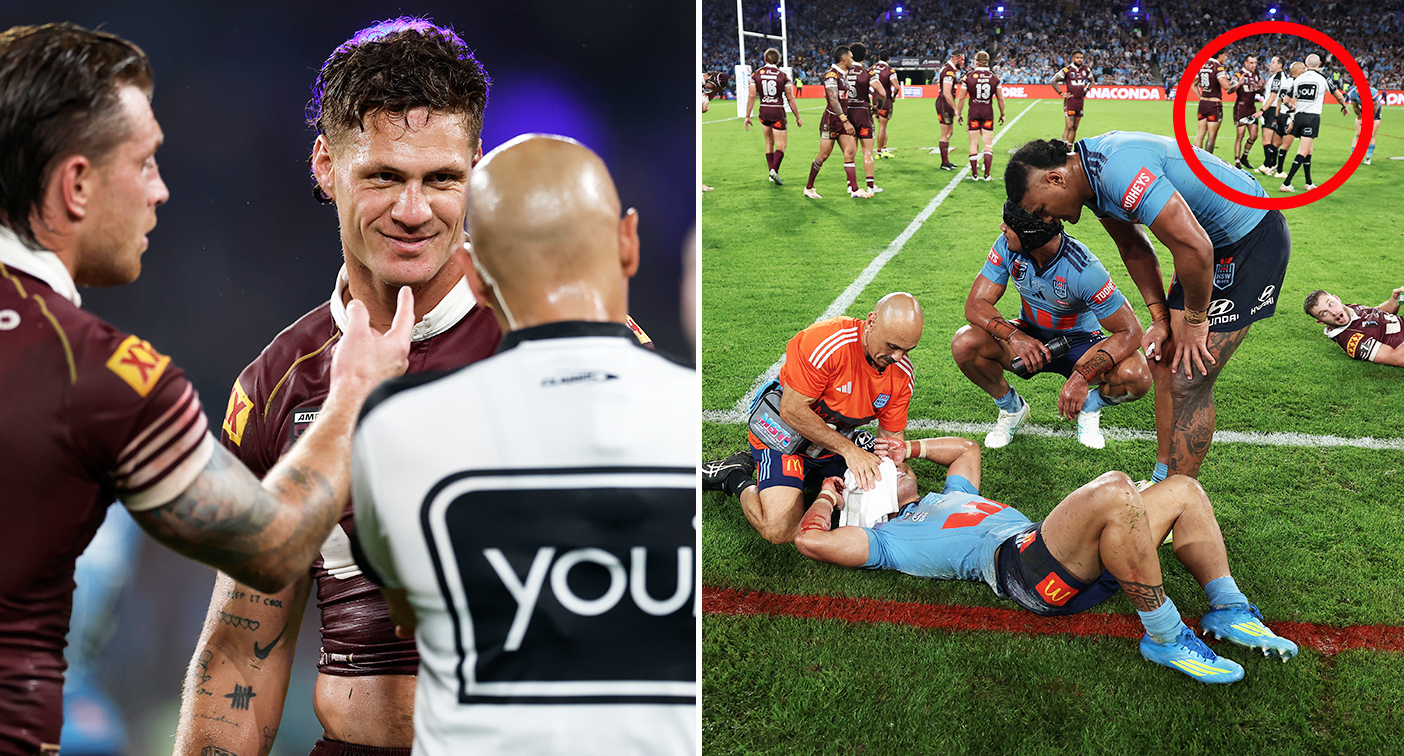
The recent State of Origin match has sparked a heated debate, particularly around the decision to send Kalyn Ponga off the field. Queensland legend Corey Parker has called the situation a “farce,” highlighting concerns over the referee’s choice to override the Bunker official’s judgment.
Ashley Klein, the on-field referee, decided to send Ponga off after he was involved in a shoulder charge to the head of Tolu Koula. This decision significantly impacted the game, as Queensland, already down by a man, lost their 20-6 lead and eventually fell 22-20 to New South Wales.

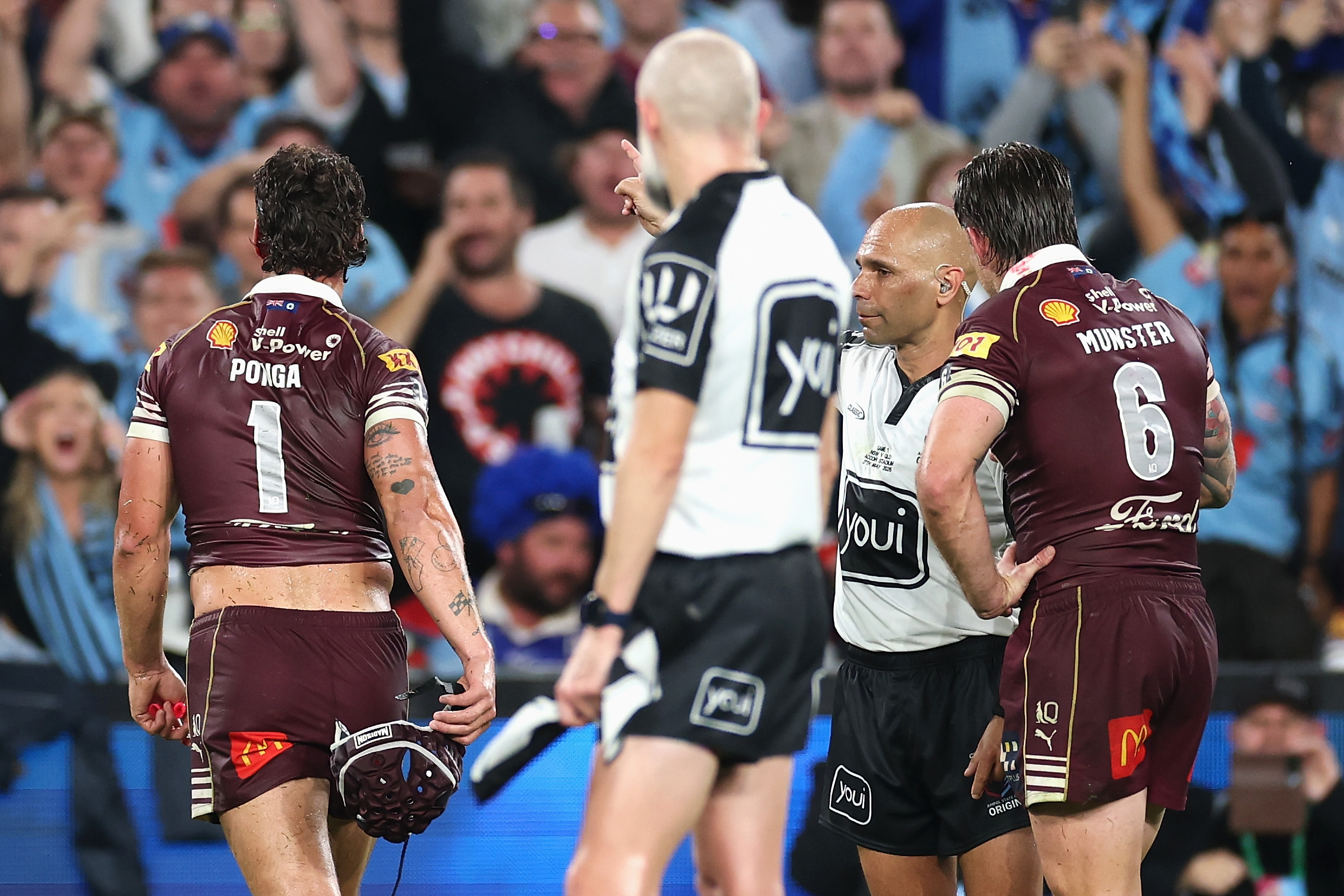
The incident has raised questions about the role of the Bunker in modern rugby league. Typically, the Bunker has the final say on such decisions, but in this case, it appeared that Klein disregarded the advice given by the Bunker official, Chris Butler. According to Channel 9 audio, Butler seemed to suggest that the play was only a sin-bin rather than a full send-off. However, Klein insisted that the action was an illegal play.
Parker expressed his frustration with the situation, questioning why the NRL invested $22 million in the Bunker if it wasn’t going to be used effectively. He emphasized that the Bunker believed the decision was incorrect, yet Klein remained adamant about his call.
The Debate Over Player Safety and Fair Play
Greg Alexander, a former NSW great, also weighed in on the controversy. He acknowledged that there was a conversation between the Bunker and Ashley Klein, with Klein being very firm in his belief that the play was a shoulder-to-the-head contact. Alexander noted that while the contact was high, it wasn’t severe enough for a send-off. He pointed out that the player turned his body to brace for impact, which he considered a natural reaction.
“Contact was made, bin him but no contact. It’s not a send-off,” Alexander said, highlighting the fine line between a sin-bin and a full send-off.
Despite these differing opinions, the NRL’s General Manager of Elite Competitions, Graham Annesley, defended the decision. He stated that the incident involved clear and forceful shoulder-to-head and head-to-head contact with no mitigating factors. Annesley emphasized that player safety is a top priority and that the game would not apologize for taking strong action against foul play.
Importantly, Annesley clarified that under the current laws of the game, the on-field referee has the final say on foul play. This clarification has further fueled the debate about the balance between player safety and fair play in the sport.
The Role of Technology in Modern Rugby League
The use of technology in rugby league has become increasingly significant, with the Bunker playing a crucial role in ensuring accurate decisions. However, this incident has highlighted the potential for conflict between on-field officials and the Bunker. The question remains: how can the system be improved to prevent such controversies?
While the Bunker provides valuable insights through its cameras and technology, the final decision still rests with the on-field referee. This raises important questions about the effectiveness of the system and the need for better communication between all parties involved.
As the debate continues, fans and experts alike are calling for clarity on the rules and procedures surrounding such decisions. The goal is to ensure that the game remains fair, safe, and enjoyable for all players and spectators.
Conclusion
The controversy surrounding Kalyn Ponga’s send-off in the State of Origin match has sparked a broader discussion about the role of technology, player safety, and the final authority of on-field referees. While the NRL supports Ashley Klein’s decision, the incident has highlighted the need for a more transparent and consistent approach to handling such situations.
As the sport continues to evolve, it is essential to strike a balance between using advanced technology to make informed decisions and maintaining the integrity of the game. The lessons learned from this incident could shape the future of rugby league, ensuring that such controversies are minimized in the years to come.