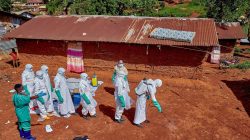
The ongoing Ebola outbreak in the Democratic Republic of the Congo has now confirmed 282 cases, according to recent reports. This situation has been particularly concentrated in the eastern Ituri province, where 264 cases have been recorded. The country’s Ministry of Health has reported over 1,000 suspected cases involving the Bundibugyo virus, a strain of Ebola that currently has no approved treatment or vaccine.
Health officials have identified several key challenges in managing the outbreak. These include early detection and rapid isolation of patients, thorough contact tracing, ensuring safe and respectful burials, and improving infection prevention measures in healthcare facilities. According to the ministry, the current contact tracing coverage rate stands at 45%, with 220 suspected cases under investigation.
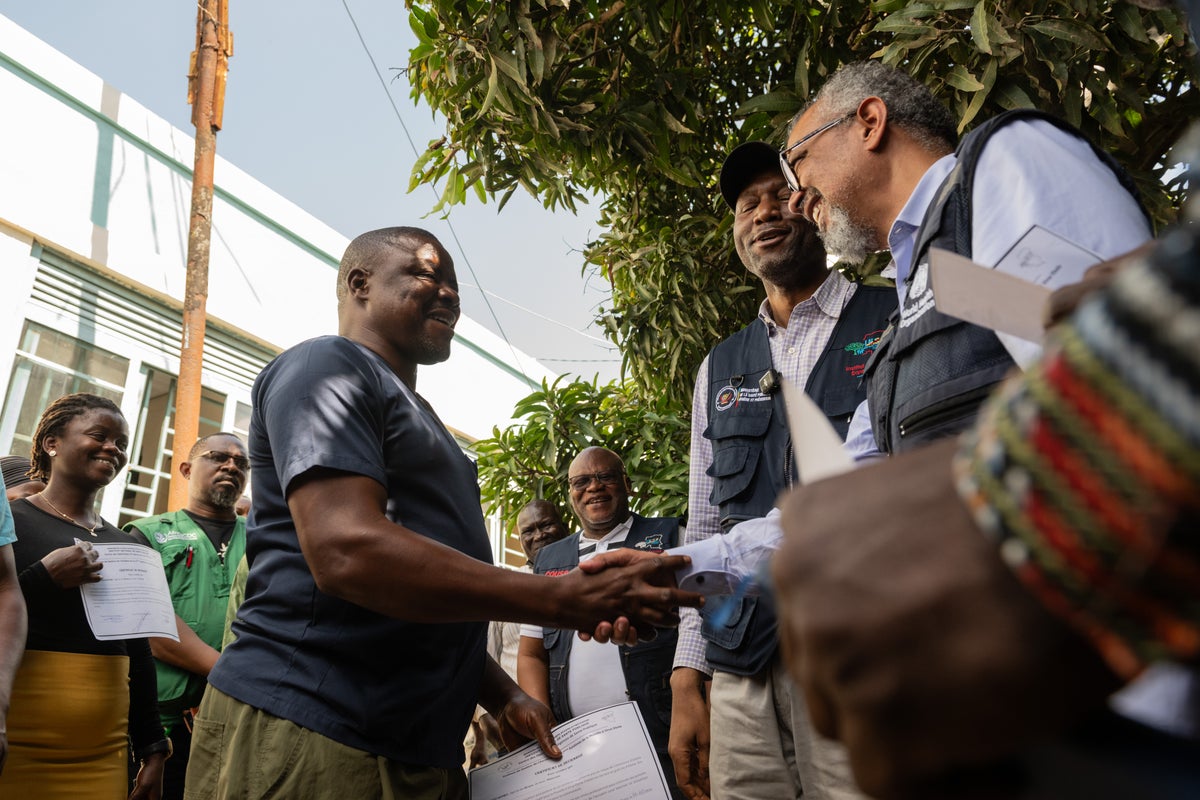
Amid these challenges, five individuals have successfully recovered from the disease, sharing their experiences with The Associated Press. Baraka Bulambulu, a nurse, expressed his relief after receiving negative results from his final two Ebola tests. He was among those honored with recovery certificates by World Health Organization (WHO) Director-General Tedros Adhanom Ghebreyesus during the opening of a new Ebola treatment center in Bunia, the capital of Ituri province.
Bulambulu described his emotions as “indescribable joy” upon surviving the illness. “The first test came back positive, but the second and third were negative,” he said with a wide smile. His experience highlights the importance of timely medical intervention and support.
Ezo Étienne, another nurse who recovered from Ebola, recounted how the illness began for him. During a routine ward round, he felt dizzy and noticed a drop in his blood pressure. “I called the team and told them, ‘Something’s wrong here.’ I checked my blood pressure and saw that I was immediately experiencing hypotension. I decided to rest for a bit, and a few minutes later I started vomiting.”
All five survivors are health workers, including four nurses and a laboratory worker, who have been most affected by the outbreak. The WHO has emphasized that treatments so far have primarily focused on managing symptoms rather than targeting the virus directly.
Tedros praised the courage of these health workers, stating, “Your courage gives hope and your living story, that this outbreak can be stopped.” His words underscore the critical role of healthcare professionals in combating the spread of the disease.
In response to the growing threat, neighboring Uganda has reported nine cases of Ebola and has closed its border with Congo to prevent further spread. Although more than 20 Ebola outbreaks have occurred in both countries, the Bundibugyo virus is relatively rare. The lack of approved vaccines and treatments, along with the remote locations and armed conflicts in affected areas, has made the current response particularly challenging.
Despite these obstacles, Dr. Dieudonne Mwamba Kazadi, director-general of Congo’s National Institute of Public Health, sees the recoveries as a significant achievement. “It’s a strong message that it is possible to recover from Ebola when seeking care early in a dedicated health facility,” he said.
From news to politics, travel to sport, culture to climate – The Independent has a host of free newsletters to suit your interests. To find the stories you want to read, and more, in your inbox, click here.