
Winter Comfort Food with a Health Twist
Winter is finally upon us, and with the cold weather comes hibernation. While getting out and about and finding dedication to cook healthy meals feels harder in the winter months, that doesn’t mean your health should suffer.
We spoke to celebrity chef Sarah di Lorenzo about how to cook hearty, comfort meals to warm you up in winter without sacrificing your nutrition goals. And there’s one ingredient she refuses to incorporate into her meals: sour cream. She told us exactly why she refuses to cook with the creamy kitchen staple, and instead uses substitutes in every single one of her recipes.
“Every ingredient has to have a purpose, and the purpose has to be towards positive health and wellness,” Sarah, who has partnered with Australian Mushrooms, exclusively tells [New Idea].

“So I’m not interested in giving people sour cream in recipes and I’m not interested in consuming sour cream, but I am interested in something that’s going to give extra protein and probiotic and support my gut health.”
Instead, Sarah uses Greek yoghurt as a sour cream substitute, insisting it gives all the same flavour and cream, without the higher fat content.
Healthy food swaps are something she swears by in the winter season, when we all opt for creamier, heartier recipes, rather than fresh, summer salads. Sarah’s swaps don’t just stop at sour cream; she also uses the intense umami flavour of a perfectly seared mushroom to trick the brain into thinking it’s rich and fatty, without any of the health compromises!
“[Mushrooms] are complete winter warmers in that you feel cosy eating them, they’re really tasty, and they’re so versatile,” she says.
“What people really don’t truly know about them is just how much of a nutritional powerhouse they are.”

Previous

EXCLUSIVE: “I knew that I won”: How one MasterChef star found out the result early
How you can make every MasterChef Australia 2026 recipe at home
Next
While most people throw in a few mushrooms on the side of a dish to add a few more veggies, Sarah says they should be swapped to be the main focus of a dish, thanks to their nutritional value. They are high in fibre and low in calories (around 20 calories in one cup), keeping you full for longer while also bolstering your brain health.
“There is an antioxidant in them, which is almost practically unique to mushrooms, called ergothioneine,” she explains.
“That antioxidant is neuroprotective and anti-inflammatory.”
Sarah says they are a natural food source which can improve brain cognition and memory recall, as well as feed all the good bacteria in the gut.
“If you think about the gut-brain axis, mushrooms play a role in that,” she adds.
But the best little-known health benefit of the mushroom? Improving our hair, skin, and nails!
“No one even thinks about eating mushrooms for that,” Sarah tells us.
“Mushrooms contain biotin as well as selenium and zinc, which are all really important for hair, skin and nails.”
As well as boosting our overall health, Sarah raves about mushrooms as a winter staple because they are cost-effective and available all year.
“It’s not going to break the bank, and you can get all of those nutrients, especially the B vitamins as well,” she adds.
Not understanding anyone who hates fungi, she insists the negativity towards the mushroom comes from it being wrongly cooked. But don’t worry, she’s broken it all down for us, revealing exactly how to use and cook mushrooms in every single dish:
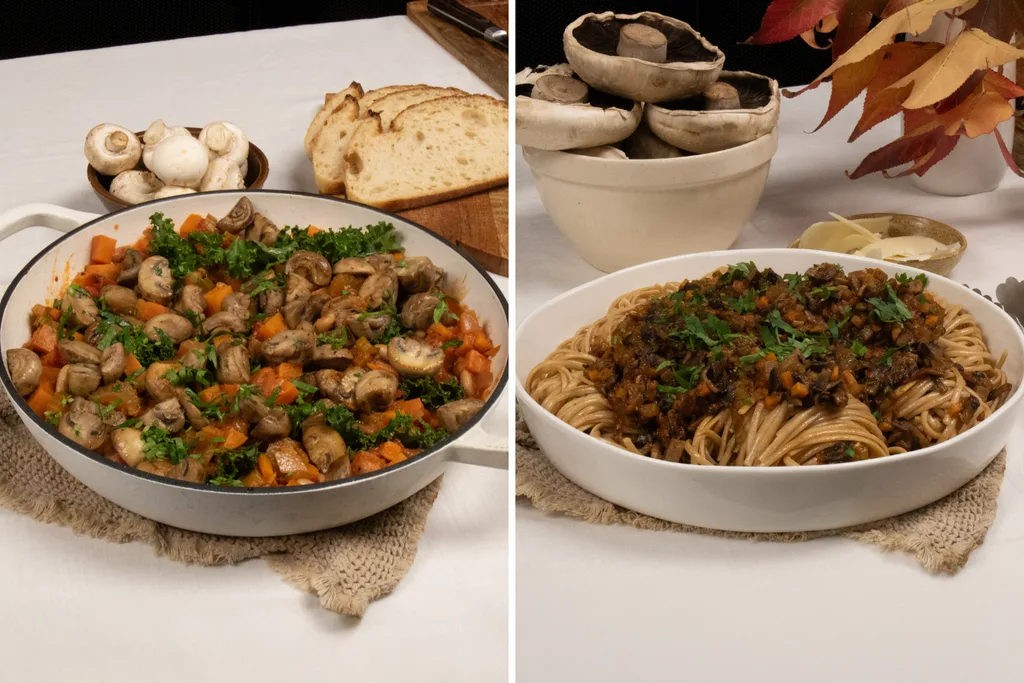
- Button mushroom: Chop up small into dishes such as a stew for a “natural” flavour. Holds its shape well even in small slices.
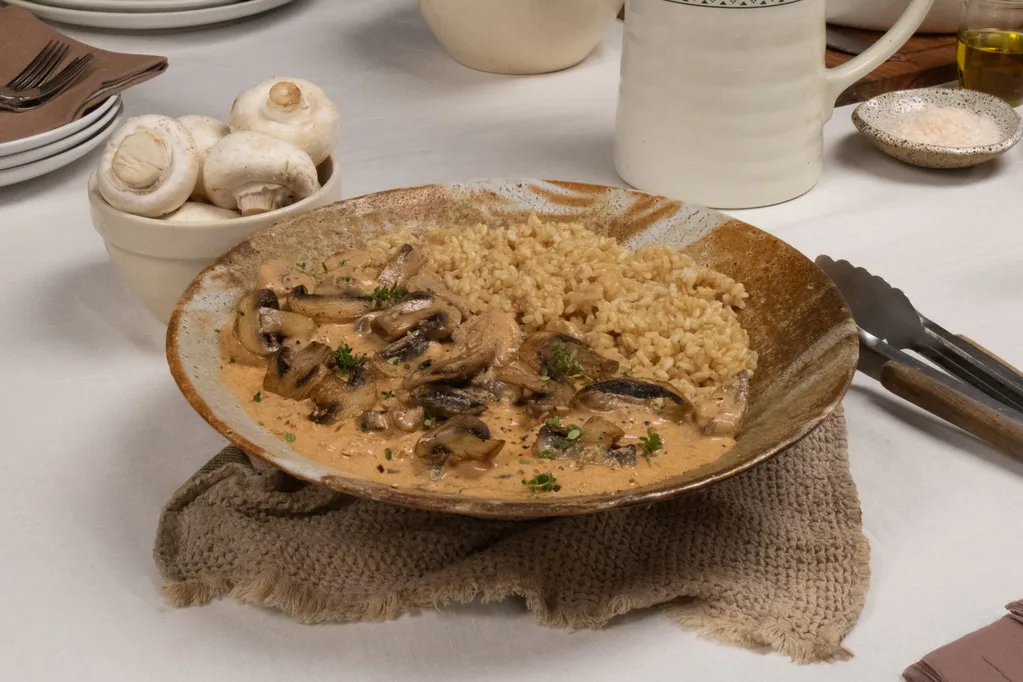
- Cup mushroom: Stronger, more concentrated flavour. Good for warming winter meals such as a stroganoff.
- Portobello (flat) mushroom: The best for a “meaty” and “robust” flavour. Can be used as a meat alternative in a bolognese or even as a bread substitute for a burger.
What you might not realise is that they are actually all the same type of mushroom, just harvested at different stages of maturity! As they age from a button to a Portobello, they lose water content, which creates the denser, meatier concentration of a flat mushroom.
Sarah praises the Portobello as the most diverse form of mushroom for cooking, describing it as a “standalone hero” in winter cooking.
“It’s so meaty, and it’s [got a] really strong, robust, beautiful flavour,” she adds.
Still thinking you don’t like mushrooms because they’re “slimy”? Well, if you cook them right, they shouldn’t be!
Sarah has told us the tip she swears by for cooking mushrooms without falling into the beginner’s trap (and it’s something even experienced cooks might be getting wrong).
She recommends starting any recipe by putting the mushrooms evenly in a pan and frying them for eight minutes until they caramalise to achieve a “golden seal” of flavour.
Using just a small amount of oil in the pan to cook them before adding them to a sauce prevents them from becoming too watery or slimy, a beginner’s error that makes many people think they don’t like the vegetable.
Sarah has released three quick and easy recipes (a Bolognese, a slow-cooked stew and a creamy stroganoff) with Australian Mushrooms to show exactly how versatile the mushroom can be.
Scroll down for her stroganoff recipe and click here for more.
Clinical nutritionist, author and TV personality, Sarah Di Lorenzo, partners with Australian Mushrooms to inspire Aussies to embrace winter comfort food with flavour-packed, nourishing mushroom recipes that balance hearty indulgence with everyday health benefits.
Sarah di Lorenzo’s Mushroom Cup Stroganoff
Ingredients
- 600 g mushroom cups, thickly sliced
- 1 large brown onion, finely diced
- 3 garlic cloves, minced
- 2 tbsp extra virgin olive oil
- 1 tbsp unsalted butter
- 1 tbsp Dijon mustard
- 1 tsp smoked paprika
- 0.50 tsp sweet paprika
- 1 tbsp tomato paste
- 0.50 cup low salt vegetable or beef stock
- 200 g natural Greek yoghurt
- 1 tbsp Worcestershire sauce (or tamari for plant-based)
- 1 tbsp fresh thyme leaves
- 2 cups brown rice, cooked
- 1 small handful fresh flat-leaf parsley, chopped
- 1 pinch sea salt and cracked pepper
Method
Step 1
Sear the cup mushrooms: Heat 2 tbsp extra virgin olive oil and 1 tbsp butter in a wide pan over high heat. Add 600 grams mushrooms, thickly sliced in a single layer. Do not stir for 2 full minutes. Let the cup mushrooms sit and develop a deep golden sear on the base of the pan. Cook for 5–6 minutes total until deeply golden and caramelised. Season with 1 pinch sea salt and cracked black pepper and remove to a bowl.
Step 2
Cook the onion and bloom the paprika: Reduce heat to medium. In the same pan cook 1 large brown onion, finely diced for 6 minutes until soft and translucent. Add 3 garlic cloves, minced and 1 tbsp fresh thyme leaves and cook for 1 minute. Add 1 tsp smoked paprika and 0.5 teaspoons tsp sweet paprika and stir for 30 seconds.
Step 3
Build the sauce: Add 1 tbsp tomato paste and 1 tbsp Dijon mustard and stir for 3 minutes. Pour in 0.5 cup of beef stock and 1 tbsp Worcestershire sauce (or tamari for plant-based) and let it bubble and reduce by half for about 2 minutes. The sauce will be rich, dark, and deeply savoury.
Step 4
Remove the pan from the heat: Then return the caramelised mushrooms to the pan. Spoon 200 grams of natural Greek yoghurt into the pan and stir gently and continuously until it is completely incorporated and the sauce is creamy, glossy, and coating every mushroom beautifully. The residual warmth is enough, do not return to the heat or the yoghurt will split.
Step 5
Serve over brown rice: Divide the warm 2 cups of brown rice, cooked between four bowls. Spoon the stroganoff generously over the rice. Scatter 1 small handful fresh flat-leaf parsley, chopped over the top and finish with a final crack of black pepper. Serve immediately.