Cricket Australia’s Strategy for Player Management
Cricket Australia has long been known for its strict control over player participation in premier leagues, particularly the Indian Premier League (IPL). This approach was evident in the 2026 season, where key players such as Cameron Green were restricted from bowling in the first half of the tournament. Similarly, Mitchell Starc was not used initially by Delhi Capitals, and Cooper Connolly did not bowl at all. The primary objective behind these decisions was to ensure that the team’s top players remained in optimal physical condition for their international commitments.
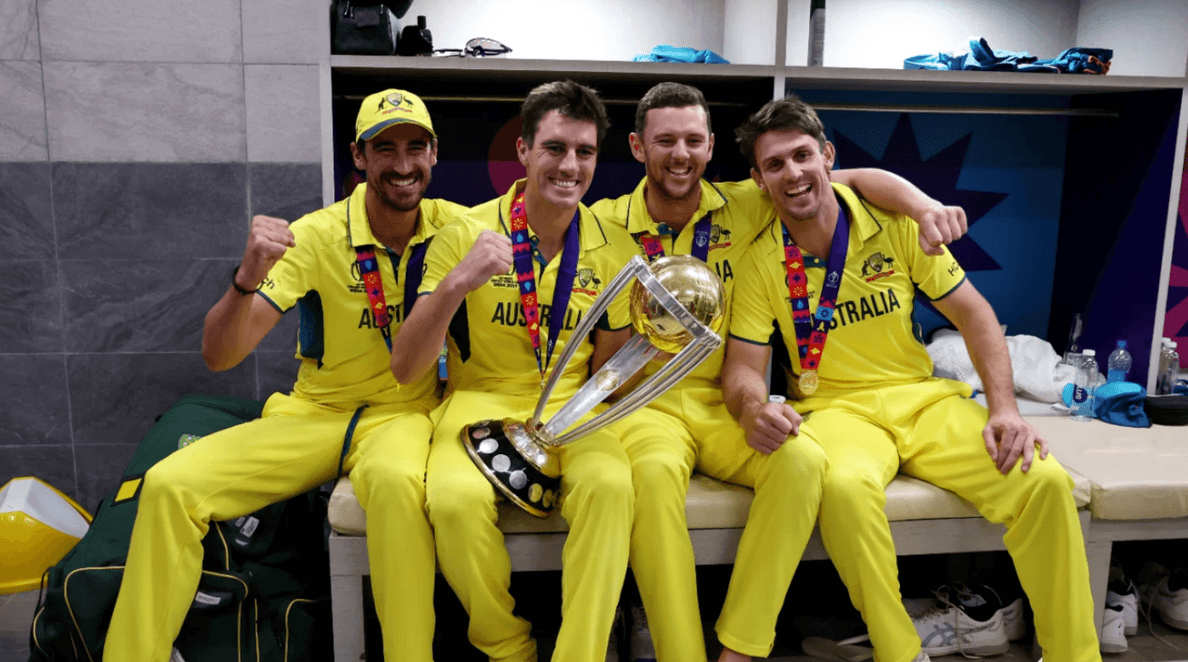
This strategy may be repeated in 2027, with a more drastic move potentially being considered: completely excluding the famous Australian pace trio—Pat Cummins, Josh Hazlewood, and Mitchell Starc—from the IPL altogether. While this might seem extreme, it is driven by the need to protect the health of these high-profile players, who are crucial to Australia’s success in upcoming international competitions.
Preparing for the 2027 ODI World Cup
The 2027 Indian Premier League is not far off, and in the nine-month period leading up to it, Australia will have a demanding schedule. The team will play 21 Test matches while simultaneously preparing for the 2027 ODI World Cup. Given the importance of these tournaments, Cricket Australia has prioritized the physical well-being of its top players over the financial incentives offered by domestic leagues.
Earlier this year, Australian head coach Matthew McDonald confirmed that the board would closely monitor the physical conditions of the three fast bowlers. By 2027, Cummins, Hazlewood, and Starc will be in their late 30s, with ages of 34, 36, and 37 respectively. Their age is a significant factor, especially considering the history of long-term injuries among the trio. This makes it even more critical for Cricket Australia to manage their workload carefully.
Financial and Strategic Moves
To ensure the availability of the pace trio for the ODI World Cup and the World Test Championship (WTC) final, Cricket Australia has extended their contracts for three years. This move also includes an increase in their retainer value. The decision reflects the growing influence of global leagues and the need to balance financial considerations with the physical demands of international cricket.
This strategic approach highlights the board’s recognition of the challenges posed by the increasing number of matches and tournaments. It also demonstrates a commitment to maintaining the health and performance of its star players, ensuring they are in the best possible condition for major international events.
What Can the Players Do?
In light of these developments, there is a strong possibility that the high-profile Australian players, including Hazlewood, Cummins, and Starc, may choose to skip the IPL in 2027. If they do, they are likely to inform their respective franchises well in advance about their unavailability.
Franchises may then release these players before the tournament begins, allowing them to bring in alternative options. However, the absence of the pace trio could create significant challenges for teams like Sunrisers Hyderabad, Delhi Capitals, and Royal Challengers Bengaluru. These teams rely heavily on the experience, tactical insight, and leadership provided by these bowlers.
Impact on Team Dynamics
The loss of Pat Cummins, Mitchell Starc, and Josh Hazlewood would not only weaken the pace attack but also leave a noticeable gap in the overall team dynamics. Their presence brings a level of experience and leadership that is difficult to replace. For franchises, this could mean having to adjust their strategies and rely on less experienced or less familiar players.
As the 2027 IPL approaches, the decisions made by Cricket Australia and its players will have far-reaching implications. The balance between international commitments and domestic league participation remains a delicate one, and the choices made now will shape the future of Australian cricket in the coming years.