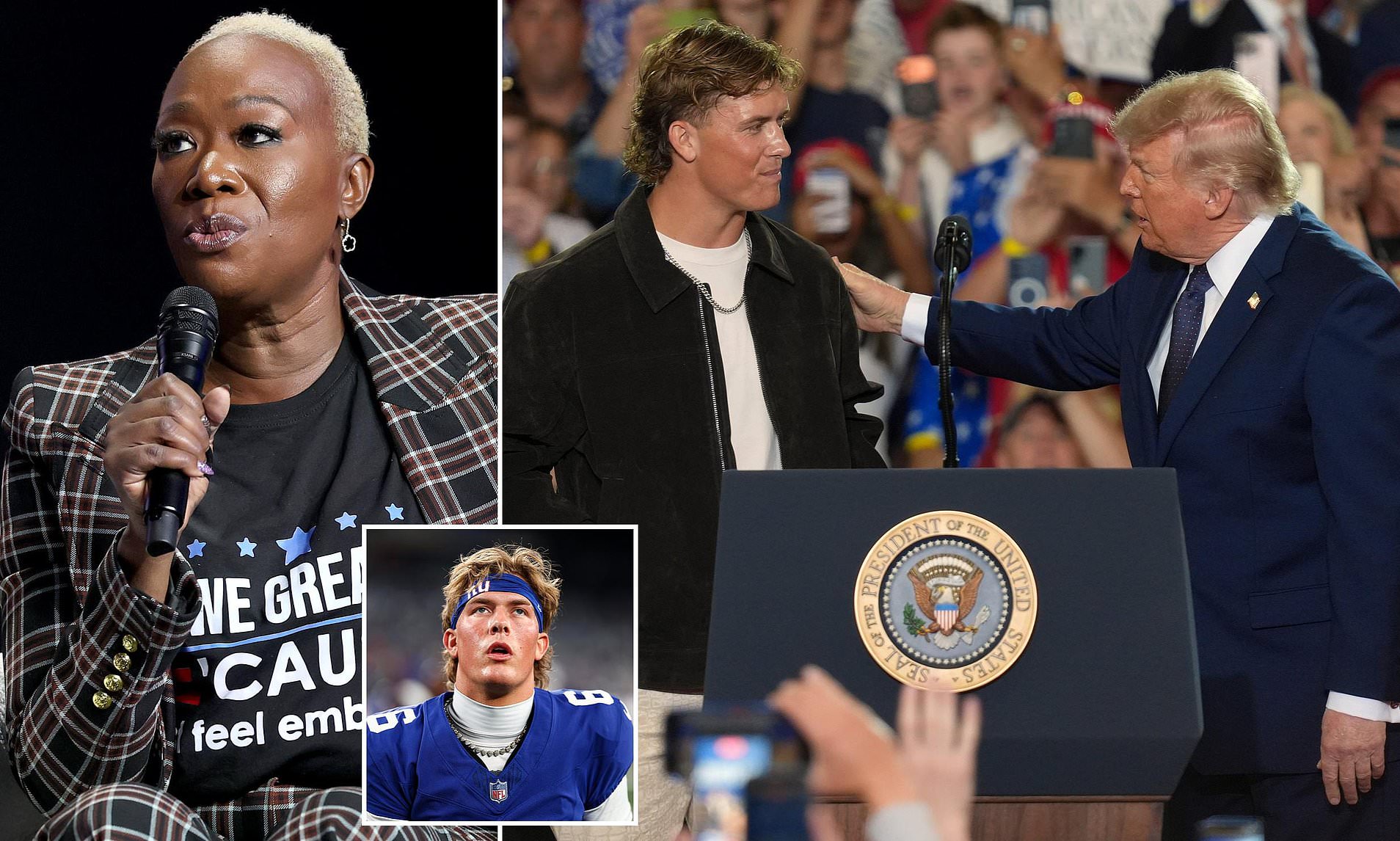
Joy Reid’s Strong Criticism of Jaxson Dart
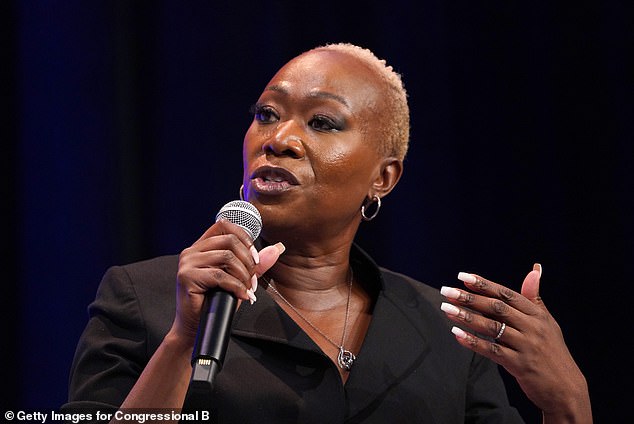
Former MSNBC host Joy Reid has made a dramatic statement, claiming she will no longer support the New York Giants after quarterback Jaxson Dart introduced Donald Trump at a rally. This incident has sparked significant controversy and divided opinions across the sports and political landscapes.
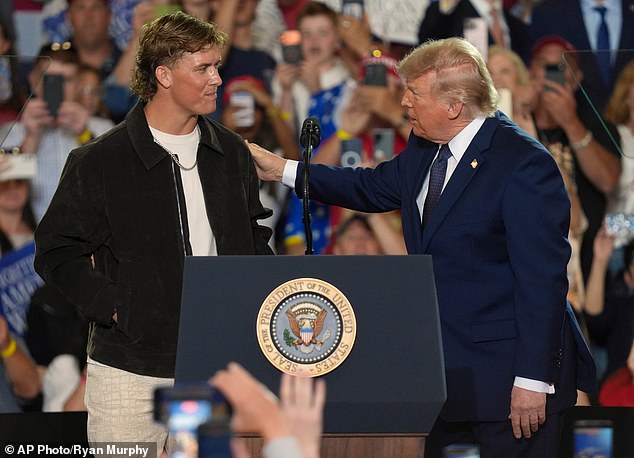
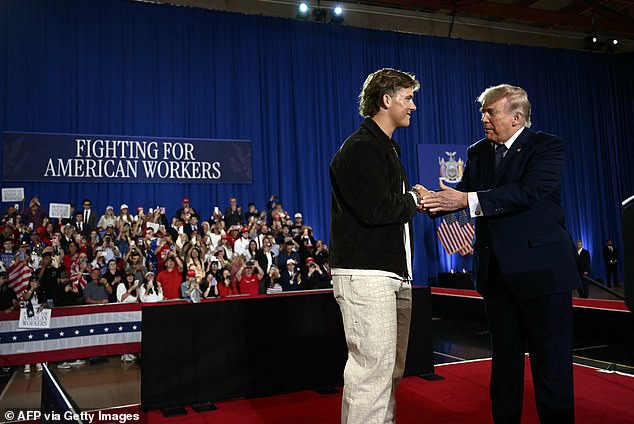
Dart’s appearance at a MAGA rally in Suffern, New York, where he introduced Trump for a speech at Rockland Community College, drew immediate backlash. The most intense criticism came from within his own team, with teammate Abdul Carter taking to social media to express his disapproval of Dart’s actions.
In response to the situation, Dart has defended his decision, acknowledging that it was a “sensitive topic” but also viewing it as a “unique opportunity” he couldn’t refuse. His comments have led to a shift in public perception, especially among fans and former supporters like Joy Reid.
Reid expressed her frustration during an interview, labeling Dart as an “idiot” and questioning his choice of words. She remarked on how Dart described the meeting with Trump as being “pleased to meet the president,” which she found confusing and inappropriate.
A Political Statement by an Athlete
Reid emphasized that the issue goes beyond just Dart’s words. She highlighted the broader implications of an athlete aligning with a political figure, particularly one with such a polarizing reputation. According to Reid, Trump is not just a president but a “wannabe king,” drawing a historical comparison to the American Revolution.
She further discussed the double standards in how athletes are treated based on their race. Reid pointed out that if a Black athlete had been in Dart’s position, the reaction might have been different. She argued that sports have always been a platform for political expression, often used as a symbol of Americana.
Reid explained that while waving the flag is generally accepted, challenging the status quo or the flag itself can lead to backlash, especially for Black athletes. She referenced historical examples, such as Muhammad Ali’s refusal to be drafted into the Vietnam War, highlighting how Black athletes have often faced harsher scrutiny compared to their white counterparts.
Reactions from the NFL and Public
The incident has caused ripples within the NFL community, with some fans and commentators expressing disappointment over Dart’s association with Trump. Despite the controversy, Dart has attempted to downplay any potential conflict with his teammate Abdul Carter, who had publicly criticized him on social media.
However, Dart has also taken steps to distance himself from the Republican party following his MAGA appearance. He stated that his intention was simply to respect the office of the presidency, regardless of political affiliation. He acknowledged the sensitivity of the topic and the responsibilities that come with being a high-profile athlete.
Despite these statements, many conservative commentators have criticized Dart for having to explain his actions, arguing that he should not be held accountable for his personal political views.
The Broader Implications
This incident raises important questions about the role of athletes in politics and the expectations placed upon them. As public figures, athletes often find themselves in the spotlight, with their actions scrutinized by fans and critics alike.
The debate surrounding Dart’s appearance highlights the complex relationship between sports and politics. While some see it as an opportunity for athletes to express their beliefs, others view it as a distraction from the game itself.
Ultimately, the situation underscores the challenges athletes face when navigating the intersection of sports and politics. It also reflects the broader societal discussions around identity, responsibility, and the influence of public figures in shaping cultural narratives.