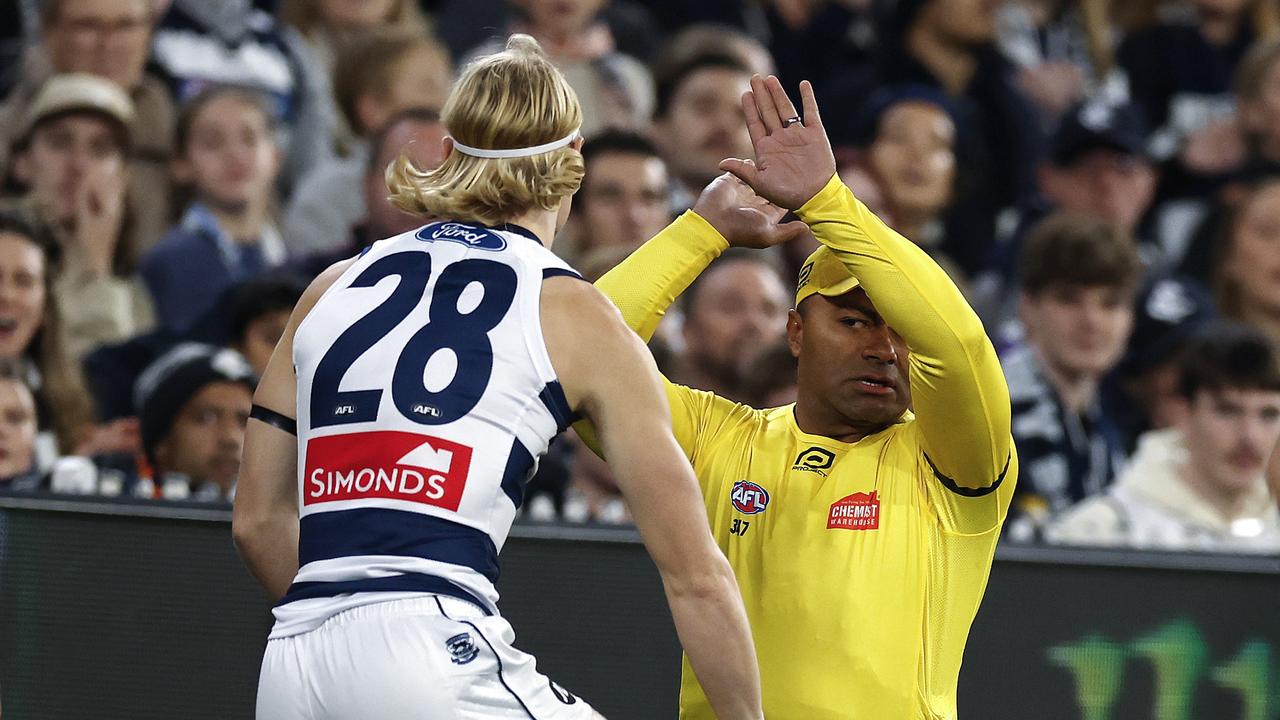
AFL Umpiring Under the Microscope: Upgrades and Controversies Ahead of Finals
The Australian Football League (AFL) is gearing up for its crucial finals series, and with it comes a significant upgrade to the AFL Review Centre (ARC) technology. AFL football boss Greg Swann has confirmed that new, high-definition cameras will be installed and operational before the intense post-season matches commence, aiming to address some of the contentious umpiring decisions that have plagued the season.
The ARC has been a focal point of discussion throughout the year, with several high-profile incidents sparking debate among fans and experts alike. Two particular moments stand out: a delayed free kick awarded to St Kilda’s Rowan Marshall, which prompted an immediate review and subsequent rule adjustment, and a seemingly clear goal for Geelong’s Ollie Dempsey that was controversially missed by the review system just weeks later.
While Swann acknowledges the Dempsey incident, he attributes it more to an umpire’s failure to properly utilise the review process rather than a fundamental flaw in the ARC itself. However, he has been vocal about the upcoming improvements.
Enhanced Technology for Faster, Clearer Decisions
“We’re getting a whole new set of cameras in August, covering the last few games and then leading into finals,” Swann told SEN. “We should be able to be quicker, with better definition.”
The current system, while functional, has faced criticism for its duration. Swann explained that the existing ARC utilises around 10 to 11 cameras, and often, multiple angles are necessary to reach an accurate decision. This can lead to delays, as the review team meticulously analyses each frame.
“The other thing about the ARC is people complain about how long it takes, but they’ve got about 10 or 11 cameras and sometimes you need a lot of those angles to get the decision right,” he elaborated. “I’ve looked at some things where you have an angle where it clearly looks like it’s touched, and there’s another where the ball misses by a good metre. It takes some time to get that right.”
The upcoming camera upgrade promises a substantial leap in performance. The current cameras operate at a shutter speed of 50 frames per minute, while the new equipment will boast a staggering 250 frames per minute. This significant increase in speed and resolution is expected to provide much clearer and faster analysis, ultimately improving the efficiency and accuracy of the review process.
Addressing Time Limits and Umpiring Discretion
Beyond the technological enhancements, the AFL is also considering implementing time limits for ARC reviews. Swann indicated that while they don’t want decisions taking an excessive amount of time, they also recognise the necessity of thoroughness. “Then we might end up putting a time limit on it, but we certainly don’t want 50 (seconds),” he stated, alluding to the frustration associated with lengthy reviews.
Swann also delved into the broader quality of umpiring, referencing a particularly drawn-out set shot by Carlton forward Harry McKay. In the dying minutes of a match against Essendon, McKay took an extended period to take a long-range shot, consuming 41 seconds. This incident brought the issue of time-wasting and umpire discretion to the forefront.
“The direction is if they call it, they’ve got the 30 seconds and they must start to walk in at 30 seconds,” Swann explained regarding the rules for set shots. He noted that in McKay’s case, the player began his walk at 29 seconds, but then took an unusually long time to reach the mark, stretching the process.
The Nuances of Umpiring Difficult Scenarios
Swann acknowledged the complexity of such situations, highlighting the umpire’s discretion in managing the pace of play. “He probably should have got a bit of a hurry-up at stage, but it is at the umpire’s discretion,” he admitted.
The AFL football boss also touched upon the historical context of these rules, explaining that decisions about how long players can take for set shots have been debated for some time. A key consideration is the impact of environmental factors, such as strong winds, particularly in venues like Tasmania or Ballarat.
“It has been discussed before my time and one of the issues, for example, would be if you’re playing down in Tassie or Mars (Ballarat) where you’ve got a howling breeze, who are the umpires to say to someone like a Harry McKay, ‘You’re 60 out, you can’t kick it’?” Swann posed.
He further elaborated on previous discussions that suggested a player on the mark 50 metres or further back would prevent a set shot call. However, acknowledging the exceptional kicking abilities of some players, this rule proved difficult to enforce universally.
“The discussion previously was if the man on the mark was 50 or outside, you can’t call it. But again, there’s guys… they can kick it that far,” he said.
Ultimately, the AFL is adopting a cautious approach to this particular aspect of umpiring. “It’s a difficult one to have a hard-and-fast rule, so at this stage, it’s the first one we’ve had blatantly this year… we’re not jumping at shadows at the minute, going to change it, but it is to be monitored,” Swann concluded, indicating that while the incident is under review, immediate rule changes are not anticipated. The focus remains on refining the technology and ensuring umpires are equipped to handle the diverse and challenging situations that arise in a game of AFL.