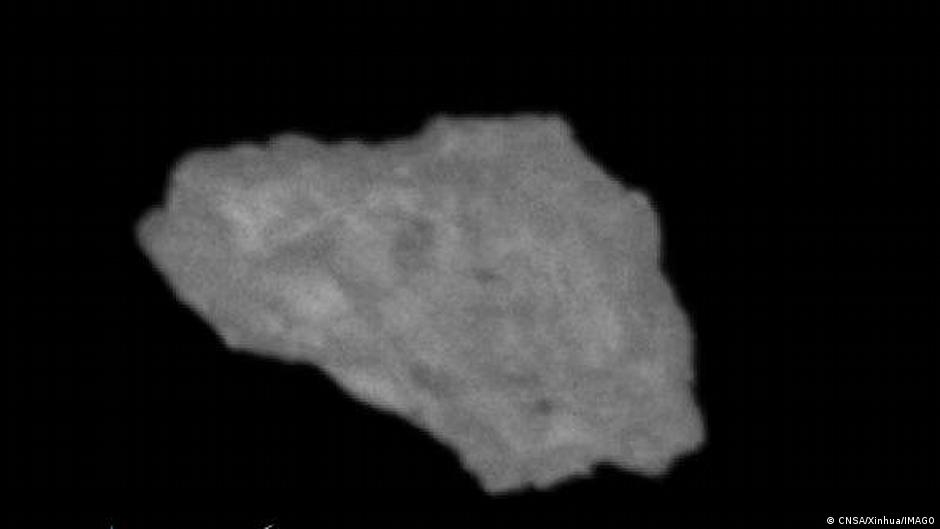
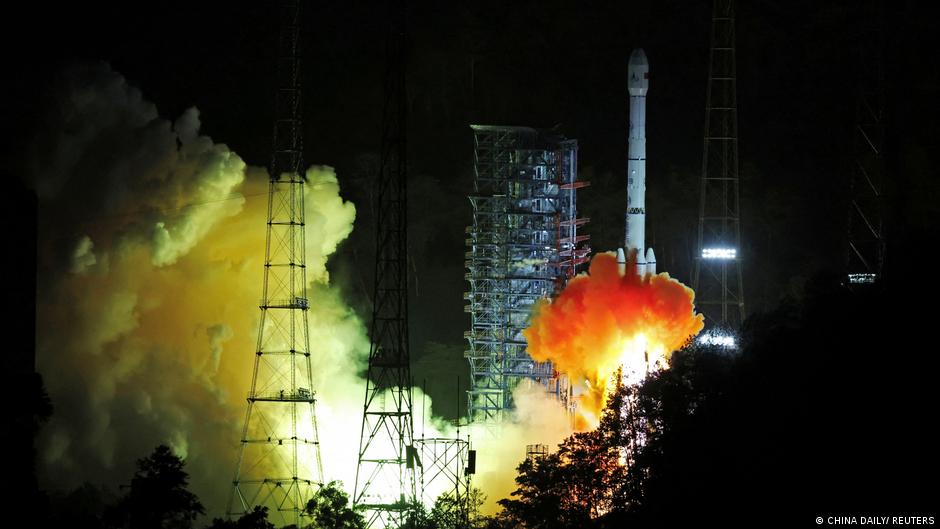
China’s Tianwen-2 space probe has reached its target, the near-Earth asteroid Kamo’oalewa, after a journey of about 400 days, according to the China National Space Administration (CNSA). The mission, which was launched in May 2025, marks an important milestone for China as it strives to match or surpass the United States and Europe in deep-space exploration. It is also the first Chinese attempt to collect samples from an asteroid.
Scientists believe that samples taken from asteroids—rocky bodies orbiting the sun—could provide valuable insights into how the solar system formed and evolved. Understanding these celestial objects can help scientists piece together the history of our cosmic neighborhood and potentially uncover clues about the origins of life on Earth.
What do we know about the Tianwen-2 mission and the asteroid?
The CNSA announced that the Tianwen-2 had successfully arrived at a distance of 20 kilometers (12 miles) from the asteroid, also known as 2016 HO3. This asteroid measures just a few dozen meters (yards) in diameter. Discovered in Hawaii in 2016, it travels around the sun at approximately the same distance as Earth and is considered a quasi-satellite of our planet because its orbit is nearly synchronized with Earth’s.
“The probe will progressively conduct more detailed scientific exploration to acquire data on the asteroid’s morphology, material composition and internal structure, laying the groundwork for subsequent sample collection operations,” the CNSA said.
Sample collection and return to Earth
Once the samples have been collected, the Tianwen-2 will release a module that transports them back to Earth. The return is scheduled for late 2027. After completing its operations at the asteroid, the main spacecraft is expected to travel further toward a comet in the asteroid belt, continuing with a mission that is planned to last about a decade.
This extended mission highlights China’s growing ambitions in space exploration, aiming to establish itself as a leading player in deep-space research.
China boosts its space program
Over the past few years, China has invested billions of dollars into its space program, with President Xi Jinping often referring to the country’s “space dream.” The current mission follows successful sample-return missions by Japan and the United States, which have already collected samples from different asteroids.
Beijing is now working to close the gap with the US and the European Union, both of which have recently advanced their efforts in exploring beyond the Moon. These developments signal a new era in global space exploration, where multiple nations are competing to unlock the secrets of the cosmos.
China’s progress in space exploration is not only driven by scientific curiosity but also by strategic and technological goals. As the country continues to invest in its space program, it is likely to play an increasingly prominent role in shaping the future of interplanetary research.