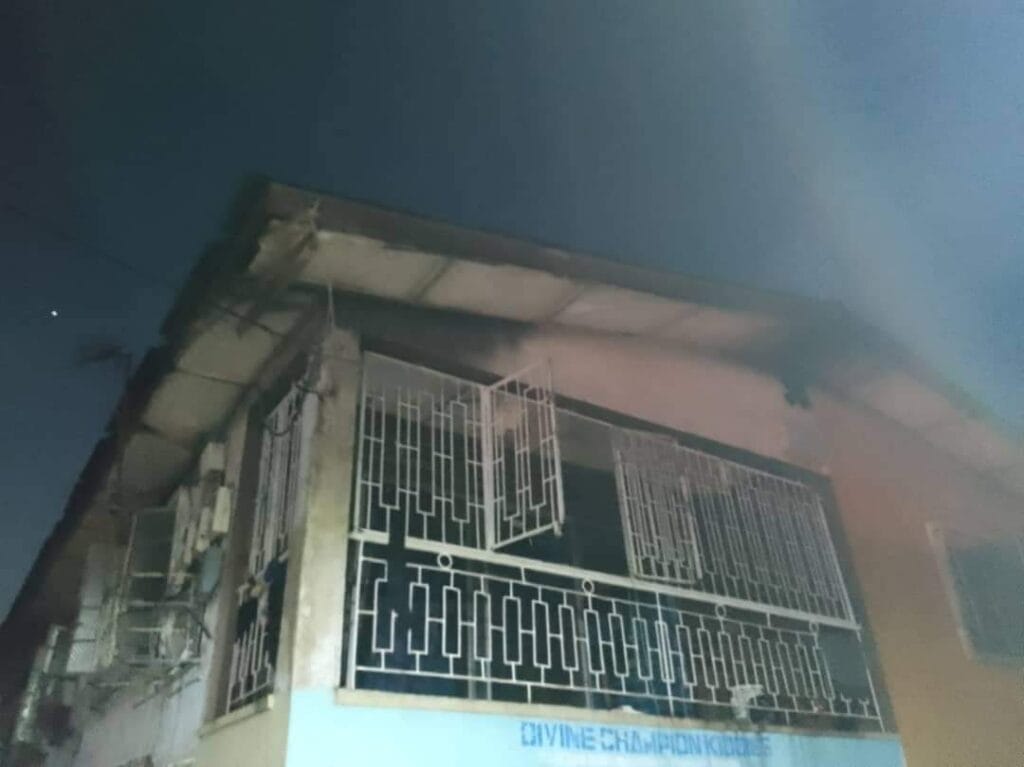
Christmas Eve Inferno Engulfs Lagos High-Rise, Leaving a Trail of Devastation
As the festive spirit of Christmas Eve began to illuminate Lagos, a catastrophic fire erupted at the Great Nigeria Insurance (GNI) House, a prominent 25-storey building on Martins Street, Lagos Island. The blaze, which commenced on the evening of December 24, 2025, quickly transformed a night of anticipated joy into one of widespread panic and tragedy. The GNI building, a bustling hub of commercial activity, housed numerous third-party tenants operating as a vibrant market plaza. Its floors were laden with retail goods and warehouse storage, including clothing materials, footwear, accessories, and jewellery.
The inferno’s rapid spread was alarming, engulfing not only the GNI building but also extending to adjacent structures, including a mosque and a neighbouring plaza. Thick columns of smoke billowed into the sky, a stark visual testament to the unfolding disaster. Preliminary investigations, as reported by the Lagos State Emergency Management Agency (LASEMA) on December 25, indicated that the fire originated from an apartment on the fourth floor, escalating swiftly to the sixth floor and beyond.
Shop owners, caught off guard, fled in desperation as the flames raged uncontrollably. Emergency responders worked tirelessly for hours, and indeed days, in a relentless battle to contain the destructive blaze. By the time the fire was finally subdued, the once festive atmosphere had been replaced by profound shock, immense loss, and a multitude of unanswered questions for those who survived and for the grieving families of those who perished. Reports indicated that as of the following Monday, at least 20 individuals were feared trapped under the rubble, with relatives providing names and photographs of their missing loved ones.
Among the identified potential victims were Elo Chukwu, Omeigbo Chuwuebuka, Omeigbo Chukwudubem, Kayode Omoniyi, Ikechukwudi Asobi, and Murphy Aborinwa. The list also included Onyeka Obinwa, Mercy Ukamaka, Taofeeq Opera, a trader identified only as Chiding along with two associates. LASEMA later clarified that many of the traders who became trapped were those who had disregarded safety warnings in a desperate attempt to salvage their merchandise.
A Family’s Unimaginable Loss
The Omatu family found themselves at the heart of this tragedy, grappling with the devastating loss of three brothers: Steve (40), Casmir (39), and Collins (37). All three are believed to have perished in the GNI building fire. Hailing from the Uzoakwa Community in Ihiala Local Government Area of Anambra State, the siblings were reportedly trapped while attempting to evacuate their belongings when the fire broke out.
A poignant WhatsApp voice message from Precious Okoro, who identified herself as the elder sister of the three brothers, circulated widely, raising the alarm about their entrapment and pleading for official intervention. Their surviving twin brother, Camillus Omatu, narrowly escaped the inferno and has since been actively involved in efforts to locate the victims.
Mimi Nonyerem, another sister to the Omatu brothers, shared a harrowing account. She revealed that in March 2023, a fire incident at Plaza 32 Balogun market had previously affected her brothers’ shops, prompting their relocation to the GNI House. Despite suffering losses in that earlier blaze, they were determined to rebuild their business. This past experience, Nonyerem speculated, likely influenced their decision to prioritize retrieving their belongings during the GNI fire, a choice that tragically led to their demise. She expressed profound grief, stating, “May Casmir, Kene (Collins), and Uncle Steve’s souls find eternal peace. In the afterlife, they will forever remain my brothers.”
In a Facebook post on December 30, accompanied by a video from the incident scene, Nonyerem voiced accusations against the Lagos State government, alleging a lack of essential rescue equipment and a reluctance to risk lives. She stated that the government claimed only Julius Berger Nigeria possessed the capability for the rescue operation, and that police were using tear gas to keep people away from the building. “If the government lacks the necessary equipment to save those trapped, why permit high-rise buildings in the state?” she questioned.
Further details emerged from Mr. Emmanuel Anumba, another relative of the Omatu brothers. After days of searching, access to the building was reportedly gained with the assistance of scavengers who were present to purchase iron scraps. Anumba reported that the bodies recovered were burnt beyond recognition, necessitating the collection of ashes for burial. He also highlighted that the surviving brother, Camillus, had been persistently engaging with stakeholders for the evacuation of a collapsed extension that trapped the victims. However, these efforts reportedly yielded no results, with the Lagos State Government maintaining that no casualties had been recorded. Anumba alleged a failure in proper evacuation procedures by government and emergency agencies, citing a lack of urgency and inadequate equipment for debris removal. “For days, nobody helped us. We kept begging officials, but they moved like there was no emergency. Lagos State keeps saying no casualty was recorded, but how can they say that when we carried ashes of our own relatives?” he lamented.
The Omatu family reportedly decided to formally declare Casmir, Collins, and Steve deceased to avoid the emotional toll of lengthy DNA identification processes on the unrecognisable remains.
Public Outcry and Official Response
On January 1, Nonyerem updated her supporters, expressing gratitude for their outpouring of sympathy and confirming the loss of her brothers. She requested continued prayers for her family, stating, “I appreciate everyone’s support. Unfortunately, my brothers are no longer with us. I humbly request that you include our family in your daily prayers. May we all be spared from such calamities in Jesus’ name, Amen.” Nonyerem also shared videos on Facebook Reels, including one of Steve dancing at an event, and posted heartfelt birthday wishes for him, expressing a desperate hope of waking from what felt like a nightmare.
Friends of the Omatu brothers voiced their profound disappointment. Anthony Ejepu described the grief as a weight on his soul, stating that Nigeria had failed the siblings when it mattered most. “In a sane society where life is valued, this would have been a national emergency. Helicopters would have been deployed, sirens would have wailed, and a coordinated rescue mission would have been launched,” Ejepu remarked. He contrasted this with the perceived indifference of leaders attending festive celebrations while a horror unfolded. Kingsley Agulonye echoed these sentiments, asserting, “As a country, we failed them when it mattered the most. Before their very eyes, before help could come, Nigeria had already happened.” He attributed the escalation of the fire and the loss of life to a lack of functional emergency systems and prevalent negligence.
An X user, Dr Olufunmilayo Ogunsanya (@OurFavOnlineDoc), highlighted the seven-day period the brothers were trapped without help, stating, “The government failed to save them. We tried to raise an alarm but human life has no value in this country. We watched them die.” Another user, Oziegbe Odion, described the incident, which resulted in at least five confirmed deaths and multiple trapped traders, as an exposure of “a failure in basic protections.” He urged Lagos authorities to act decisively, investigate lapses, compensate victims’ families, and enforce safety reforms.
An official from LASEMA, speaking anonymously, stated that authorities had warned people against entering the building after the fire started, but many went in to steal or recover goods. The agency claimed to have done its best to caution people about safety.
Governor Babajide Sanwo-Olu visited the GNI building site on December 25 to commiserate with affected families and property owners. He returned on January 2, confirming eight deaths, with five victims identified and three remaining unidentified. He reported that thirteen people had been rescued and that an information centre had been established at the site. The Governor stressed that the area remained unsafe and that no unauthorized activities were permitted. He noted that unsafe practices, such as the proximity of shops to transformers and the use of generators, had significantly increased risks. Sanwo-Olu announced that the GNI building would be demolished following a structural review, and some surrounding buildings would also need to be removed, prioritizing safety above all else.
On January 1, the state Commissioner for Information and Strategy, Gbenga Omotoso, conveyed the government’s sympathy. He detailed the immediate deployment of first responders, including the Lagos State Fire and Rescue Service, LASEMA, and other emergency units. He stated that these teams were conducting systematic search and rescue operations in line with international protocols. Omotoso provided casualty figures as of that morning: eight males (including a fireman) rescued with injuries, three males and two females treated for minor injuries, one adult female extricated dead, two adult males extricated, and three persons who were burnt.
On December 30, Omotoso announced the enforcement of the Governor’s directive for residents and businesses around the GNI building to evacuate immediately. Experts had evaluated the site and warned of the dangers to life and property within a 100-meter radius. He noted that several surrounding buildings were compromised and required evacuation, and expressed concern that shop owners were breaching the established safety perimeter.